


BLUF:
Xi Jinping is hosting Trump and Putin in Shenzhen on Thursday, although Ukraine may not be on the agenda. Estonia is closing its border with Russia following an attempted GRU-directed arson attack against a drone manufacturer. Iran has attacked Bahrain again, just as Trump appears to be considering a pause in American strikes. Zelenskyy says renewed Starshield restrictions are allowing Russian drones to reach Ukrainian infrastructure. And an enormous communications failure brought American aviation to a standstill on Friday.
Hey friends,
Welcome to another Monday Preflight, your weekly intelligence briefing for Eyes Only paid subscribers.
Here’s what’s cooking: Three of the world’s most powerful leaders are preparing to sit down together in China, Estonia is taking extraordinary measures to protect itself from Russian sabotage, and the Middle East remains one bad US decision away from another round of fighting.
Meanwhile, Ukraine’s Starshield problems are back, and the United States just experienced the sort of aviation communications failure that would’ve given every air traffic controller in the country an instant loosening of the bowels.
As usual, I’ve picked five developments that I think deserve our attention over the next seven days. Links included so you can follow the reporting yourself.
Let’s get into it.
1. Xi, Trump and Putin Meet in Shenzhen Thursday. Ukraine May Not Be on the Agenda
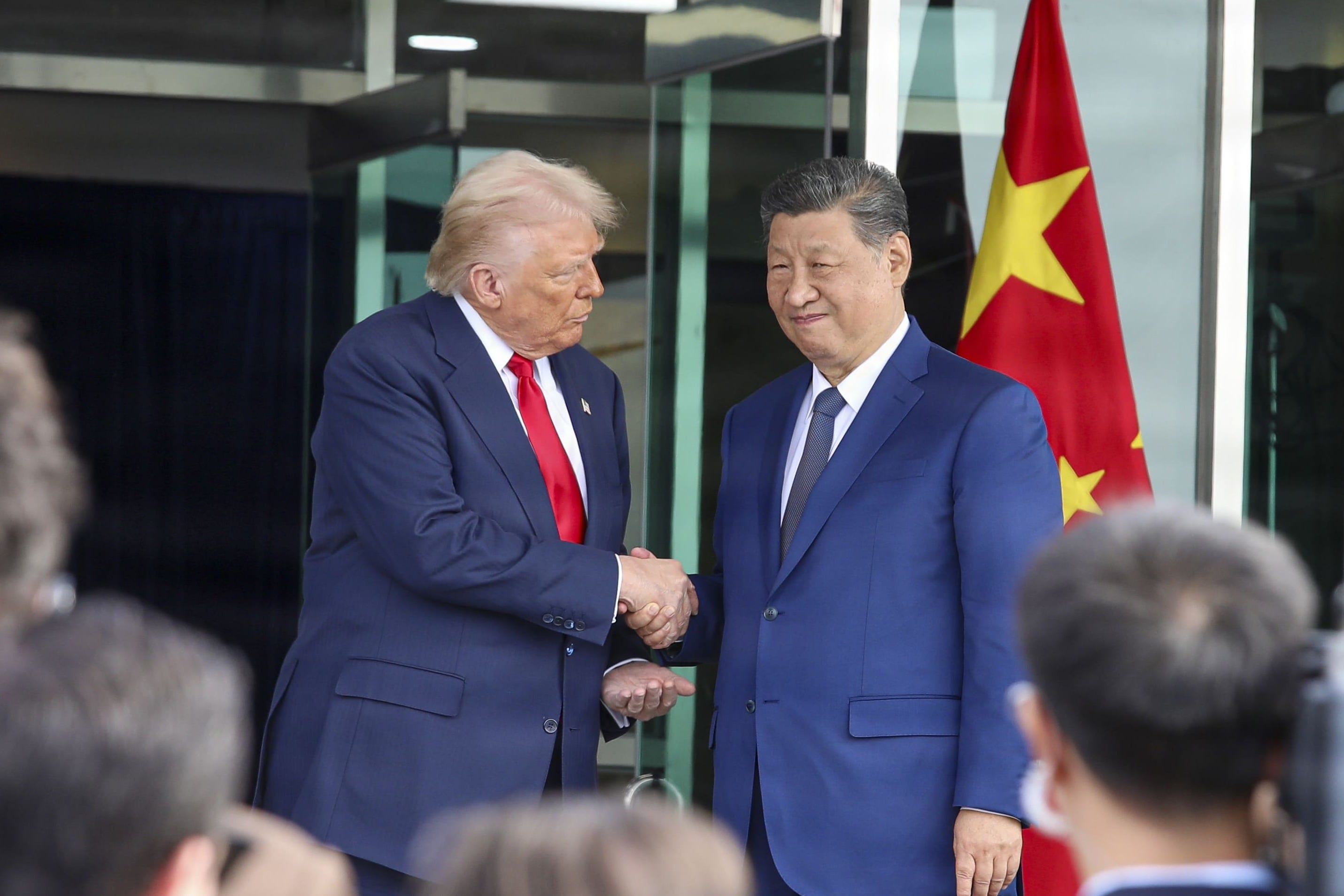
China’s Foreign Ministry has confirmed that Xi Jinping will host Donald Trump and Vladimir Putin in Shenzhen on November 19, on the sidelines of the APEC summit.
It’ll be the first meeting involving all three leaders together, and Beijing is already describing it as “groundbreaking.”
The White House and Kremlin previously confirmed the meeting, although China hasn’t published a formal agenda. Trump is also expected to meet Xi separately before the three-way discussion. That’s worth watching because the current US-China trade truce expires in January.
The interesting part is how differently the three governments appear to view the gathering.
Trump wants to discuss reducing nuclear arsenals, according to reporting by the New York Post. With New START now expired, there’s an obvious need to establish some kind of arms-control arrangement between Washington and Moscow.
But Beijing has long argued that the United States and Russia should reduce their much larger nuclear arsenals before expecting China to accept comparable limitations. That’s an understandable position from the Chinese perspective, although in recent years, Washington has increasingly wanted Beijing involved in future arms-control agreements.
And then there’s Ukraine…
American officials have indicated that the war will not feature prominently in the discussions.
I find that extraordinary, considering we’re approaching the fifth year of Europe’s largest war since World War II, and all three leaders sitting at that table have varying degrees of influence over how long it continues.
Putin’s aide Yuri Ushakov says Moscow intends to continue pursuing a settlement. Trump has also suggested that Iran will be on his list of subjects.
Germany’s president has raised concerns about discussing Ukraine’s future without European participation, and there’s good reason for that concern.
Last week’s negotiations in Abu Dhabi didn’t produce much progress. The parties reached an agreement in principle on a substantial prisoner exchange, which TASS says could happen within two or three weeks. That would be welcome news for the prisoners and families involved. But there was no reported movement on the issues that actually stand between Ukraine and a ceasefire.
Russia continues demanding that Ukraine withdraw from the Donbas, while Kyiv insists on credible, binding security guarantees.
Those positions are fundamentally incompatible.
Ukrainian negotiator Davyd Arakhamia has argued that the next round of negotiations should include European representatives. Reporting differs on how Russia’s Vladimir Medinsky responded to that proposal, and European governments are anxious about being excluded from decisions that will affect their security for decades.
US envoys are also expected to meet Putin again.
Moscow would be perfectly happy to discuss Ukraine’s future with Washington and Beijing while the Europeans wait outside the room.
What I’m watching: The official readouts from Shenzhen, particularly whether Ukraine is mentioned at all. I’ll also be looking for concrete proposals on nuclear arms control. Since New START expired, the major nuclear powers have been operating without the treaty’s previous framework of limits and verification. Putin’s description of the meeting afterward may tell us as much as the formal statements.
2. Estonia Is Closing Its Entire Border With Russia on December 1
Estonian authorities say Russia’s GRU ordered an arson attack on Threod Systems, a drone maker whose products Ukraine uses, in the early hours of November 14. The target was its facility in Viimsi, near Tallinn.
Eight Latvian residents were detained. The Internal Security Service says the suspects tried to break windows and pour flammable liquid inside to cause an explosion. The plot failed because the company’s security team responded quickly, and production was not disrupted. The security chief said arson is a common Russian tool in Europe, with recruits typically drawn from criminal networks or people under financial pressure.
The government answered by announcing that all road crossings with Russia will close from December 1.
Remember, Estonia is on the record as having said “Any Russian or unidentified ‘little green men’ incursion into Estonian territory get SHOT ON SIGHT.”
Estonia’s not fucking around here.
