


This article is one of two weekly exclusive articles for my paid subscribers. Thank you for continuing to fund independent military analysis with a moderate dose of pro-Ukrainian/ anti-authoritarian humor.
Have you noticed that official information coming out of the Iran War is pretty muddy? Especially compared to the War on Terror?
I have.
The United States public hasn’t experienced this lack of official wartime information since World War II. I don’t think we’re at full censorship yet… But right now, most of our news about US casualties and equipment damage in the Iran War is coming from open-source researchers, mainstream reporting from WSJ and CNN using off-the-record sources inside government, and analysts.
This is a huge regression from what we’ve grown accustomed to going back to the end of the Vietnam War.
The Gap Between the Briefing and the Battlefield
Here’s the version of this war you’re being sold: precision strikes, standoff distance, and clean geometry…
Iran’s military is “decimated.”
Missiles arc off destroyer decks somewhere in the Gulf, B-2s ghost through Iranian airspace, the targets collapse on cue, and the US holds a briefing where Marco Rubio says all our objectives are being met.
America is winning. Iran is absorbing. Casualties are minimal.
But, here’s the version that keeps trickling out of OSINT (Open Source Intelligence) reporting: more than 300 US service members wounded by March 28, repeated Iranian strikes on Prince Sultan Air Base (PSAB) in Saudi Arabia, 13 American deaths in the conflict so far, a national strategic-level asset destroyed (the E-3G Sentry at PSAB), at least one KC-135 tanker gone, five more damaged, potential loss of an F-35, and much more.
The US and Gulf states have apparently been absorbing retaliatory punishment at a rate that makes the official timeline look, to use a technical military term, deeply optimistic.
Both of those versions can’t be fully true at the same time. One of them is a Truth Social post. The other one is a real war.
Obviously, some things need to be held back during an active shooting war. That’s basic operational security, and it has a name: OPSEC. Nobody rational wants CENTCOM posting tomorrow’s strike package on social media.
Nobody wants real-time casualty figures published while families are still being notified, or while the enemy is still doing damage assessment and deciding whether to hit again.
The question isn’t whether wartime secrecy is appropriate. Of course it is.
The question is whether what we’re seeing now is wartime secrecy, or something with Trump’s intentions wearing wartime secrecy’s uniform.
In March, the US reported roughly 140 US service members wounded in the Iran conflict. By March 27 and 28, Reuters and AP were reporting that the number had climbed past 300.
Fine. Wars produce casualties. That’s the job. What matters is how those figures reached the public.
A significant share only emerged after outside reporting forced clarity, or after delays long enough to make the public picture look cleaner than the battlefield actually was while those wounds were being treated.
The numbers were released in a way that felt like information management, not information sharing. There’s a difference. In the Army, we’d call that need-to-know, where “need” is defined by someone with a very specific agenda about what you need to know.
How the Hallways Closed
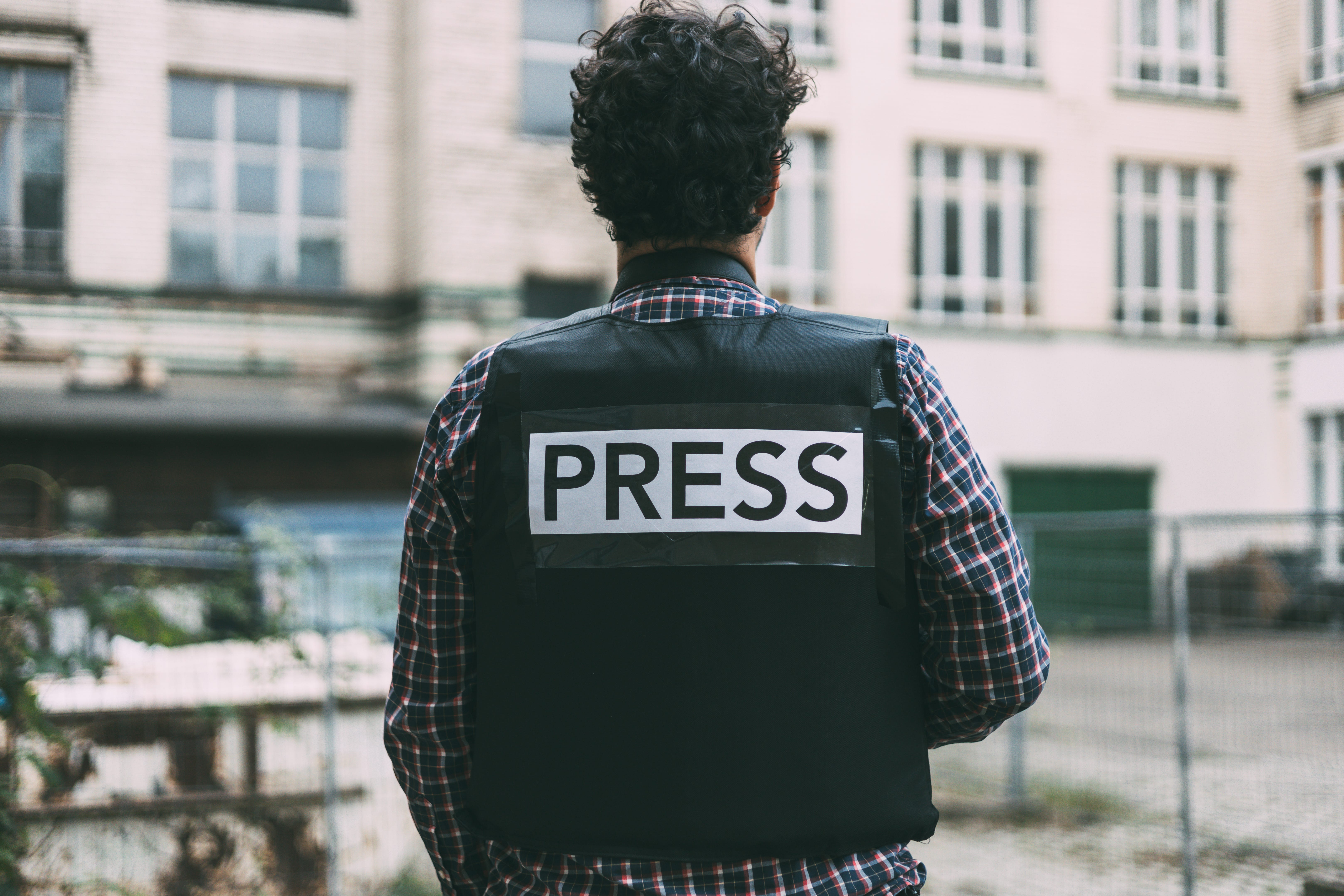
Then there’s the press access question, and this one is harder to wave away with words like “OPSEC.”
On March 23, the Pentagon closed the long-used Correspondents’ Corridor, moved journalists out of their workspace, and imposed escort requirements for reporters seeking physical access inside the building.
A few days earlier, a federal judge had blocked an earlier restrictive access policy, finding constitutional problems with rules that threatened journalists who sought information not authorized for public release.
That is the profile of an institution trying to keep a tighter hand on who sees what and who asks which questions.
When the government starts choosing its press corps like a casting director, the product you’re getting is a sponsored documentary with words that sound suspiciously Trump-y, like “obliterated,” “decimated,” and “fire and fury.”
Russia’s way of war has an information model that I think is instructive here. Moscow controls the emotional frame before it controls the facts.
Casualties are minimized, failures are blurred, independent reporting is criminalized or crushed, and the state positions itself as the only legitimate narrator of the war.
Human Rights Watch documented that Russia moved early in the Ukraine invasion to insist that media rely on official sources and later expanded laws criminalizing “false” information and “discrediting” the armed forces.
Admittedly, the Pentagon is not the Russian Ministry of Defense. American reporters are not being sent to prison for asking bad questions, (yet). The comparison here is narrower and more uncomfortable. The US under Trump and Hegseth is beginning to borrow the instinct from Russia, even if it hasn’t imported the full machinery.
Delay the ugly numbers.
Restrict access.
Narrow the hallways where unscripted accountability happens.
Decide which reporters are trustworthy enough to remain close to power.
Treat independent verification and OSINT as a nuisance instead of a democratic necessity.
Actually, the “OSINT as a nuisance” theme has already reared its ugly head as USAF leaders have been complaining that “keyboard warriors using flight tracking data are a risk to OPSEC.”
Ouch… I’m offended.
To be fair, all OSINT reporters are not created equal. Some are driven by greed, clicks, and ad revenue that produces a flood of fake, AI-generated battlefield maps or articles that fool probably 90% of the under-informed public.
DW did a great fact-check article of the fake, AI-made, Iran satellite maps circulating right now. Check it out here.
Iraq’s Embed Era Was Manipulation. It Was Also More Honest Than This
The Iraq comparison becomes useful here also.
In 2003, the Pentagon embedded more than 500 journalists with US and coalition forces in Iraq, with several contemporary and later accounts putting the number around 600.
The military understood that if reporters were living with units, eating MREs, breathing the same dust, and sleeping in the same mud, the coverage would often become more human and more sympathetic.
