


This article is one of three weekly exclusive articles for my paid subscribers. Thank you for continuing to fund independent, approachable military analysis with a heavy dose of pro-Ukrainian sentiment and a side of anti-authoritarian humor.
Crikey mate!
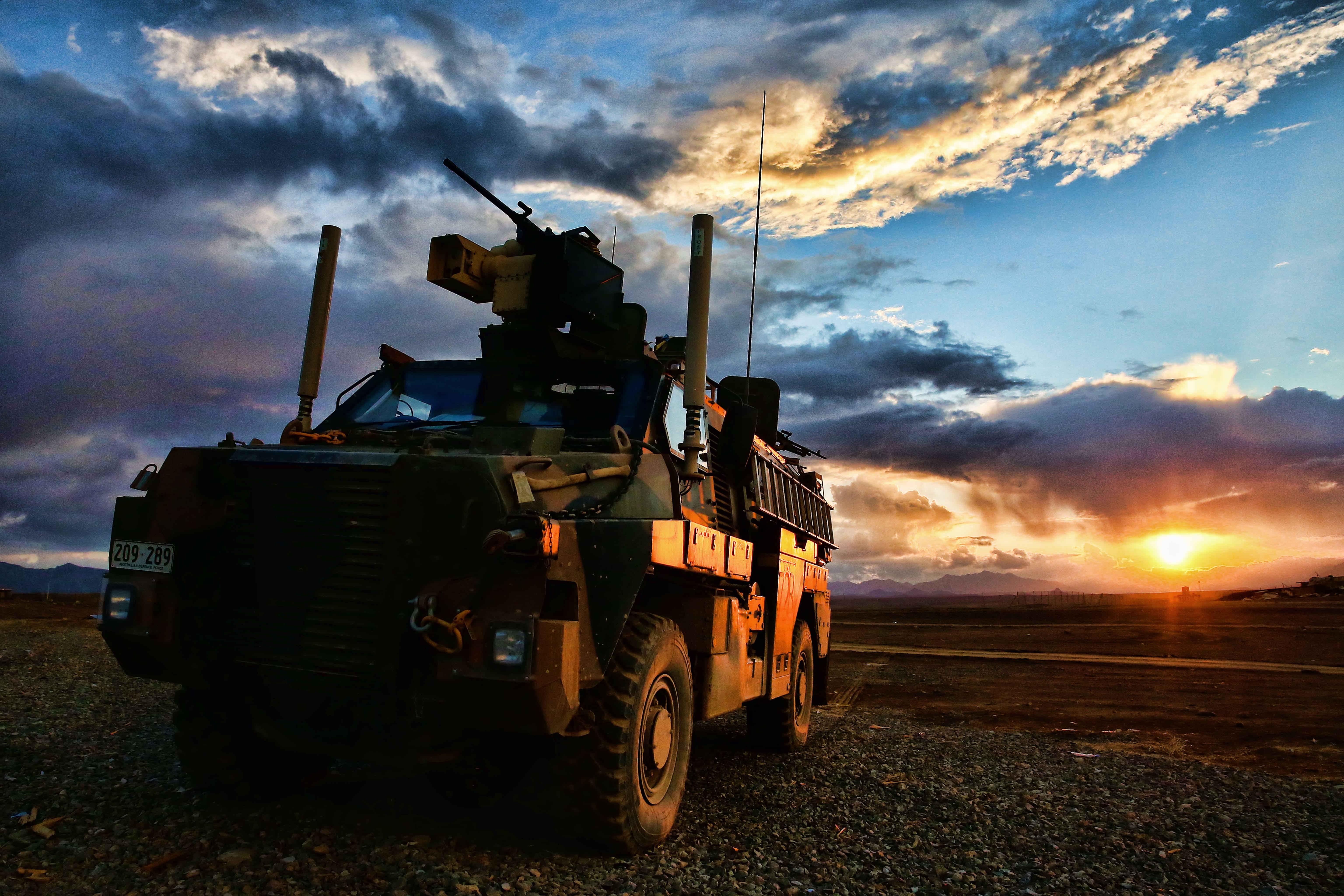
Australia is selling a fleet of Bushmaster protected mobility vehicles to the Netherlands.
I’ve covered the Bushmaster before and it’s one of my favorite exports from down unda, mainly because several survived numerous Russian drone strikes in Ukraine and kept its crews alive on multiple occasions.
Now, the Dutch are asking for more of them.
Australia agreed, although Canberra won’t say how many are being shipped or how much the Netherlands is paying.
What we do know is that the deal lands alongside a much bigger Australian investment: $1.2 billion for 268 new Bushmasters, upgrades to army trucks, and continued work on Hawkei tactical vehicles.
Most of the new Bushmasters will stay with the Australian Army, and production at Thales’ Bendigo facility is now locked in through 2033.
According to Australia’s government, the order helps sustain local jobs and keeps the protected mobility line alive; and given what’s happened to Bushmaster’s reputation since February 2022, that line is worth sustaining.
The Bushmaster has become one of Australia’s most visible military exports. It’s a combat-proven vehicle that has been under Russian fire, hauled Ukrainian soldiers through artillery danger zones, and come back with a reputation most armored vehicles would happily kill for...
Plus, according to Ukrainian troops, it’s downright luxurious compared to other battle taxis. (It has plenty of legroom and serious air conditioning.)
We’ll get to the Netherlands deal, but first…
What the Bushmaster Actually Is
“Protected mobility vehicle” is one of those defense euphemisms that gets mixed in with armored personnel carriers (APCs).
Infantry mobility vehicle, or IMV, is often used for vehicles like the Bushmaster. It sounds a little more modern and less ‘Cold War motor pool.’
‘Protected mobility vehicle’ is the Australian-style term and fits Bushmaster perfectly.
Mine-resistant ambush-protected vehicle, or MRAP, works when the vehicle is specifically designed for mine and IED protection. The Bushmaster is often described as “MRAP-like,” though Australia tends to call it a protected mobility vehicle.
I just call them battle taxis because the goal is to move troops quickly with light to moderate armored protection.
So, the Bushmaster is an Australian-designed, Thales-built four-wheel-drive protected vehicle originally conceived for the Australian Army’s need to move infantry through territory that actively wants to kill them.
It runs on a diesel engine, weighs roughly 13 to 14 tons depending on configuration and what you’ve bolted onto it that week, and is built around a monocoque hull, meaning the protection is structural.
The design philosophy means the vehicle absorbs the punishment so the people inside don’t have to.
A generation of Cold War-era armored personnel carriers like the BTR series, the BMP series, the M113 in its older configurations, were designed around a different threat model.
In these old-timers, mine protection was an afterthought. Undercarriage blast management was primitive. They were mostly built to withstand an RPG hit to the side.
The Bushmaster was designed from the start to manage the under (mine) and over (drone) blast events: the V-shaped hull redirects the energy of a mine or IED outward and away from the crew compartment. The seats are energy-absorbing and suspended from the roof rather than bolted to the floor, which means the shockwave traveling up through the vehicle has less of a direct path to the human spine.
That small detail alone represents a generational shift in protected vehicle philosophy.
The vehicle can carry nine to ten troops in standard configuration, comfortably by military standards. It can be configured for command, reconnaissance, ambulance, and fire support roles.
The ambulance variant has seen particularly heavy use in Ukraine.
It’s also worth noting what the Bushmaster is not…
It’s not a tank.
If you drive it into a scenario designed for a Bradley or an M2 and expect the same outcome, you’ve made a significant category error.
Some Ukrainian Bushmasters have been lost with at least one captured by Russia. We don’t know the exact circumstances of every one of these losses, but like every new capability, Ukraine went through a learning phase to figure out how best to employ these trucks.
It doesn’t help that many Russian ISR drone operators see the Bushmaster as a high-value target, compared to something with a lower-profile, like a Hilux.
