


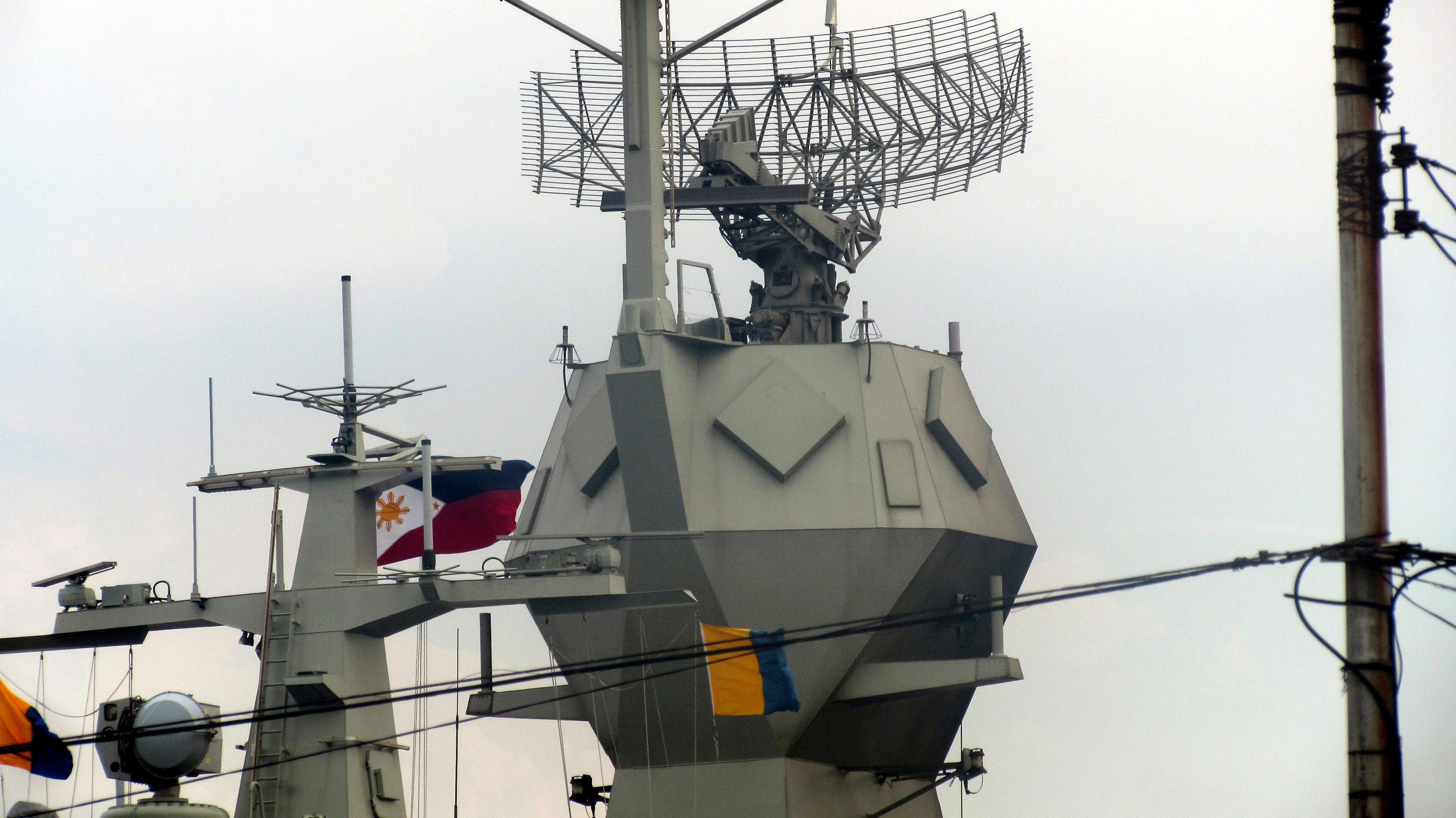
Hey friends. This story comes as a request from several subscribers both here and on YouTube: The UK is buying a fancy radar system from down unda.
So, let’s take a look at why this radar is so cutting edge, specifically compared to American alternatives.
On August 12, in a factory in Canberra, the UK’s Minister for Defense Readiness and Industry stood next to his Australian counterpart and signed a piece of paper committing Britain to seriously exploring whether it should buy its next generation of military radar from an Australian company most Americans have never heard of.
For eighty years, the Anglosphere defense trade has run one way: America and Britain build the exquisite sensors and weapons. Then, Australia buys them, licenses them, and occasionally gets a local production line as a consolation prize for good behavior. Crickey!
What just happened in Canberra actually runs that in reverse.
A radar designed and built by a Canberra company called CEA Technologies, with a UK defense giant along for the integration work, is now being very seriously evaluated to go on British warships, armored vehicles, and eventually aircraft.
You know me; I love a good radar story. And the kick-in-the-pants here is that an Aussie company spent forty years quietly becoming one of the best phased-array radar houses on the planet without anyone noticing.
What Australia and the UK signed on August 12 is a statement of intent, not a purchase order. But it builds directly on commitments both governments made back in June at the Australia-UK Ministerial Consultations, known as AUKMIN, where the two sides first agreed to explore joint development and production of Active Electronically Scanned Array radar capability together.
The four parties in the room, QinetiQ, the UK Ministry of Defense, Australia’s Department of Defense, and CEA Technologies itself, committed to working closely together to figure out how CEA’s radar family gets integrated across British warships, military vehicles, and eventually aircraft.
QinetiQ, the UK’s own defense-technology giant, will handle the integration, testing, and assurance work that turns an Australian radar into something the British armed forces can certify.
QinetiQ’s CEO Steve Wadey said, “Current conflicts keep reminding everyone how much pressure modern air defenses are under, and QinetiQ wants to be the trusted partner bringing this particular capability home to Britain.”
What an AESA radar does
Old-school radar works a little like a lighthouse.
A mechanically scanned antenna physically rotates, sweeping a narrow beam of radio energy across the sky. The radar transmits a pulse, waits for some of that energy to bounce off an object and return, then calculates where the object is based on the direction the antenna was pointing and how long the signal took to come back.
It works remarkably well. Militaries have been finding aircraft this way for decades.
The limitation is the mechanical part.
The antenna has to physically move before it can look somewhere else. If a target sits at one azimuth while the dish is pointed 90 degrees away, the radar has to wait until the antenna comes around again before updating that track. Rotate faster and you get more frequent updates, though you also spend less time looking in each direction. Slow down and you get more energy on each portion of the sky, at the cost of refresh rate.
Radar engineers have spent most of the last century negotiating with that tradeoff.
An Active Electronically Scanned Array, or AESA, changes the architecture completely.
Instead of one transmitter feeding one mechanically steered antenna, the face of an AESA radar contains hundreds or thousands of small transmit-receive modules. Each module produces a tiny piece of the radar signal and can also receive the energy that comes back.
The clever bit is what happens when all those modules work together.
Radio waves have peaks and valleys, just like any other wave. If thousands of transmitters send their signals at exactly the same instant, their energy combines in a predictable direction. Change the timing of some of those transmissions by incredibly small amounts and the waves begin reinforcing one another somewhere else.
The antenna hasn’t moved. The wave has.
We call this phase shifting.
The radar’s computer controls those phase differences across the face of the array, effectively shaping the outgoing electromagnetic energy into a beam and pointing that beam wherever it wants inside the radar’s field of regard.
And we’re talking about extremely small changes in timing. The radar can redirect its attention electronically in microseconds.
Think about what that does to the old rotating-dish problem.
A mechanical radar might sweep past a target, move on, and come back several seconds later.
An AESA can look at one sector, jump to another, revisit a ballistic missile track, scan for aircraft somewhere else, and return to the first target without anything on the antenna physically moving.
In many modern systems, the radar can also form multiple beams or divide its time among different jobs so quickly that, operationally, it behaves as though it’s doing several things at once.
One portion of the radar’s attention might be maintaining a precision track on an incoming missile.
Another is searching a different altitude for aircraft.
Another may be checking a suspicious low-altitude return that could be a drone.
Meanwhile, the radar can continue updating tracks it already has.
This is where AESA stops being merely a better radar antenna and starts becoming a battlefield computer that happens to manipulate radio waves.
The radar can also change the characteristics of those transmissions from pulse to pulse. Frequency, waveform, beam width, power, and dwell time can all be adjusted electronically depending on what the radar is trying to accomplish.
Searching a huge volume of airspace requires one kind of behavior.
Maintaining an accurate track on a ballistic missile requires another.
Trying to pull a small drone out of ground clutter may require something else entirely.
An AESA can move between those tasks without waiting for a giant dish to rotate into position.
A fighter crossing the sky gives a radar time. A ballistic missile descending at several kilometers per second doesn’t.
The radar has to detect the object, establish that the return is real, determine its speed and trajectory, classify the threat, refine the track enough to support an intercept, and keep feeding updated information into the fire-control system while the missile continues moving.
Every second wasted waiting for the antenna to come around again eats into the engagement timeline.
AESA radars can “revisit” the important target much more frequently.
That produces what radar people call a higher update rate: the fire-control system receives a fresher picture of where the target is going.
An interceptor isn’t normally chasing the target from behind. The fire-control system is calculating an intercept point somewhere ahead of it. The better and more frequently the radar updates the target’s position, velocity, altitude, and maneuver, the better that prediction probability becomes.
AESA also offers another advantage that becomes very important once people start shooting back at the radar: Electronic warfare.
Because the radar can change frequencies and waveforms rapidly, it can make itself considerably harder to jam than older systems built around more predictable emissions. A modern AESA can hop around the spectrum, change how it transmits, concentrate energy in one direction, and adapt its behavior when somebody starts trying to interfere with it.
Then there’s reliability.
A mechanically scanned radar contains motors, bearings, gearboxes, rotary joints like on my AWACS, and other components responsible for moving a large antenna continuously. Break something important in that mechanical chain and the radar can lose its ability to scan.
An AESA doesn’t need to spin the antenna to steer the beam.
Each transmit-receive module also operates largely independently. Lose a few modules through damage or failure and the array doesn’t suddenly go black. The remaining modules continue operating, with some reduction in overall performance.
Lose ten modules out of a thousand and you still have a radar.
Modern arrays have also benefited from improvements in the semiconductor material inside those modules.
