Canada and Europe in the Crosshairs: Trump’s Pentagon Is Signaling Retreat and Attack
Unpacking the Pentagon's new National Defense Strategy and what it tells us about Trump's ambitions
The Pentagon’s new National Defense Strategy (PDF warning in case you don’t want this smut downloaded) reads like it wants to fight our allies while assuring our enemies that we won’t confront them.
If that sounds insane… It most certainly is.
The four priorities seem clean and simple: defend the homeland, deter China, push allies to carry more weight, and “supercharge” the defense industrial base.
That appears reasonable. But we need to read the fine print.
In practice, the document telegraphs a worldview where America pulls its commitments inward, pressures partners like they’re overdue on a car payment, and tries to manage our biggest geopolitical adversaries by telegraphing that we won’t confront them.
That combination doesn’t produce strength. It produces gaps. Russia and China don’t need to defeat the United States in a fair fight if they can watch Washington step back, then start “testing” the edges.
This is what makes the strategy feel less like a war plan and more like a negotiation posture, with a military budget attached.
Homeland defense, and the Greenland-shaped tell
This is the most alarming part of the document, which is saying something…
“Defend the US homeland” sounds like the least controversial sentence ever written. It should be. A national defense strategy that doesn’t put the homeland first is basically a pizza box that says “salad.”
But this strategy’s ‘homeland language’ carries a distinct smell of Western Hemisphere hegemony, and it matters. When an administration starts framing “the hemisphere” as a security zone in the same breath as pressure campaigns, tariff threats, or territorial ambitions, it doesn’t reassure allies. It spooks them.
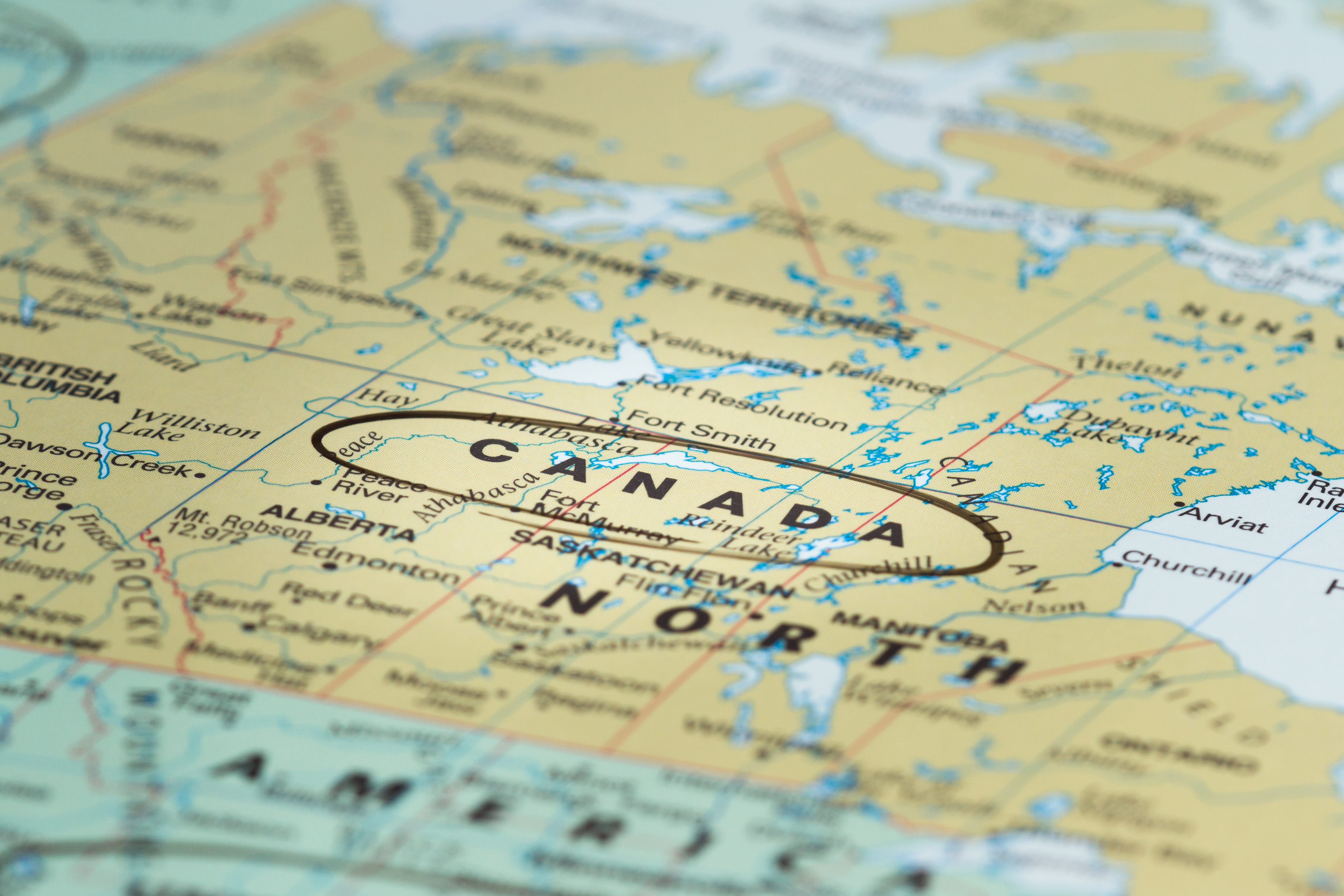
Canada isn’t an explicit “enemy” in the new 2026 National Defense Strategy, but it sits right on the seam line of how the document frames “homeland defense” and “Western Hemisphere” control.
The NDS explicitly treats the hemisphere as the strategic rear area the US intends to secure, and it leans hard on a Monroe Doctrine style posture (“enforce the Monroe Doctrine,” and what it calls a “Trump Corollary” to it).
So why would Canada feel like it’s in the crosshairs?
Because under Trump, anything is possible. The “Venezuela Effect” as I’ve begun to call it, had the very unique effect of both making Trump feel invincible and freaking out a lot of other people in the West.
The US military executed the Maduro raid extremely well. Unfortunately, Trump will think all future land grabs will be as easy. He’s emboldened by the mission’s success. That’s why Greenland was scary, because Trump felt, perhaps for the first time, what wielding an enormous power like the US military actually felt like and I can only imagine it was euphoric for a man with no moral restraint.
We’re in some Handmaid’s Tale shit now.
This is why Canada is looking tempting to Trump, and it’s not just the Tim Hortons Timbits, which I’m personally addicted to.
First, geography. If the Pentagon is prioritizing “defending the homeland,” that means the northern approaches, the Arctic, undersea infrastructure, and the air and maritime corridors that run straight through Canadian space.
In practice, that turns into pressure campaigns about basing, sensors, NORAD modernization, Arctic domain awareness, and border-related security cooperation, because the US can’t “lock down the hemisphere” without treating Canada as operational terrain.
I am alarmed by this, and I’m an American. If I were Canadian, I would be preparing for a conflict. I don’t want to scare anyone up north; but there’s no harm in being prepared, as my Scout leader used to say.
Second, leverage. In a world where Washington is openly talking about coercion as statecraft, Canada becomes vulnerable to squeeze tactics that sit below the threshold of war: trade pressure, defense-spending demands dressed up as “burden-sharing,” and hard bargaining over energy, critical minerals, and industrial capacity.
That’s the part Europeans are already anxious about, and Canada’s not magically immune.
I want to be EXTRA CLEAR here about what Trump could do economically to Canada and Europe that maybe hasn’t crossed people’s minds because they’re focused on US military options and land grabs.
The United States has a significant arsenal of economic tools.
I hope you’re sitting down.
The US could, in a potential future economic conflict with Canada or Europe, theoretically cutoff access to any or all of the following, essentially bringing companies and governments to a standstill:
Cloud and data center infrastructure (AWS, Azure, Google Cloud): Losing access would stall huge chunks of Europe/Canada’s digital economy overnight, because everything from banking apps to logistics to government portals runs on rented US-owned compute and storage.
Email and productivity suites (Microsoft 365, Google Workspace, Slack): This would hit day-to-day business continuity fast, because email, calendars, files, meetings, and internal comms are the nervous system of modern firms and public agencies.
Identity, logins, and enterprise authentication (Entra ID, Okta, Ping): If you can’t authenticate users, you can’t run the company, since employees can’t log into core systems, cutting off work, billing, and operations of thousands of Canadian and European companies.
AI model access and developer APIs (OpenAI, Anthropic, Gemini): A cutoff would freeze many automation, customer support, analytics, and product features that rely on US-hosted models, forcing costly rewrites and slowing productivity gains.
Semiconductor design software and chipmaking pipeline (Synopsys, Cadence, NVIDIA CUDA): Restrictions would kneecap advanced chip design and a lot of high-performance computing, delaying R&D and weakening industrial competitiveness in sectors from autos to defense.
Content delivery, web performance, and DDoS protection (Cloudflare, Akamai, Fastly): Websites, e-commerce, and Canadian public services would get slower and more fragile, and the cost of outages and cyber disruption would spike.
Cybersecurity tools and threat intelligence feeds (CrowdStrike, Palo Alto, Microsoft Defender): You’d see higher breach risk and longer incident recovery times, which translates into real money lost through downtime, ransom, fraud, and regulatory penalties.
Mobile ecosystems and app distribution (Apple App Store/iOS signing, Google Play/Android services, APNs/FCM): Cutting these would disrupt app updates, security patches, and core mobile services, hitting consumer commerce and enterprise device fleets at scale. Are you a Canadian or EU member who owns an Apple or Android device? It could be bricked overnight.
Payments and card networks (Visa, Mastercard, PayPal): Any constraint here is immediate economic pain, because it directly stops retail spending, online transactions, cross-border commerce, and cashflow for businesses.
Core internet governance chokepoints (DNS/registrars, TLS certificate ecosystem, US-based transit/peering dependencies): Even partial disruption raises the cost and risk of doing business online by breaking trust (certificates), reachability (DNS), and performance (transit), which cascades into outages and lost revenue.
Space-based services that bleed into “civilian tech” (Starlink, US commercial EO products, GPS-adjacent controls): Losing these would degrade connectivity, mapping, timing, and situational awareness for transport, energy, agriculture, and emergency response, and the knock-on economic cost shows up as delays, inefficiency, and higher insurance and operational risk.
Now imagine the economic landscape in Canada or Europe without access to any of this.
Scary shit.
The only good news is that this would be a self-inflicted wound hurting US business interests also.
For the record, the EU recognizes its dependence on Silicon Valley for its existence and is taking steps to become more independent. For instance, “W” is a new Eurocentric social media platform launching in early 2026 as an alternative to X (formerly Twitter), designed to combat “systemic disinformation” and enhance Europe’s digital sovereignty. All I can say is good luck preventing it from turning into a right-wing hellscape the way X is today.
There’s also the politics. When Trump publicly floats Canada as a “51st state,” even if he frames it as bluster or “economic” pressure, it poisons the well and makes every routine defense conversation feel like it has a hook in it.
Because in the real world, “homeland defense” is missile defense, counterterrorism, cyber resilience, border security, continuity of government, and critical infrastructure protection. It is not turning Greenland into a property negotiation where the leverage is “nice alliance you’ve got there, shame if something happened to it.”
Even if the Greenland talk never becomes policy, the fact that it shows up as a recurring obsession in the political bloodstream is the point. Allies listen to patterns. Adversaries listen to patterns. Bureaucracies listen to patterns. If the pattern says Washington is willing to threaten friends to get what it wants, then the glue that holds coalitions together starts to fail.
And coalitions are the whole reason NATO exists.
This is also where Russia gets its favorite kind of win, the kind that doesn’t require competence.
Okay, let’s take a deep breath. That was just the first of four line items.
Deter China “through strength, not confrontation,” and the problem with bumper stickers
The second pillar is deterrence in the Indo-Pacific, described as “through strength, not confrontation.”
That phrase sounds good in a speech. It reads like someone tried to workshop “peace through strength” into something fresher, then “Trumped” it all up.
Here’s the thing… Deterrence is a form of confrontation you Pentagon muppets. It is controlled confrontation, bounded confrontation, confrontation with rules, but still confrontation.
If you want to deter China, you do it with forces that can survive first contact, sensors that can see through deception, logistics that can sustain a fight, and a political posture that tells Beijing you won’t fold when the bill comes due.
The document’s phrasing leaves room for the opposite reading: that Washington wants to posture, build capacity, and avoid the kind of firm commitments that reduce Beijing’s options.
That is exactly the kind of shit China likes. It lets them test, probe, escalate gradually, then dare the United States to be the one who “starts” the confrontation.
Taiwan is the obvious pressure point. If the strategy language is interpreted in allied capitals as “we’ll deter, but we won’t confront,” then the deterrent effect weakens.
If it’s interpreted in Beijing as “the US wants to avoid escalation more than it wants to stop us,” then the risk curve shifts.
That doesn’t guarantee war. It raises the odds of coercion. It raises the odds of a blockade scenario. It raises the odds of China trying to win without fighting by using time, economics, and incremental military pressure.
The strategy also leans on the idea that industrial strength can substitute for political clarity. It can’t. Shipyards and missile factories matter, but they don’t answer the question every adversary asks first: will you actually use them.
Burden-sharing, and Europe’s new job title: “you’re on your own”
The third pillar is burden-sharing with allies and partners.
Burden-sharing is not new. American presidents have been yelling about European defense spending since before some NATO members had color television. Europe does need to spend more, build more, and stockpile more.
But the way burden-sharing is framed now feels less like alliance management and more like leverage. It reads like the United States is positioning itself to say: pay up, or maybe we start breaking things.
That posture matters most in Ukraine.
Ukraine is the frontline demonstration of whether the West can defend the basic rule that borders don’t get changed by force. If Russia wins, or even if Russia gets rewarded with land for mass murder, every authoritarian regime takes notes.
The danger here is that burden-sharing becomes a mechanism to threaten Europe through Ukraine.
If Washington wants to pressure European governments on trade, basing, tariffs, or yes, Greenland-related demands, then Ukraine becomes a bargaining chip. Not because Ukraine “should” be one, but because it is one of the few levers that can inflict immediate political pain on Europe.
That would be a strategic gift to Putin. He wants a separated West more than he wants a single city in eastern Ukraine. If the United States hints it might cut support unless Europe complies on unrelated demands, Moscow’s propaganda writes itself.
Europe’s answer, if it’s serious, is to build an independent support pipeline for Ukraine that can’t be turned off by American politics.
That means long-term contracts, ammunition production, air defense procurement, drone and EW scaling, and training pipelines that don’t depend on the mood in Washington.
This is the part where European leaders usually nod grimly and promise action “soon.” Russia hopes they keep doing that.
Supercharging the defense industrial base, the one pillar that actually makes sense
The fourth pillar is “supercharging” the defense industrial base.
This is the most defensible part of the strategy, and it’s not even close.
The United States has real problems here. Shipbuilding capacity is strained. Ammunition production is better than it was, but still not where a major-power competition demands. The supply chain for components, rare earths, energetics, and microelectronics has weak points that a serious adversary will target.
A rebuilt industrial base does three things that matter.
First, it makes deterrence real, because deterrence is partly the enemy’s belief that you can replace what gets destroyed.
Second, it shortens wars. A country that can surge production can impose costs faster than an adversary can absorb them.
Third, it reassures allies. An America that can build is an America that can lead, because leadership is not just speeches. It is sustained support, over time, at scale.
The catch is that industrial policy is slow, and wars aren’t. You can’t build a 155mm production surge overnight. You need contracts, workforce, machine tools, and stable demand that survives election cycles.
If the broader strategy is signaling retreat while the industrial base rebuilds, then you get a dangerous gap period: less political commitment now, with stronger production later.
Adversaries love gap periods.
These four pillars share a common weakness: they treat relationships like transactions.
That is not how alliance warfare works. It is not how authoritarian regimes calculate risk. And it is not how Ukraine survives.
Ukraine survives because it fights like a modern military and thinks like a stubborn nation. It absorbs the blow, adapts faster, and hits back where Russia is weak. It doesn’t win by promising it might do something later. It wins by doing it now, repeatedly, and at scale.
If Washington wants a strategy that actually deters, it needs to stop treating multi-generational allies like punching bags.
It needs to say, clearly, that NATO territory is not negotiable, and that threatening allies is not “strength,” it is self-harm.
It needs to treat Taiwan deterrence as a commitment problem, not a branding problem.
It needs to treat Ukraine as the central test of whether the West still exists as a coherent idea.
Right now, this strategy reads like an attempt to look tough while keeping options open. That is exactly the posture that invites the very confrontations it claims it wants to avoid.
Слава Україні!


A very enlightening analysis.
Canada and the EU are not defenseless. Trump TACO'd from his "51st" and Greenland for a reason and it's safe to assume it wasn't because he was playing 3D chess to distract from the Epstein Files or because he pivoted. It's largely because Canada/EU holds a significant amount of US Treasury debt (much more than China). Carney's threat to release that debt causing Trump to backtrack on the 51st rhetoric last year, it caused him to backtrack on using military force for Greenland this year. A unified action (Japan, the largest holder of US debt, probably would stay loyal to US) would tank the US economy and USD. Even Trump was made to understand this. We are talking $20 for a gallon of milk, riots in the streets type of economic depression
Unfortunately all this has done is push Canada & EU towards China as a hedge. Trump Administration has accelerated the China Century