


Some stories hit the inbox and make you stop mid-scroll. China gaming out a Starlink blockade over Taiwan was one of those.
My first reaction was the usual: Of course they did.
My second was more worrying: this is the first time Beijing’s think-tank class has openly modeled how to shut down a Western satellite constellation over a contested battlespace.
Not degrade it. Not harass it.
Blanket it.
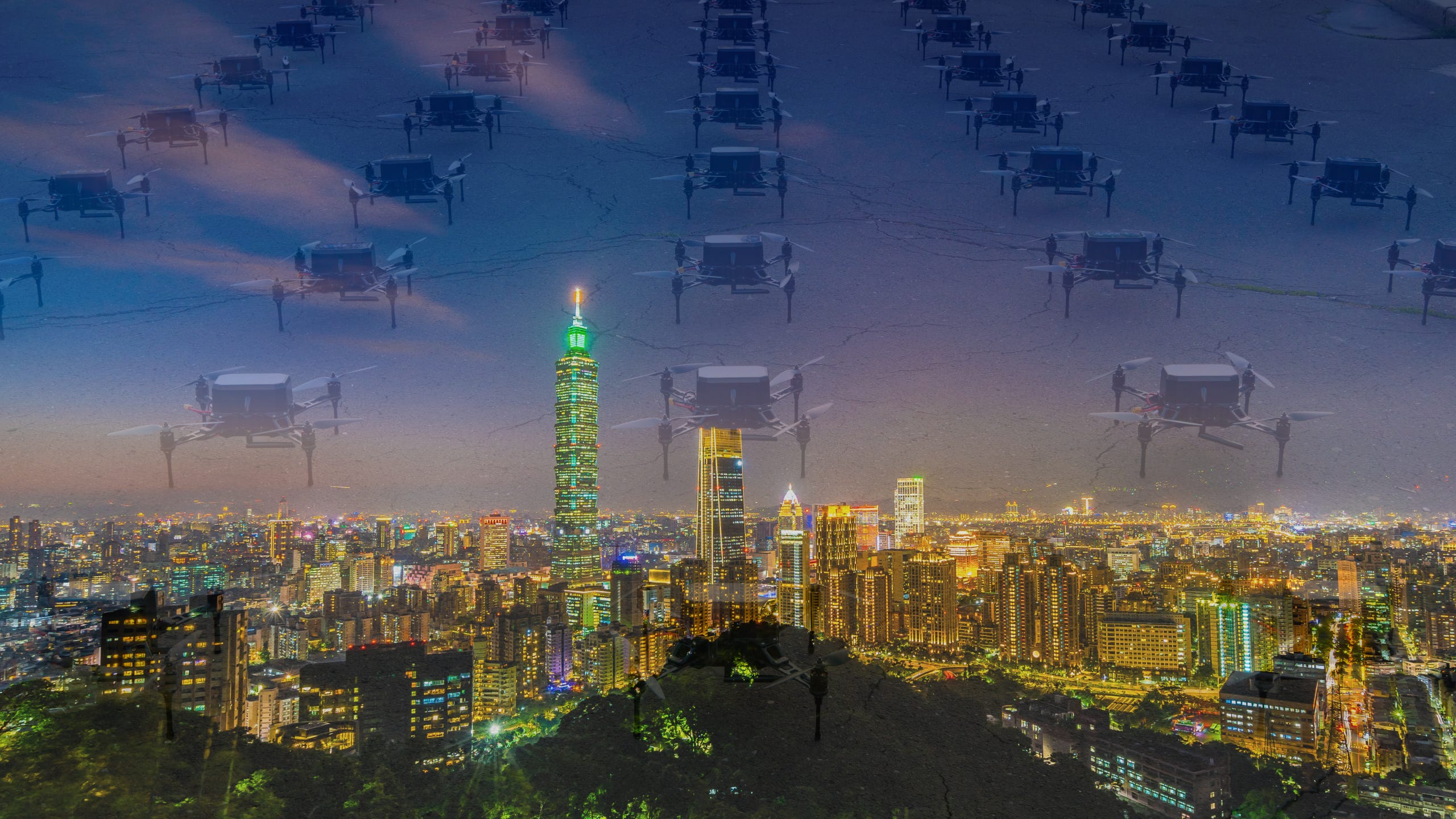
If the reporting is accurate, Chinese military scientists ran a twelve-hour simulation over a Taiwan-sized grid and concluded they can build what they call an electromagnetic shield, a sky-wide jamming dome, by flying roughly 1,000 to 2,000 small drones equipped with synchronized EW payloads.
A wall of buzzing electronics hundreds of miles across, all pointed upward, all blasting the same hostile message into the sky.
In other words, Beijing has stopped pretending Starlink isn’t a threat and has started planning how to shut it off.
And for anyone who has studied the first phase of a possible Taiwan invasion, this development fits neatly into China’s opening-salvo doctrine: sever external communications, blind the island, and then move fast enough that Washington wakes up to a fait accompli.
But could this work in real life? Eh, I’m not so sure. But they definitely get an “E” for effort. Read on, my friends.
The “Electromagnetic Shield” Concept
What China’s researchers are proposing isn’t jamming as we’ve come to know it over Eastern Europe. It’s an atmospheric curtain; best thought of as an artificial weather system made of electronic noise.
Or a Faraday cage made out of drones…
Zhejiang University and the Beijing Institute of Technology are the factories where the PLA sends its more ambitious concepts to be sharpened into something that looks scientific enough to publish and threatening enough to brief to senior leadership.
Their starting point is simple: Starlink is built to survive disruption. It moves. It reroutes. It heals itself. It laughs at the idea of a single high-power jammer. It’s also impervious to kinetic anti-satellite weapons simply because there are so many small satellites.
Maybe ‘impervious’ is the wrong word. Anti-satellite missiles are so rare at the moment that China would need more than they have in stock to kill every Starlink satellite.
So instead of trying to break the constellation, China’s model focuses on breaking the connection between the ground and the sky. If you can saturate the airspace above Taiwan with enough coordinated interference, you don’t need to touch the satellites at all. You simply make it impossible for receivers on the ground to hear them.
The architecture the researchers describe looks like a digital minefield suspended over the island. Each jammer occupies a spot inside a massive three-dimensional grid, spaced at intervals designed so their interference wave overlaps without canceling itself out.
That spacing, three to six miles, lines up perfectly with what medium-class drones can manage while carrying EW payloads. Fly enough of these drones high enough, and you create a vertical wall of static that even Starlink’s adaptive modulation struggles to punch through.
The numbers are where the concept becomes striking. Under clean lab conditions, the simulation says the blockade works with just under a thousand nodes.
But laboratory conditions don’t exist in a shooting war. Drones crash. Batteries fail. Weather matters. Some nodes will be shot down, some will drift out of position, and some won’t power up at all. That’s why the operational estimate doubles.
Two thousand drones to create a jamming canopy big enough to smother the island’s uplinks.
The thing is, China can produce two thousand drones without breaking a sweat. Their industrial base rolls these things out like consumer goods. And they don’t treat them as precious assets. They treat them as ammunition. You can lose a few hundred and keep going. You can lose half and still maintain coverage long enough to cause serious trouble.
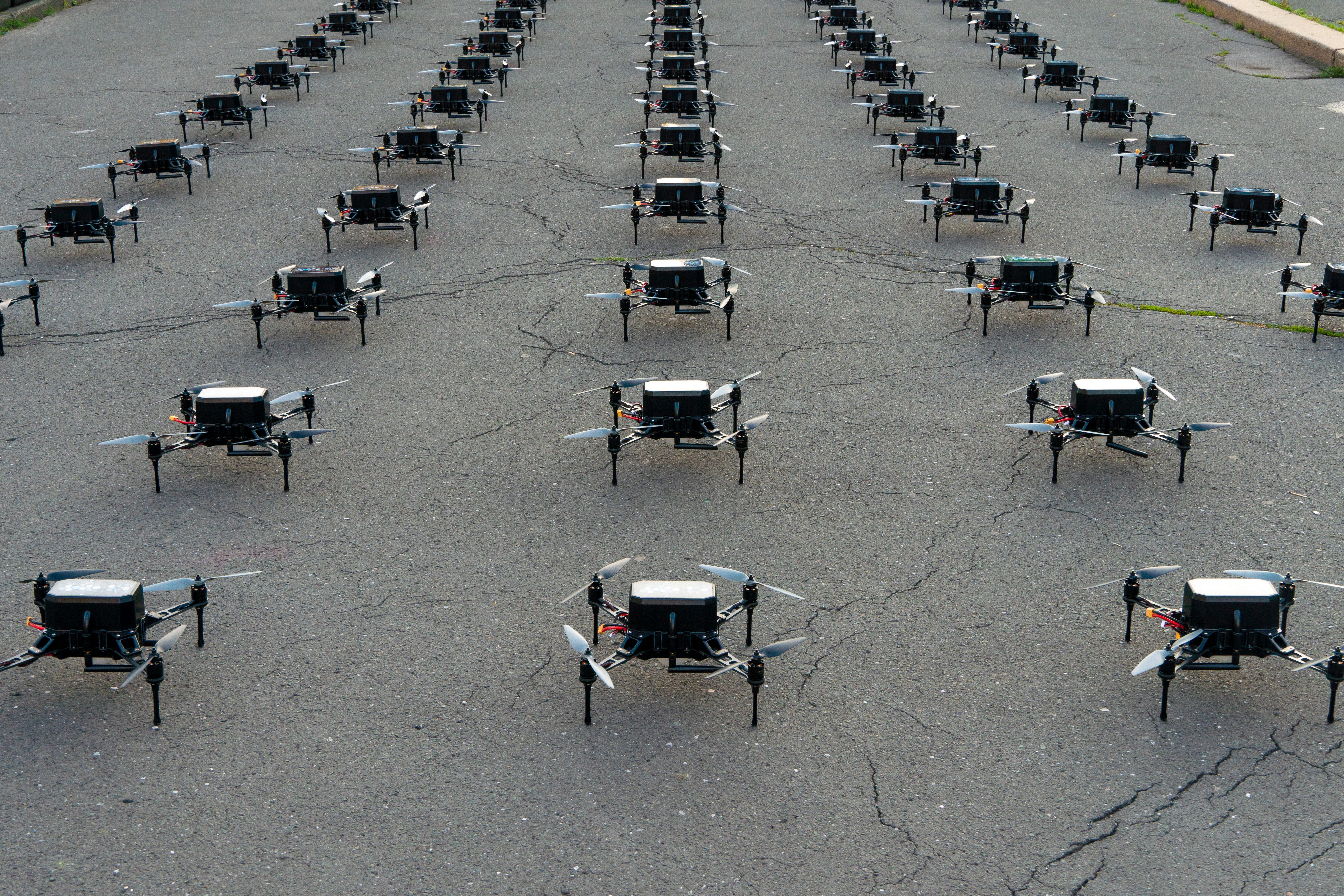
This is the heart of the concept: a jamming network so large and disposable that Taiwan can’t kill it fast enough. Not permanently… just long enough for Beijing to do whatever it plans to do next.
