


I’ve been contacted by friends and family in Canada, and more recently by some concerned Danes, worried about how Americans plan to contain Trump’s wilder impulses.
The Maduro Affair, followed swiftly by the Greenland push, seriously put allies on notice that the United States under Trump is a wildcard not to be trusted.
Usually, my response is something along the lines of: Look, there are early signs of a blue wave sweeping through the House of Representatives (although admittedly not the Senate). Still, even this would seriously restrict Trump’s ability to act unilaterally in late 2026.
Their response to this statement is the same: “But Wes, what if he just cancels the election?”
Well, then we are officially in Civil War II territory.
Still, I think it’s worth talking about what a bad-faith administration could try to do at home if midterm math looks ugly and the president decides democracy is optional.
I’m going to keep this in the realm of analysis, not a how-to manual for political arson. The goal here is to map the pressure points, then lay out how Americans can shut the whole thing down with lawful, boring, effective actions.
And make no mistake, Americans are on the hook here to fix this fuckup, or risk going down in history as the generation that ended democracy.
“Unlimited immunity” isn’t a crown, but it is a problem
The Supreme Court’s 2024 presidential immunity decision created a new, fuzzier line between “official acts” and everything else, and it raised the stakes around how a determined president might use lawful authorities in bad faith.
The Brennan Center for Justice called it “an affront to democracy and the rule of law.”
What the Court did, in plain English, was redraw the map around presidential accountability. It carved out absolute immunity for a president’s “core” constitutional powers, created presumptive immunity for other “official acts,” and left “unofficial acts” exposed. That sounds clean until you remember that real life doesn’t come with color-coded tabs.
A motivated White House can take actions that look like governance on the surface, then dare everyone else prove they weren’t.
Strictly speaking, a President could now theoretically attempt to cancel an election with no fear of prosecution, assuming he did it under the auspices of “fraud” or “foreign interference.”
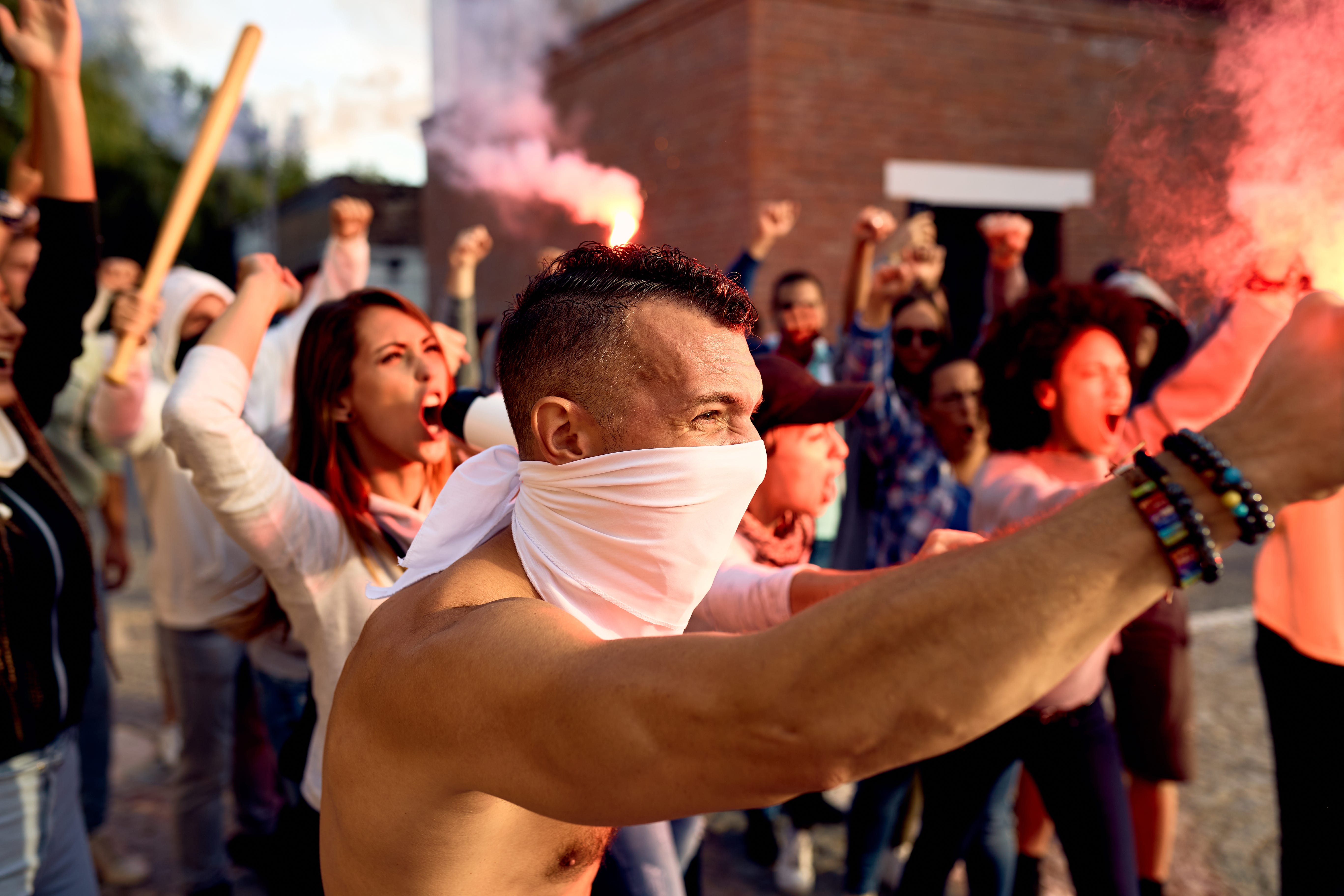
But I think even Trump understands that this would result in some sort of public uprising; a soft civil war to ensure the will of the people is heard.
Plus, as I’ll explain later, US federal elections actually live in state-controlled jurisdictions, which might be our only saving grace.
In reality, I don’t think there will be a cartoonish moment where Trump cancels elections with a Sharpie. His administration lives in the gray zone where an administration uses lawful authorities aggressively, then wraps them in the protective language of “official duty.”
If the president knows criminal exposure is harder to attach, he can push closer to the edge of despotism, and he can do it repeatedly.
The ruling also matters because of friction, not force.
In the real world, a lot of democratic stability comes from speed and clarity: people accept outcomes because institutions respond quickly and decisively.
Immunity doctrine slows everything down. Each disputed act becomes its own mini-case, its own appeals ladder, its own procedural mud pit. Even when the president loses in the end, the delay is the point.
Delay eats legitimacy. Delay crowds out oxygen. Delay turns “that’s nonsense” into “well, I guess we’ll see.”
There’s another underappreciated part of the decision: it raises the cost of fact-finding. The Court signaled that courts must be cautious about probing the president’s official conduct, and it constrained how “official acts” can be used in a prosecution.
You don’t have to be a cynical operator to see the implication. If you can’t easily drag official conduct into court as evidence, then proving corrupt intent gets exponentially harder.
You’ve basically told future prosecutors, “Good luck, and bring snacks.”
That shifts the battlefield away from clean legal accountability and toward institutional resilience. It puts more pressure on inspectors general, career civil servants, whistleblower channels, congressional oversight, and rapid civil litigation.
It also puts more weight on state-level election administration, because states run the machinery of voting and counting. A president can throw sand in the gears, but he can’t personally count ballots in Maricopa County.
And since I’m writing for adults who’ve watched the last decade unfold in real time, here’s the hard truth: you don’t need a single decisive power grab to damage an election.
You just need uncertainty at scale.
You need enough lawsuits to make normal people tune out. You need enough conflicting statements that half the country assumes the other half cheated. Immunity doctrine, as the Court framed it, increases the incentives for exactly that kind of chaos generation.
Congress did tighten parts of the federal count process after 2020, including raising the threshold for objections and clarifying the Vice President’s role as ministerial. That helps at the finishing line. But the immunity ruling affects everything upstream, where an administration might try to turn routine executive actions into a rolling legitimacy crisis.
The crown isn’t real. The fog is.