Iran is Winning. We Need to Get Out Right Now
America has been here before, twice in living memory and once in a conflict that killed 58,000 Americans.

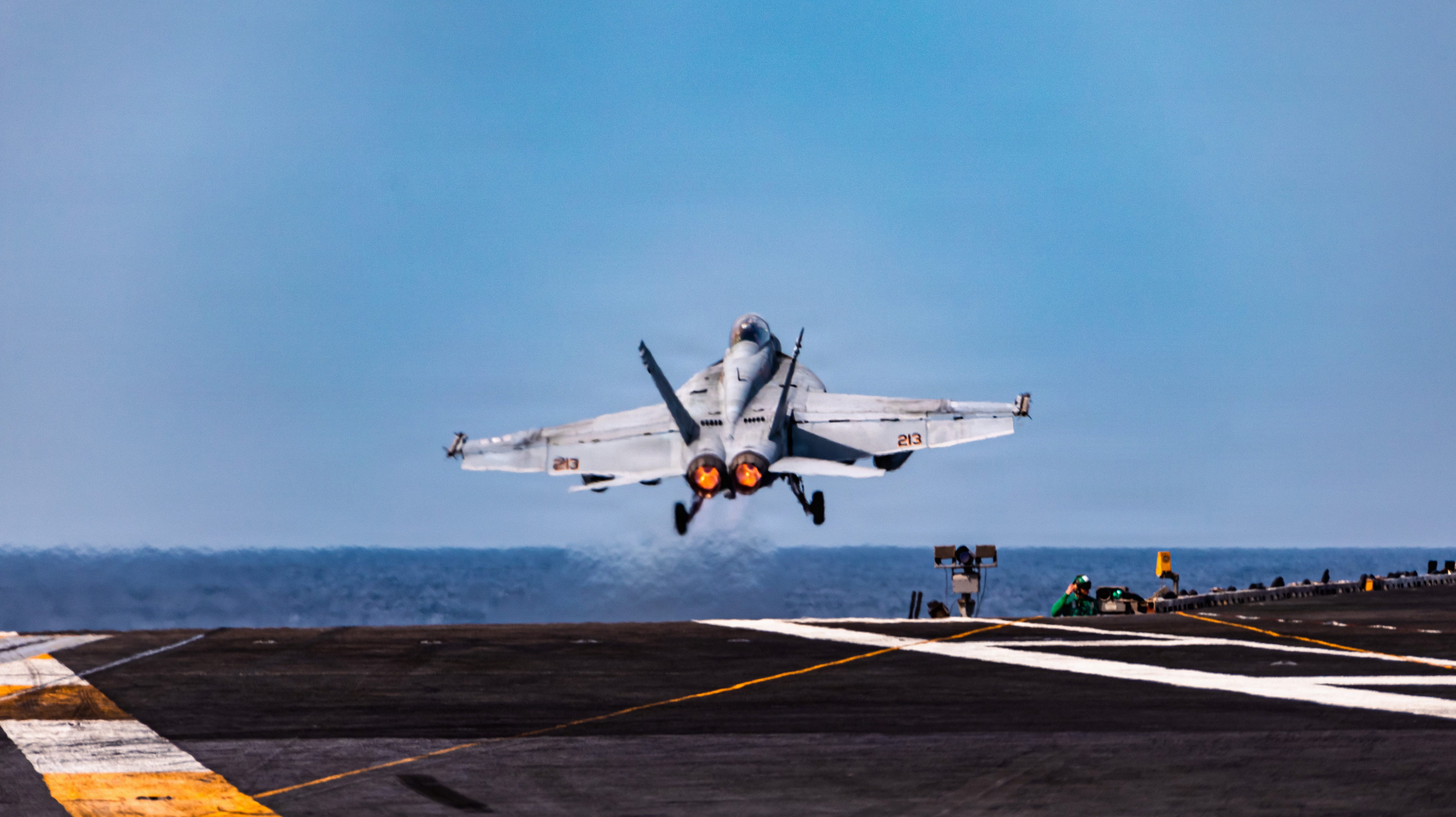
Three weeks into this war, the US military and the Israelis have done what the US military usually does when told to break things fast: they’ve performed with frightening competence.
Like the unrestrained power of a terrible Greek god, wielded by a three-year-old with no restraint and a short memory.
Iran’s air defenses have been hammered.
Missile infrastructure has been hit repeatedly.
Naval assets have been sunk.
Command nodes, industrial sites, and internal security targets have taken a beating.
Great!!!
Part of me has been wanting to see the Iran regime get its ass kicked for a while now. After all, where do you think most of the roadside bombs and IEDs came from that killed so many of my brothers and sisters in Iraq?
But aside from the fleeting sugar rush of watching my military move fast and break things, what is the actual strategy?
Defense Secretary Pete Hegseth says Washington’s goals remain the same as they were on day one: dismantle Iran’s missile launch capability, degrade its defense industry and navy, and prevent it from obtaining a nuclear weapon.
Oh, that’s comforting.
Actually, that, my friends, is a very clear list of military tasks. It is not a strategy.
That distinction is important because I’m not writing this as some campus pacifist who just discovered the word “peacenik.”
I’m writing this as a veteran who respects the hell out of the people executing these missions and opposes this war anyway. Those two positions are not in conflict. In fact, they belong together.
The more capable your military is, the more obligation civilian leadership has to use it for something smarter than political improv with bombs.
And that’s the problem. Trump has a target list. He does not appear to have an end state.
This is the core issue.
Reuters reported that major European allies are openly refusing to join the war, saying they were not consulted and do not understand the objective.
Yeah? I don’t blame them. Iran is a massive distraction from real, long term European security and the ongoing war in Ukraine.
Why in the hell should any European country waste munitions and, more importantly, soldiers and airmen in Trump’s Tehran adventure when Putin is more of a threat now than ever? Ukraine must not be sacrificed on the alter of Trump’s ego.
Europe saying, “Nah bro, we’re good” is the wise behavior of allies looking at Washington like it just announced a surprise home renovation with dynamite.
What’s worse, it’s almost like the gool ole’ U S of A has forgotten the lessons of Vietnam and the Global War on Terror.
Iran understands something American policymakers keep forgetting: in a war like this, survival is a form of victory.
Tehran does not need to win in the conventional Hollywood sense. It does not need to defeat the US Air Force. It needs to remain in the field, preserve enough retaliatory capability to keep costs rising, fracture the coalition, rattle energy markets, and wait for American political will to sag under the weight of inflation, casualties, and strategic confusion.
And if you want proof that Iran’s strategy is not theoretical, look at the Gulf.
Iran retaliated against energy infrastructure. Strikes on Qatar’s Ras Laffan complex wiped out 17% of Qatar’s LNG export capacity and could take up to five years to repair.
Reuters also reported wider damage across Gulf energy infrastructure, force majeure declarations, disrupted refining, and major shocks to global markets.
That is exactly how a weaker power fights a stronger one in 2026, which, by the way, is the same way they fought in 1966 and 2006. Not by beating the stronger power head-on, but by making the homeland pay for the fight.
Vietnam Called. It Wants Its Lessons Back.
America has been here before. Twice in living memory, and once in a conflict that killed 58,000 Americans and reshaped a generation’s relationship with its own government.
Vietnam is the case study that should be mandatory reading for every civilian policymaker who has ever attended a targeting meeting.
The United States dominated Vietnam militarily for a decade. It flew more sorties, dropped more ordnance, conducted more raids, and serviced more targets than in any previous conflict in American history.
The body count metrics looked good. The strategic situation kept deteriorating.
The reason isn’t complicated.
North Vietnam needed to remain in the field until America’s domestic political support collapsed under the weight of casualties, costs, and the slowly dawning realization that there was no clean finish line.
Ho Chi Minh’s strategy was simpler and more durable than America’s. He knew it.
American commanders, fixated on operational metrics that kept showing progress, struggled to understand why progress kept failing to translate into victory.
I can almost hear General Westmoreland now…
“But President Johnson, just tell the American people how successful our bombing of the North was this week. That should cheer them up.”
The Global War on Terror, my generation’s war, repeated the pattern with eerie fidelity… Like walking through a thrift store and finding a priceless pair of Vietnam-era Klipschorn Hi-Fi speakers.
Most of my fellow Post 9/11 veterans right now are the real-world version of that Leonardo meme from Once Upon a Time in Hollywood, pointing at the screen. Because we’ve seen this movie before. We recognize the danger.
For two decades in the desert, Washington conducted raids, disrupted networks, killed leaders, and delivered press briefings that glowed with action Jackson verbs like “degrade, deny, dismantle, disrupt.” The machine kept moving. The political outcome kept slipping away.
The Taliban just needed to outlast American political will in a conflict where the American public never fully understood what victory was supposed to look like.
I remember the day we left Afghanistan. It was August 20, 2021. I remember thinking to myself, “huh, so this is what the fall of Saigon felt like for my father’s generation.”
It didn’t feel good.
Still… We built a warfighting culture across those two decades that became extraordinarily efficient at hunting nodes and extraordinarily uncomfortable answering the question “then what?”
Our special forces guys got so good at the tactical layer that we started mistaking tactical excellence for strategic progress.
Raids increased. Briefings improved. The fundamental political question never got a clean answer.
Iran is built to exploit exactly that pattern.
It’s a regime with deep institutional experience in strategic patience, proxy warfare, cost imposition, and the long game. It watched the United States in Vietnam. It watched the United States in Iraq and Afghanistan.
It drew conclusions.
Two Choices. One of Them Is Actually Available
There are exactly two paths forward in Iran. Not three. Not five with asterisks. Two.
The first is to “declare victory” right now, withdraw American forces from the direct fight, and hand whatever comes next to Israel.
The second is to commit a minimum of 200,000 US ground troops, accept years of occupation, absorb tens of thousands of American casualties, and attempt to impose a post-war political order on a country of 90 million people across some of the most difficult terrain on the entire planet.
That’s it. Those are the options.
Everything else like sustained air campaigns with no end state, “thousands of troops” for limited missions, ambiguous deployments to protect Kharg Island or the Strait of Hormuz, is just option two with a polite euphemism attached to it.
The moment American boots are on Iranian soil in any number above a small special operations footprint, you’re in a ground war whether you call it that or not.
A Quinnipiac University poll found 74 percent of registered voters oppose sending ground troops into Iran. A CNN poll put it at 60 percent opposed, 12 percent in favor; a five-to-one margin.
Even among Republicans, just 27 percent favored ground troops in the CNN poll and 37 percent in the Quinnipiac survey.
A steady 65 percent of Americans say the Trump administration has not clearly explained the war’s goals, and more than six in ten say the number of US casualties so far has been unacceptable given the objectives and costs.
The public is already losing patience with an air war. The idea that the same public will sustain political support for a ground invasion and multi-year occupation of Iran is not a serious proposition.
Yeah right. It’s not happening.
And a president who campaigned on ending forever wars, who is watching his approval ratings sink on the Iran question specifically, who has midterms coming and a coalition already fracturing over this conflict, that president is not going to order 200,000 troops into Iran.
Which means option two is off the table. Which means we’re left with option one.
Here’s the case for it, and I want to make it seriously rather than as a retreat.
The US Air Force has conducted the most consequential degradation of a regional military power since Desert Storm.
Iran’s integrated air defense network has been systematically dismantled.
Its navy is largely on the sea floor.
Its ballistic missile production infrastructure has been struck repeatedly.
Its nuclear program has been set back in ways that analysts are still assessing.
The senior leadership of the regime is dead or in disarray.
By any honest accounting, US and Israeli airpower has set Iranian military capability back by at least five years, and depending on how thoroughly the defense industrial base was hit, potentially longer.
That is a genuine military achievement. It’s also probably the ceiling of what airpower alone can deliver without transitioning into a ground phase that the American public has clearly said it will not support.
Let Israel handle whatever comes next inside Iran’s borders. Israel has the most acute threat perception, the most direct strategic interest, the most operational experience against Iranian targets, and, critically, the domestic political will to sustain operations that Washington currently lacks.
Israel doesn’t need American ground troops in Iran. It needs American resupply, American intelligence sharing, and American diplomatic cover. That’s a sustainable arrangement. A joint occupation of Iran is not.
Declare victory. Leave.
We’ll even loan Trump the “Mission Accomplished” banner that Bush used in 2003…
That’s why I oppose any talk of a ground invasion. Not because the military can’t fight. Not because American troops would fail in the tactical sense. They wouldn’t. They’d do what they always do. They’d adapt, improvise, and perform with professionalism under insane conditions.
That’s exactly why sending them into Iran without a credible political end state would be unforgivable.
Let me say that plainly: a ground invasion of Iran would be one of the dumbest decisions this country has made in my lifetime, and that’s saying something...
Iran is a country of roughly 90 million people, impossible terrain, hardened ideology, internal repression networks, proxy relationships, and decades of preparation for exactly this kind of conflict.
You do not invade a country like that with Truth social confidence and a few thousand fucking Marines. You invade it with a massive force of hundreds of thousands of souls and the willingness to own the aftermath for years.
And that, friends, is the whole war.
The US military is executing with excellence. I want to be crystal clear about that. The people doing the mission are not the problem. The institution’s tactical competence is not the problem.
The problem is that Trump appears to be doing what too many presidents have done before him: using military force as a substitute for strategy, then hoping the explosions sort out the politics later.
They won’t.
They never do.
Long-time readers will remember when I said the Venezuela operation went so cleanly that it would embolden Trump; fool him into thinking that every military option would be as painless.
Trust me, dude. Iran is not Venezuela. You’re about to bite off more than you can chew.
If Washington has no clear answer beyond “keep bombing until good things happen,” then Iran already has its path to victory. Survive.
Wait for America to remember, too late, that it never defined the political finish line.
I’ve worn the uniform in two branches. That’s why I have no patience for leaders who treat military force as the first option in international relations. It is, and always should be, the last option in a civilized society.
If you’re going to use force, you owe the country a real strategy, a real end state, and an honest accounting of what comes after the first burst of operational success.
Trump has not provided that.
And until he does, every additional step toward a ground war in Iran looks less like strength and more like the opening chapter of yet another American mistake.
Don’t forget Ukraine.
Слава Україні!


Please don't hesitate to report comments that violate basic civility, good order, and discipline. Reported comments are sent to me for review, and I’ll remove them or ban users when necessary. If your opinion is that a ground invasion of Iran is essential to US national security, we can respectfully disagree. But if someone can’t manage basic manners, you're out dawg. Have a great air force day!
Interesting point here: «By any honest accounting, US and Israeli airpower has set Iranian military capability back by at least five years, and depending on how thoroughly the defense industrial base was hit, potentially longer.» I am not going to quibble over four, five, even ten years. Iran has also lost proxies around the Middle East. So yes, you could declare victory. Now. Because the costs are after all relatively small and the time expended on this short. But if you continue the bombing the law of diminishing returns would also hit you. Three more weeks wouldn’t give similar increase in gains, but likely similar pains. And continued time use which makes the gains less impressive and the losses (which will accrue) bigger. So it is definitely time to get out of Dodge. But I afraid it will not happen. Bibi wants more. Iq47 is angry for something. Inertia creeps in. And also, while I agree that the results are significant people’s expectations were bigger. Regime change… the overthrow of the mullas and the return of the king. Uprising of the Iranians. Nothing of this has happened. So while the military gains are immense the political not. Sigh. I really wish they could follow your advice. They will not. And one more reason. Pete Hegseth hasn’t gotten Armageddon yet. And boy does he want it.