



This article is one of two weekly exclusive articles for my paid subscribers. Thank you for continuing to fund independent analysis with a moderate dose of pro-Ukrainian/ anti-authoritarian humor.
Ukraine doesn’t have one air-defense problem. It has three, stacked on top of each other.
First, Russia keeps throwing mass at the system. Drones, cruise missiles, ballistic missiles, decoys, oddball profiles, weird timing, and enough nightly volume to turn even a decent air-defense network into a math problem with sirens.
Second, interceptors are finite. The Middle East has turned into a PAC-3 vacuum cleaner. Reuters reported this month that the Iran war is already diverting attention and missiles toward Gulf defense, right when Ukraine still needs Patriots to protect its energy grid and military infrastructure.
Third, and this is the one that matters most, Ukraine’s air-defense network is still a patchwork.
Don’t get me wrong… It’s a very good patchwork and the Ukrainians are constantly improving and unifying it through clever software solutions.
But look at the traditional air defense picture in Ukraine: Soviet-era S-300s. American Patriots. Norwegian NASAMS. German IRIS-T. Each system has different sensors, different communication protocols, different interceptor types, and different command networks.
They were designed by different countries for different doctrines, and they don’t naturally talk to each other. Ukrainian operators are essentially running multiple different air defense systems simultaneously while trying to build a unified picture of the aerial threat environment and no automated way to coordinate which system engages which threat.
What’s worse, Russia figured out how to exploit this architecture. Moscow starts an air raid with cheap Shahed drones specifically designed to force Ukraine to spend expensive Patriot interceptors.
Once Ukrainian air defense units have burned through munitions and soldier alertness against the drone wave, Russia then launches ballistic and cruise missiles behind them. I’m oversimplifying, but by that point, the expensive interceptors are depleted and the incoming missiles have a clearer path.
That tactic has been working. The September 2025 strike that sent 818 weapons at Ukraine in one night was the culmination of months of Russia learning exactly how to sequence its attacks to exhaust Ukrainian interceptor stocks before the lethal payloads arrive.
Ukraine has reached parity with Russia in drone numbers, but remains behind in missiles and air defense systems, as the country lacks the industrial base and engineering knowledge, specifically surrounding radars, to create its own systems.
Drones Ukraine can build. Radars and integrated command architecture, the systems that tell you what’s coming, from where, and what to shoot at it, those require more time and engineering depth that Ukraine is trying to build under fire.
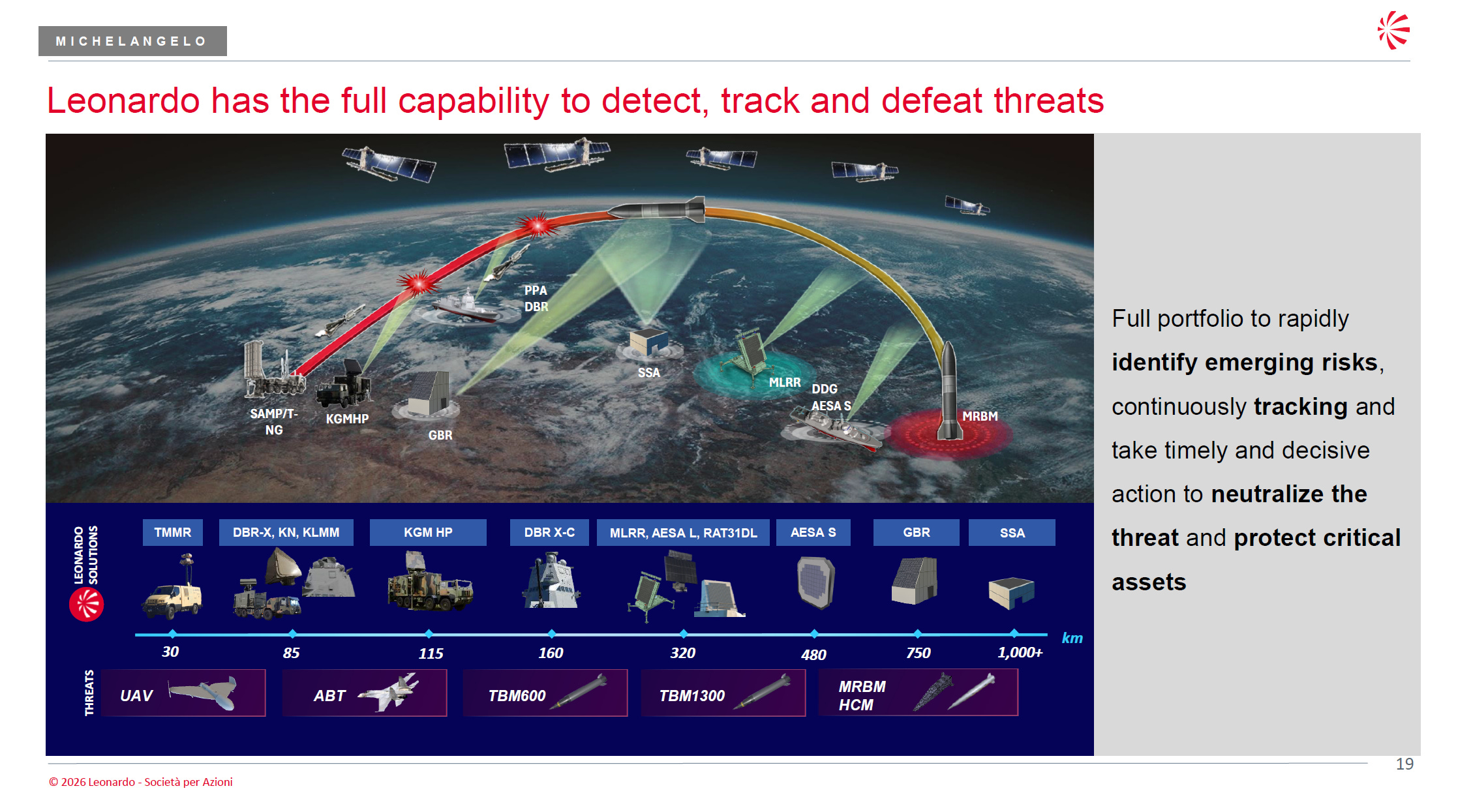
That’s the gap Italy’s Michelangelo is designed to fill.
