


Russia built the city of Severodvinsk to outlast the apocalypse.
It sits up on the White Sea, roughly 1,500 kilometers from the nearest Ukrainian-held ground, wrapped in cold water and empty tundra and a Cold War air-defense network built to guard the single most valuable industrial site in the Russian military.
The shipyards there build Russia’s nuclear submarines.
There is exactly one place on Earth that does that job for Moscow, and this is it.
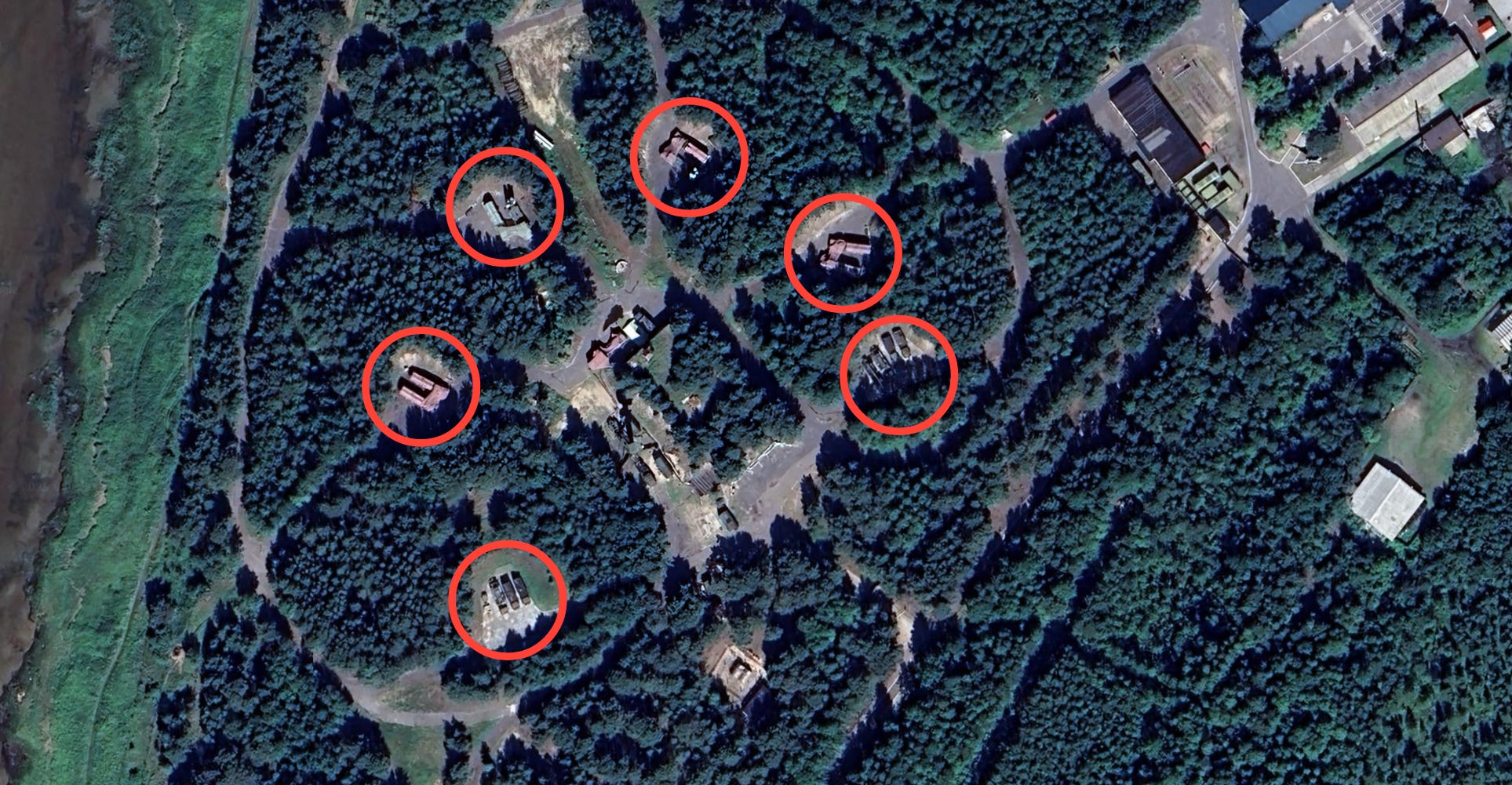
The shipyards are still standing but much of the air defense that was supposed to protect them is not. It’s essentially unguarded.
Satellite imagery analyzed by the Barents Observer shows that at least two dozen mobile S-300 and S-400 launchers, along with their fire-control radars, reload vehicles, and support equipment, have quietly vanished from the positions ringing Severodvinsk since 2024.
They almost certainly went south, into the war, where Russia keeps running out of them.
And here’s the funny part: Ukraine has never fired a shot at those shipyards. It may never bother to. It has already forced Russia to weaken their protection anyway, which might be the more impressive achievement.
Let me walk you through how a country loses the defense of its nuclear crown jewels without the enemy ever showing up.
Distance used to be Russia’s best weapon. Ukraine broke it.
For most of history, Russia treated its own size as a kind of armor. It’s the same armor that swallowed Napoleon’s Grande Armée in 1812 and froze Hitler’s Wehrmacht solid outside Moscow in 1941, two of the most powerful militaries of their day, undone less by Russian firepower than by the sheer, punishing distance between the border and anything worth taking.
Both armies learned the oldest lesson on the continent the hard way: that Russia is simply too big to conquer by marching, and Moscow has spent the two centuries since assuming that vastness would always cut in its favor.
The really precious things, like the strategic bomber bases, the submarine yards, the deep interior industry, all sat comfortably far from a frontline hundreds or thousands of kilometers away.
You can’t bomb what your enemy can’t reach, and for a long time Ukraine simply couldn’t reach.
That assumption is dead now, and Ukraine killed it methodically.
In early July, Ukrainian drones hit the Omsk refinery in western Siberia, around 2,700 kilometers from Ukrainian-held territory, the deepest strike of the war.
Operation Spiderweb reached strategic bombers at Olenya up in the Arctic and at Belaya in Siberia.
Ukraine has put drones over Moscow, over Tatarstan, and over targets nobody in the Kremlin thought were on the board a year ago.
Once you’ve proven you can range that far, you’ve told every base commander across eleven time zones that his facility might be next, and every one of them starts asking for air defense.
That’s the trap. Russia now faces credible threats spread across more territory than its finite pool of long-range air defense can possibly cover at once.
So, it has to choose, and the satellite pictures around Severodvinsk are what a hard choice looks like from orbit.
