Russia’s Newest Kh-101 Cruise Missile Upgrade Points to Chinese Help
Several large news outlets are claiming Russia stole this technology, but the truth is more troubling
Hey friends.
A Facebook user posted a video of a burnt engine fragment last week, and within about forty-eight hours the internet had decided General Electric is providing Russia with secret engine components.
Here’s the sequence, because it’s a perfect little case study in how bad tech journalism gets made these days.
Look, I don’t want to talk down to anybody; I’m not usually the smartest guy in the room, but I just want to say this is particularly egregious.
Let’s start here: Someone going by Zampotekh Omelyanovich shared footage of a recovered Kh-101 cruise missile engine, manufactured in late 2025 and apparently pulled from wreckage after a strike. I want to be clear: this guy is not the issue; it’s what the mainstream media outlets did with his post afterwards.
By the way, the Kh-101 and Kh-102 trace their lineage back to the Soviet-designed Kh-55 cruise missile, one of the USSR’s primary air-launched nuclear-capable weapons during the Cold War.
Development of the modern Kh-101 family began after the Soviet collapse, with flight testing reportedly starting in 1995. The Kh-101 carries a conventional warhead, while its nuclear-armed counterpart is designated the Kh-102. Externally, the two missiles are nearly identical.
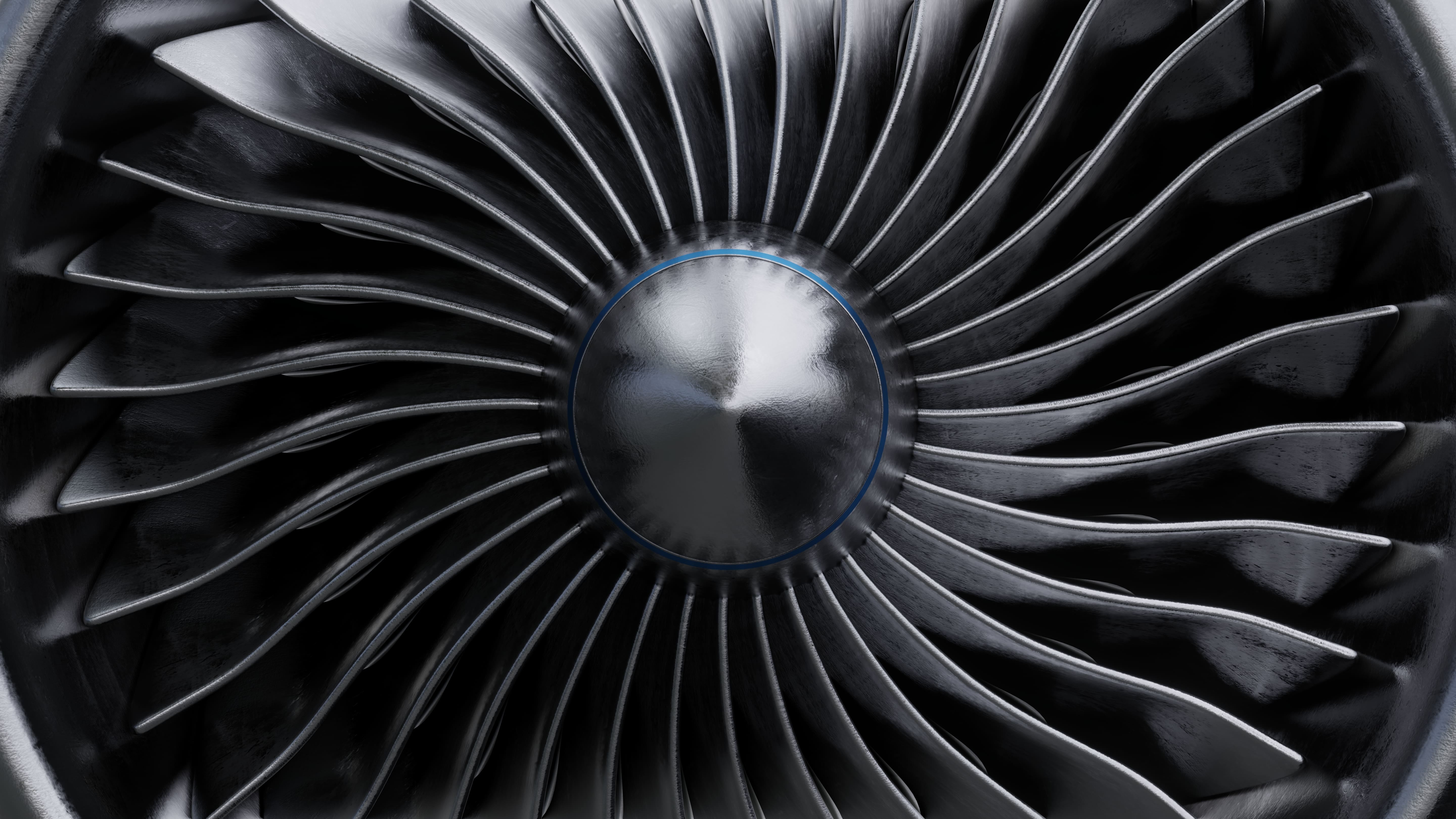
In the wrecked picture from Facebook, the turbine blades inside it “looked” like single-crystal components, an advanced metallurgy technique.
A few big, seemingly reputable outlets picked it up and ran with a headline that writes itself… that this kind of technology has historically belonged to a short list of Western manufacturers, namely General Electric in the US and Rolls-Royce in the UK. So Russia must have somehow gotten its hands on Western secrets despite years of sanctions.
Plausible, I suppose… Especially since gray market sanction loopholes are Russia’s specialty.
And one popular headline just called the blades “exclusive to US engines” and left it there.
Objection, your honor! That headline is patently wrong on the facts in a way that’s easy to check (and nobody bothered checking). Once you fix the mistake, the real story underneath it turns out to be more interesting.
First, let me paint you a picture of what’s happening inside that metal, because it’s an elegant piece of engineering once you see it.
Picture pouring molten metal into a mold and letting it cool the ordinary way.
As it hardens, the metal doesn’t freeze into one solid chunk.
It freezes into thousands of tiny individual crystals, all starting to form at once from different random points, growing outward until they bump into their neighbors and lock together, (like a lake freezing over on a windy night, where instead of one smooth sheet of ice you get a jumble of separate ice patches all jammed against each other at crooked angles).
Metallurgists call each of those little crystals a grain, and the seams where they meet are called grain boundaries.
That’s what ordinary cast metal looks like under a microscope; millions of tiny crystals glued together at their edges.
Here’s the problem. Those seams are the weak points.
Think about a chocolate bar, the kind with the little grooves molded into it so you can snap off a square. Hershey didn’t design those grooves to be strong; they designed them to be where the thing breaks.
Also, can we all agree that Hershey’s chocolate is the worst-tasting chocolate? During World War II, US soldiers used to say that the Hershey’s bars (Field Ration D bars) were the German’s secret weapon against the Americans. Guaranteed to land like a gut bomb in your intestines.
Grain boundaries break the same way by accident. They’re where impurities collect, where atoms don’t line up cleanly from one crystal to the next, and where the metal is most willing to crack, stretch, or slowly deform when you push it hard or add heat.
Now put that metal to work inside a jet engine.
A turbine blade spins around ten thousand times a minute or faster, which means centrifugal force is constantly trying to fling it outward like you’re swinging it on a string, and at the same time it’s sitting directly in the exhaust of burning fuel, at temperatures that can actually exceed the melting point of the raw metal itself, kept just barely solid by a thin cooling system and a ceramic coating.
That is about as brutal a combination of stress and heat as any piece of hardware on Earth is asked to survive.
Seriously, jet engines are little modern miracles. Here’s my favorite video, made by Veritasium, explaining why jet engines shouldn’t work at all.
Under those conditions, a turbine blade built from ordinary jumbled-grain metal starts failing exactly where you’d expect: At the grain boundaries.
Cracks begin at those seams and slowly creep, the metal stretches and sags in a process engineers literally call creep, and eventually the blade fails, which in a jet engine or a missile means the whole thing stops working, often violently.
Single-crystal casting solves this by refusing to let the seams form in the first place.
Instead of pouring the metal and letting a thousand random crystals fight for territory, engineers pour it into a mold sitting on top of a chilled plate and pull it downward, very slowly, through a narrow neck shaped almost like a corkscrew that only lets one crystal survive the climb while it strangles out all the competing ones trying to form beside it.

Think of a gardener training a single rose vine up a trellis and snipping off every other shoot that tries to sprout, until there’s exactly one continuous vine from root to tip with no joints, no grafts, and no seams anywhere along its length.
By the time the blade finishes cooling, it’s one single, unbroken crystal lattice, shaped exactly like the finished blade, with zero grain boundaries anywhere for a crack to start.
That’s the whole trick, boy-o, and it’s why the payoff is so large.
No seams mean no weak points, which means the blade can run hotter, survive longer under the same punishing spin and heat, and resist that slow creeping stretch that eventually kills ordinary cast blades.
A hotter-running engine is a more efficient engine in some cases, and a blade that lasts longer is an engine that doesn’t need rebuilding every few hundred flight hours.
For a fighter jet that’s a maintenance and performance win.
For a cruise missile that only needs to survive one flight, it’s a slightly different kind of win, which is exactly the part of this story that made me wonder if something else was going on.
Pratt & Whitney pioneered the production version of this in the West, and it became one of the technological landmarks of American engine design.
It also stopped being exclusively American sometime around the Reagan administration.
The Soviet Union developed its own single-crystal casting technology decades ago, through an institute called VIAM, the All-Russian Institute of Aviation Materials, which is the Kremlin’s answer to a national aerospace materials lab.
VIAM’s own published research record, freely available in its own peer-reviewed journal, stretches back through detailed papers on directional crystallization, high-gradient crystal growth, and rhenium-and-ruthenium-alloyed single-crystal superalloys; the kind of work that quietly kept pace with the West’s advances for generations rather than copying them after the fact.
This is a documented, published, decades-long scientific record sitting in an academic journal that anyone with an internet connection can go read right now.
So, the headline’s actual premise, that single-crystal blades were exclusive to American engines, doesn’t survive five minutes with a search engine. Russia didn’t need to steal this from Washington or London. Russia has been sitting on the underlying science since the time I was playing with GI Joes as a kid.
The right question, and why nobody’s asking it
Once you throw out the wrong question, “who did Russia steal this from,” a much better one appears in its place: Why is Russia apparently putting this technology into a small, disposable, single-use missile engine right now, and how did it get cheap and reliable enough to mass-produce for something that blows itself up after one flight?
Well, here’s the thing about the public evidence so far. It’s a video. One video, of one engine fragment, examined by eye rather than by laboratory instruments.
Confirming a blade is genuinely single-crystal, with no hidden grain boundaries, normally takes destructive testing or techniques like electron backscatter diffraction; the kind of lab work that takes weeks, not a Facebook post.
Militarnyi, the Ukrainian outlet that picked this up and treated it responsibly, correctly flagged the finding as tentative.
One recovered engine is a clue. It’s not a confirmed fact, and it’s certainly not proof of who taught Russia how to build it.
You’ll also see a claim in the news floating around some of the coverage that this is a “3D-printed single-crystal blade.”
I want to be precise here rather than just wave the phrase away, because it’s not actually a made-up combination.
Engineers really have been experimenting for over a decade with growing single-crystal superalloy structures using laser and electron-beam 3D printing, mostly to repair damaged blades rather than manufacture whole new ones.
The problem is that even in Western labs, this remains a genuinely difficult, mostly experimental technique, plagued by exactly the kind of defects that show up when you’re trying to grow one perfect crystal one microscopic layer at a time.
Nobody is mass-producing complete single-crystal blades this way for a production engine yet, anywhere, as far as the open literature shows.
So if Russia has actually pulled off 3D-printed single-crystal blades at real production volume, for a disposable missile engine, that would mean it’s leapfrogged a problem Western aerospace labs are still wrestling with after ten-plus years of published research.
That’s an extraordinary claim, and it deserves a lot more evidence than the so-called news sites are happy with.
This is exactly the kind of thing that happens when defense reporting runs through the metallurgy chapter at a sprint, and it’s a small but real reminder that “sounds impressive” and “technically accurate” aren’t always the same thing.
But back to regular single-crystal casting… Russia’s United Engine Corporation, through its Saturn division, publicly advertises the ability to cast turbine blades with equiaxed, directionally solidified, or single-crystal structures ranging from 30 to 600 millimeters.
Thirty millimeters sits comfortably inside small-engine territory, exactly the size class the Kh-101’s TRDD-50 engine family lives in.

That’s a company openly marketing a capability the original reporting assumes Russia doesn’t have.
And even if it is single-crystal, none of this means Russia’s version matches Western yield rates, quality control, or access to the newest alloy chemistries.
Those are real, significant limitations, and I wouldn’t wave them away.
But “Russia cannot manufacture small single-crystal turbine blades” is a claim that falls apart.
The part that should actually worry the Pentagon
If Russia already had the underlying science, then the real question becomes how a country under years of brutal sanctions turned a laboratory-grade capability into something it can stamp out repeatedly for a weapon that’s meant to be thrown away.
This is where China almost certainly enters the chat, and not as a co-conspirator handing over blueprints. Growing a single crystal is only step one. Turning that crystal into a finished, reliable blade also demands vacuum melting furnaces, precision ceramic molds, laser drilling for cooling channels, coating equipment, and exacting inspection tools; basically an entire industrial ecosystem, not just a cookie recipe.
US intelligence officials told the Associated Press that nearly 70 percent of Russia’s machine-tool imports in the last quarter of 2023 came from China, alongside roughly 90 percent of its microelectronics.
China also produces the kind of single-crystal vacuum casting equipment this whole process requires, with Western firms like Poland’s SECO/Warwick having commissioned casting systems inside China as far back as 2019.
So, the more plausible story is China quietly supplying the machine tools, furnaces, and precision equipment that let Russia take a Soviet-era capability out of the research institute and scale it into an actual production line.
A recipe is not a restaurant.
You still need the kitchen, and China appears to be selling Russia the kitchen equipment, one shipment at a time, through the exact same sanctions-evasion networks that have kept the rest of Russia’s war machine fed.
I’d rank espionage as a real but secondary factor here. Russia has certainly targeted Western aerospace programs for years, and stolen process details could plausibly have sped up a specific fix or shaved a defect rate down.
But espionage explains improvements at the margins, not an entire industrial capability.
Russia didn’t need anyone’s secrets to know what a single-crystal blade was. It’s needed help keeping the machines running.
And here’s the technical wrinkle that actually makes the whole story coherent.
Single-crystal blades exist to survive years of repeated heating and cooling cycles inside an engine, which is a durability problem. A Kh-101 engine only has to work once, so durability shouldn’t matter to a weapon designed to fly one mission and then cease to exist.
Except Russia has spent the last two years quietly hollowing out the Kh-101’s fuel tank to make room for a bigger warhead, boosting total payload from about 450 kilograms to roughly 800.
Less fuel space, heavier warhead, same missile shell.
That trade eats directly into the weapon’s range and performance, and a more efficient engine, one that can run hotter and squeeze more thrust from less fuel, is exactly the kind of fix an engineer reaches for when a payload upgrade has quietly starved the fuel tank.
The underlying logic, trading blade technology for a bit of the range lost to the fatter warhead, tracks cleanly with everything else we know about how this missile has evolved.
Ukraine’s own Defense Ministry has said that Russia no longer keeps significant Kh-101 stockpiles on hand, assembling missiles just a week or two before launch rather than banking a deep reserve, and that Ukrainian air defense has been shooting down roughly 88 percent of Kh-101, Kh-55, and Kh-555 missiles fired since the start of this year.
If we take those two facts together then the engine story looks less like a triumphant leap forward and more like an adaptation under real pressure, a weapon getting incrementally better because the version Russia had wasn’t surviving the trip anymore.
Okay, so… mystery solved? Well, maybe, but at least we’re all more knowledgeable about jet engines. My final point is more about the current defense news media ecosystem.
The entire “stolen American secret” story started with one Facebook video and no laboratory confirmation, and it still traveled through several big outlets before anyone stopped to check whether the founding premise, “exclusive to US engines,” was even true.
That’s a small, perfect demonstration of how a single unverified social media post becomes an accepted fact within about a single news cycle.
(I’ve made a career out of translating jargon for you, and the most important translation I can offer today is this: “sourced from a Facebook video” and “confirmed” are not synonyms, no matter how many outlets treat them that way.)
The corrected version isn’t as viral, because it doesn’t have a clean villain.
Sanctions didn’t fail to stop a theft, because there was likely nothing to steal.
What sanctions have struggled to stop is Russia reaching back into its own Soviet-era scientific inheritance, which is substantial, and finding a willing industrial partner in China to help turn old lab work into a functioning production line for a weapon currently killing Ukrainian civilians in their apartment buildings.
Technology journalism, and occasionally defense journalism, treat the audience like they’re idiots. I know better because I read the comments.
Stay sharp. Stay frosty.
Слава Україні!
It might be helpful to include a short bio at the bottom of my public pieces so that strangers stumbling upon my writings have a reference frame, so, welcome:
Wes O’Donnell is a journalist, veteran, and defense analyst focused on the Ukraine War, military technology, and global security. He served in the U.S. Army infantry with the 101st Airborne Division and later in the U.S. Air Force as a Surveillance Radar Journeyman on the E-3 Sentry AWACS during the Global War on Terror. He holds a B.A. in International Relations (Russian Studies), an MBA, and a J.D., bringing a mix of operational military experience, legal training, and strategic analysis to his scribblings.


"... the most important translation I can offer today is this: “sourced from a Facebook video” and “confirmed” are not synonyms ..."
But ... but ... I SAW IT ON THE INTERNET!
Thanks for the detailed explanation.