


There’s an old rule in military logistics: you can tell how a war is really going by watching the ammunition, not the speeches. And right now, Russia’s air defense inventory is telling a story louder than anything coming out of the Kremlin press office.
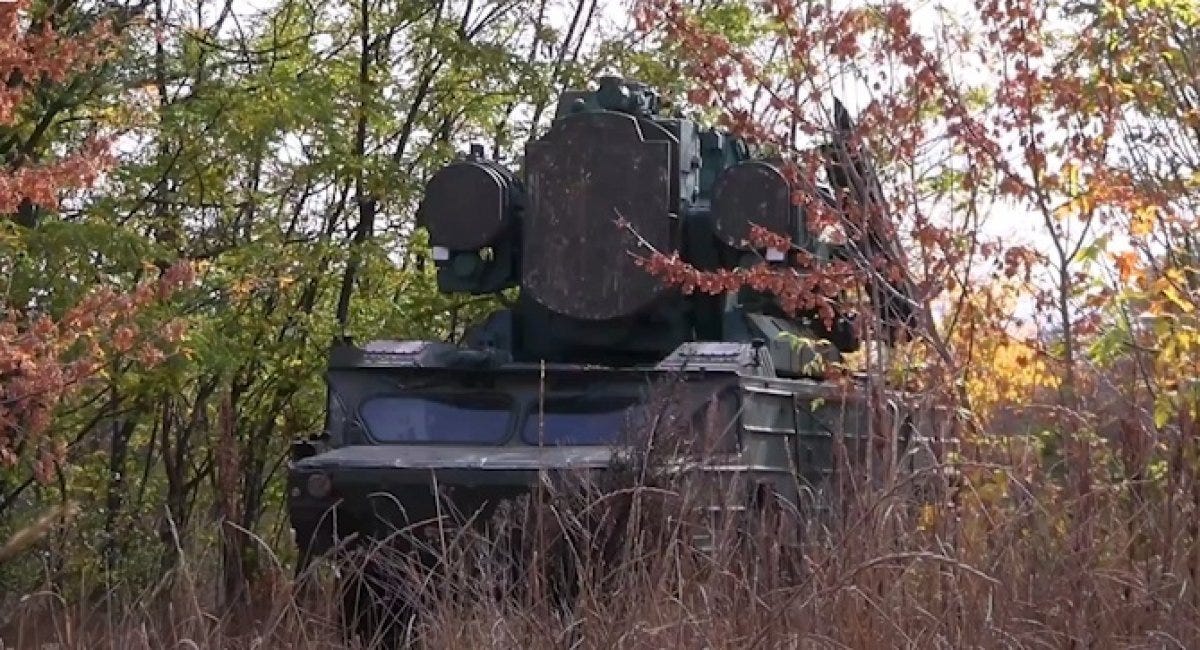
New footage from the Russian front shows a 9K33M3 Osa-AKM surface-to-air missile system loaded with ancient, museum-grade 9M33 missiles. This is hardware so old it predates the Soviet invasion of Afghanistan.
The Osa-AKM normally fires newer 9M33M3 missiles in sealed transport-launch canisters.
But in the video, half the launcher is loaded with bare, containerless missiles pulled straight from the Cold War archives.
This is the Russian military equivalent of bolting a World War I bayonet to an M4 carbine and hoping nobody notices.
The question isn’t whether this is embarrassing. It is. The question is what it says about Russia’s real missile stocks, its industrial capacity, and the stress Ukraine’s drone campaign has imposed on the Russian air defense network.
Let’s walk through it, because the implications are serious, and they go far beyond a single launcher.
The Osa Was Never Supposed to Look Like This
The 9K33 Osa wasn’t born obsolete. When the first variant rolled off Soviet production lines in the early 1970s, it was a respectable short-range air-defense system: fully mobile, amphibious, and carrying a radar suite that looked futuristic by Warsaw Pact standards.
But the original 9M33 missile it fired was primitive even then. No sealed containers, no environmental controls, nothing to protect the missile from humidity, dust, sun, temperature cycling, or the general misery of being stored anywhere inside the Soviet Union.
If you left these things outside for a few months, the paint faded. Leave them outside for a few decades, and the electronics were basically inert archaeological artifacts.
That was the entire reason the Soviets upgraded the system, twice.
In 1975, the Osa-AK arrived with its biggest improvement: transport-launch containers, or TPKs. These canisters solved the Osa’s biggest maintenance problem by sealing the newer 9M33M2 missiles against the environment. It meant crews could actually rely on the missiles to fire, track, and detonate when needed, instead of praying the decades hadn’t turned the internals into chalk.
Then in 1980, the Soviets finished the line with what became the gold standard for the platform: the 9K33M3 Osa-AKM. New radar tweaks. A better guidance package. An upgraded proximity fuse designed for low-flying targets like helicopters. And the 9M33M3 missile, the variant every Osa-equipped country prefers because the earlier ones are, to be blunt, junk.
The entire point of all this modernization was simple: retire the original 9M33 for good. Even the Soviets understood those early missiles were a dead end.
Fast-forward to 2025, and Russia is not only digging them out of storage, they’re bolting them back onto a system specifically redesigned to avoid using them. The Osa-AKM was never intended to fire containerless missiles again. That’s like refueling my wife’s Subaru using a jerrycan full of 50-year-old leaded gasoline and hoping the engine thanks you for it.
Why is Russia doing this? Not because they want to. Because they’re out of options.
From the footage, you can see exactly how improvisational this is.
Russian crews scavenged old 1970s launcher brackets, hardware that belonged two modernization cycles ago, then physically bolted those antique mounts onto the Osa-AKM’s arms.
The electrical hookups appear similarly crude, likely piggybacking off existing wiring with the minimum viability necessary to get the old missile to acknowledge a launch command. There’s no sign of proper software integration, no sign of guided-weapon validation cycles, and certainly no indication this was approved by Sukhoi’s descendants in a climate-controlled design laboratory.
This is basically desperation with power tools.
It also tells us something about Russia’s military-industrial complex. When a country claims to be producing modern SAMs at scale, but then quietly reverts to 50-year-old missiles that were already considered obsolete in the Brezhnev era, you’re not looking at a confident arsenal. You’re looking at a defense industry that has been asked to do too much with too little, under sanctions, under wartime stress, and under the constant reality that Ukraine keeps blowing up its factories, depots, and supply nodes.
This kind of improvisation is a symptom of systemic overextension. Russia is running its air-defense pipeline so hot that it’s now forced to use ammunition that predates Saturday Night Fever.
And unlike John Travolta, these missiles have not aged well.
