Shilka Reborn: How a 1960s Anti-Aircraft Gun Became Ukraine’s Drone-Killing Workhorse
Ukraine looked at a weapon built when rotary phones were considered high tech and asked a simple question: what’s the minimum we need to change to make this thing kill drones today?

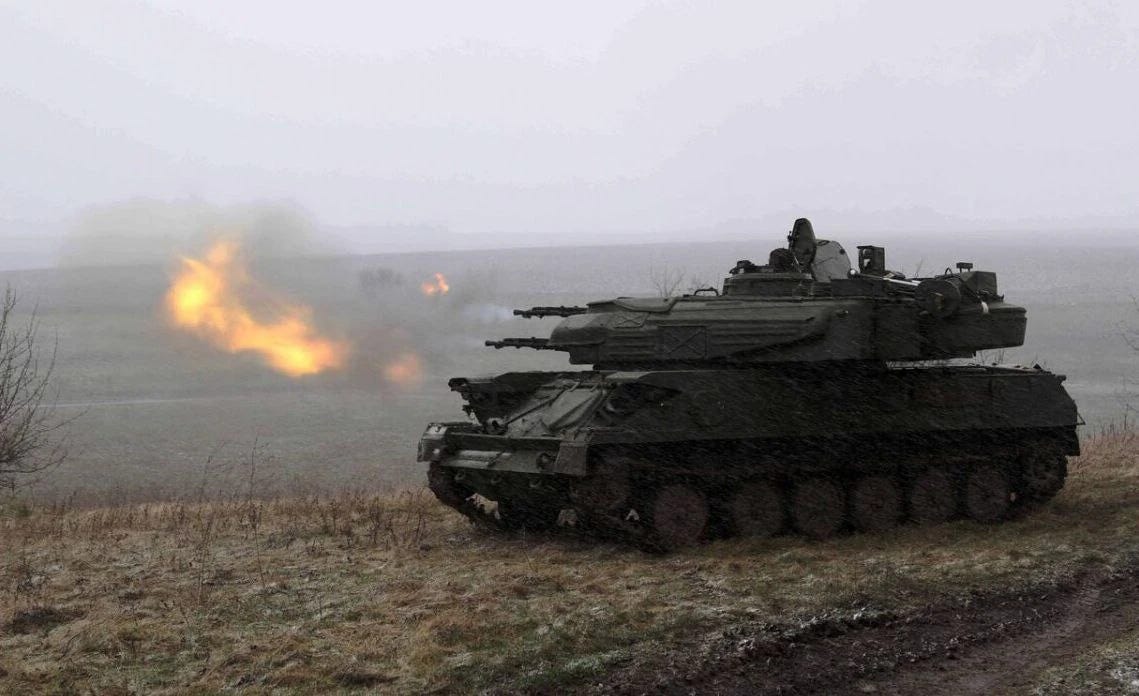
Some weapons retire gracefully.
Others get dragged out of storage, wiped down with WD-40, and shoved back into the fight because history refuses to cooperate.
And then there’s the Shilka, technically the ZSU-23-4, a Soviet relic that should, by all rights, be sitting behind velvet rope in a museum next to ashtrays once used by Brezhnev.
Instead, the Shilka is back on the Ukrainian battlefield. It is killing drones its designers never imagined, using radar modes that didn’t exist when the Beatles were still touring.
It is, once again, saving Ukrainian brigades that were rebuilt on the fly after 2014, and it is now receiving the most meaningful upgrade in its sixty-year life.
Sixteen of them, to be exact, all ordered for modernization by the Come Back Alive Foundation, Ukraine’s largest and most respected non-government military charity.
This is a civilian-funded upgrade to a Cold War icon, arriving at a moment when Ukraine’s air defenders are drowning in Shaheds.
This is the kind of plot twist only modern war can write: a retired Soviet anti-aircraft gun being resurrected to shoot down Iranian drones, all while Ukrainian engineers rip out old Soviet electronics and replace them with digital fire-control systems that can track a target the size of a crow.
Let’s break down how we got here.
Back When the Shilka Was the Apex Predator
There was a brief, glorious window in the mid-1960s when the Shilka was the meanest thing on tracks.
NATO pilots learned this the hard way.
The system forced the USAF to rewrite the manual for how low-altitude strike missions were flown. Fighter-bombers that once skimmed treetops to avoid radar suddenly found themselves inside a death triangle of 23mm shells before they even realized anyone was tracking them.
The Shilka was lethal not because it was elegant, but because it solved a very specific Cold War problem with brute efficiency. You marry four autocannons to a radar that doesn’t blink, bolt both onto a tank chassis, and tell the gunner to pull the trigger the moment the needle twitches. That level of volume and accuracy was unheard of in the 1960s, and it scared Western air forces into changing tactics overnight.
In Vietnam, Israeli-Arab conflicts, and anywhere Soviet clients fought against Western equipment, Shilkas chewed through aircraft that were never designed to survive a wall of metal that thick.
While specific numbers for NVA Shilka kills in the Vietnam War are difficult to isolate from overall anti-aircraft statistics, light anti-aircraft artillery (including towed and self-propelled 23mm and 37mm guns) were responsible for the majority of US aircraft losses to ground fire.
But battlefield supremacy has a short shelf life. By the late ’70s, attack helicopters with long-range anti-tank missiles started popping up (literally). They didn’t need to sprint past the radar; they could sit miles outside the Shilka’s envelope and fire with impunity.
Jet aircraft climbed higher and carried guided munitions, and as avionics became digital, the Shilka’s analog brain started to show its age. Soviet designers did what they usually did when a legacy system hit its limits: they built something heavier, faster, and packed with missiles.
Enter the Tunguska, and with it, the end of Shilka production.
Once the USSR dissolved, the Shilka took on a second, sadder afterlife. Former Soviet states inherited them in bulk. Most didn’t know what to do with them.
In Ukraine, they were stacked in depots that nobody bothered to heat, maintain, or even guard properly. Western advisers, still trapped in the early-2000s mindset that Europe’s wars were over for good, encouraged Ukraine to cut costs and downsize. After all, terrorists were the new bad guys. Big, peer-to-peer wars were over. Or so they thought.
The result was predictable. Hundreds of Shilkas were parked, forgotten, and slowly reclaimed by rust. Crews were reassigned. Spare parts vanished. Mechanics retired.
You could visit storage yards in the early 2010s and find Shilkas sitting on sunk suspension, tracks rotting away, and hatches powdering with corrosion. They weren’t weapons anymore, they were relics of the Cold War; a war with no monuments, no parades… only casualties. (-Marko Ramius)
Then 2014 arrived, and suddenly every piece of tracked armor the country had ever mothballed was yanked back into the daylight.
And the old apex predator started showing its teeth again.
When Russia grabbed Crimea and lit Donbas on fire, Ukraine suddenly found itself trying to rebuild an army that hadn’t been maintained in a generation. Almost every brigade needed something heavy, armored, and capable of putting real steel into the air.
The Tunguskas all went to elite mechanized units. The new brigades like the 56th, 57th, 58th, and 59th had to take what existed in the depots.
That meant Shilkas.
The problem was that most of them didn’t work. Some hadn’t been powered on since MC Hammer was on tour. Others had been scavenged for parts. A few had trees growing through them. But Ukrainian repair teams brought them back slowly, painfully, and with whatever budget could be scraped together.
And when they reached Donbas, something unexpected happened.
The Shilka found a new purpose.
Not as an anti-aircraft gun. As a ground-fire monster.
In trench warfare, 23mm autocannons melt Russian infantry positions, knock down tree lines, and shred Soviet-era vehicles that are too light for tank fire and too close for artillery. Once Minsk II restricted heavy weapons, Shilkas ended up doing far more ground combat than air defense.
By 2022, they had become the go-to “second-echelon gun truck” in several brigades. Like many crusty Cold War veterans, they were old, they were loud, they were temperamental, and they were effective.
But they were starting to go blind. The original Soviet radar couldn’t see shit by modern standards.
That’s where this new modernization package comes in today.
The Ukrainian Upgrade That Turns a Museum Piece Into a Drone Killer
What Ukraine has done with the Shilka isn’t modernization in the Western sense. There’s no billion-dollar program office, no glossy briefing deck, no TV marketing campaign.
Also, can we pause for a moment and appreciate how absurd American defense contractor commercials are in the US? I mean… who the hell is going to purchase a B-2 Spirit bomber? These commercial are made, at great expense, for an audience of one: the chief Air Force procurement officer at the Pentagon.
Anyways, what Ukraine did was far more honest: it looked at a weapon built when rotary phones were considered high tech and asked a simple question: what’s the minimum we need to change to make this thing kill drones today?
The answer became the ZSU-23-4M-A1 upgrade, and it is a case study in wartime engineering. The most important change sits right on top of the turret: the Rokach-AS radar. The original Shilka radar could track jets, but it was blind to the small, low-radar cross section (RCS) drones that define modern warfare.
The Rokach-AS fixes that. It can pick up UAVs with cross-sections so small they’d barely show up on a police speed gun. Suddenly, the Shilka isn’t hunting 1960s aircraft; it’s stalking the things Russia sends by the hundreds every night.
Then there’s the computing system. The old analog calculator inside the Shilka might as well have been powered by steam, and it handled target solutions with all the finesse of a Soviet Mr. Coffee.
Ukraine happily ripped it out and replaced it with a digital fire-control brain that reacts in milliseconds, not seconds. That change alone means the crew can engage a drone that only appears on radar for a few fleeting moments before it darts behind cover.
Ukraine also added a navigation suite and digital-to-analog converters that make the system far more autonomous. The original Shilka needed external data and coordination to be truly effective. The upgraded version can hunt independently, scan independently, track independently, and kill independently.
In a war where positions shift constantly and drone swarms appear out of nowhere, that autonomy is essential.
What makes the upgrade transformative is the way it matches the modern threat. Russia sends Shaheds that cost $20,000. Ukraine is not going to waste a $300,000 missile shooting them down. A Shilka firing 23mm rounds fills the sky with dense, lethal metal at a fraction of the cost.
This shouldn’t work. No engineer in 1964 designed the Shilka with Shaheds in mind. But war doesn’t care about design intent. It cares about results. And the upgraded ZSU-23-4M-A1 gives Ukraine something few countries possess right now: a cost-effective way to turn mass-produced Russian drones into flaming debris.
It’s a museum piece rebuilt for a war nobody predicted, and the lesson is obvious. Sometimes the best weapon isn’t the newest—it’s the one you can adapt fast enough.
So, all hail the Shilka, a budget Gepard with a Ukrainian brain.
And unlike Russia, which is still dusting off 50-year-old Osa missiles and pretending that’s modernization, Ukraine is actually rebuilding these systems with modern electronics.
The difference shows on the battlefield.
Russia’s Shilkas mostly get used as mobile suppressive fire. Ukraine’s Shilkas are finding drones their enemy can’t see, with radar modes that didn’t exist on the Soviet originals.
That’s the difference between Russian improvisation and Ukrainian innovation.
Some weapons never die. They just wait for the battlefield to catch up.
The Shilka was born in an era when jets flew low and fast. It matured in an era where helicopters launched missiles from beyond its reach. It retired when surface-to-air missiles took over.
And then drones arrived and turned the sky back into a gunner’s world.
That is why sixteen upgraded Shilkas could be a turning point.
Every one of these vehicles represents a brigade that suddenly has a fighting chance against the cheap terror Russia throws at it every night. It represents a victory of engineering over nostalgia. And it represents a small but critical shift in the most cost-sensitive domain of modern war: air defense.
Ukraine doesn’t have the luxury of building an entirely new air-defense doctrine from scratch. It has to fight with what exists. But what exists can be transformed.
The Shilka proves that.
The upgrades prove that.
And the fact that a 1960s Soviet weapon is now hunting Iranian drones for a 21st-century Ukrainian army says everything you need to know about who is actually adapting in this war… and who is stuck in the past.
Слава Україні!


I wonder what is their range? How does this compare to the heavy machine guns which for some time were effective against Shaheds? And compare to the Gepards? Do these fire just dumb shells or explosive ammunition?
necessity is the mother of invention