Hey friends, just pure aviation history today for our paid subscriber piece.
Britain once built an experimental aircraft to study what happens to an airplane that stays above Mach 2 long enough to get dangerously hot, and then discovered the airplane couldn’t stay above Mach 2 long enough to get hot…
Yup, it never actually reached Mach 2.
Its best speed, on its 47th flight in November 1963, was Mach 1.88 at 36,000 feet.
The airplane was called the Bristol 188.
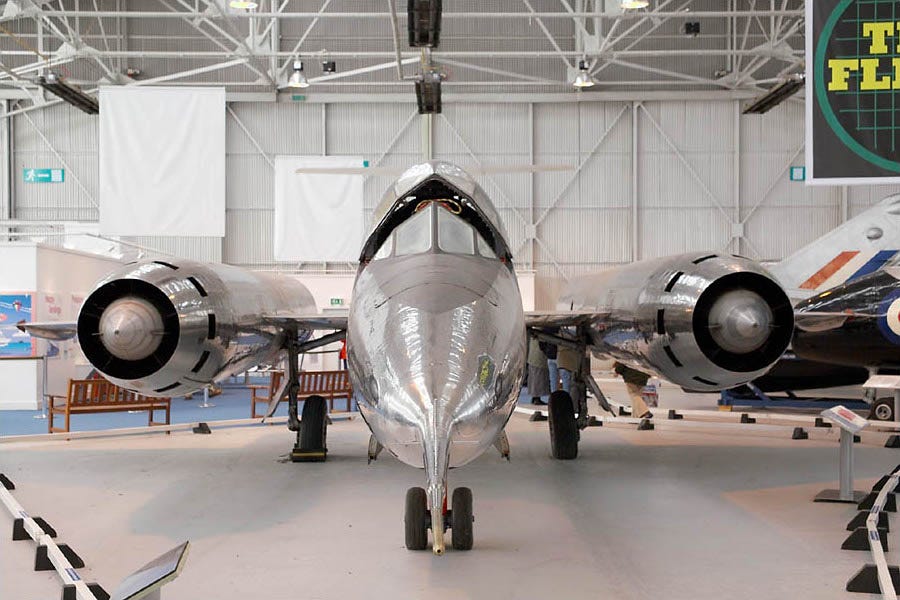
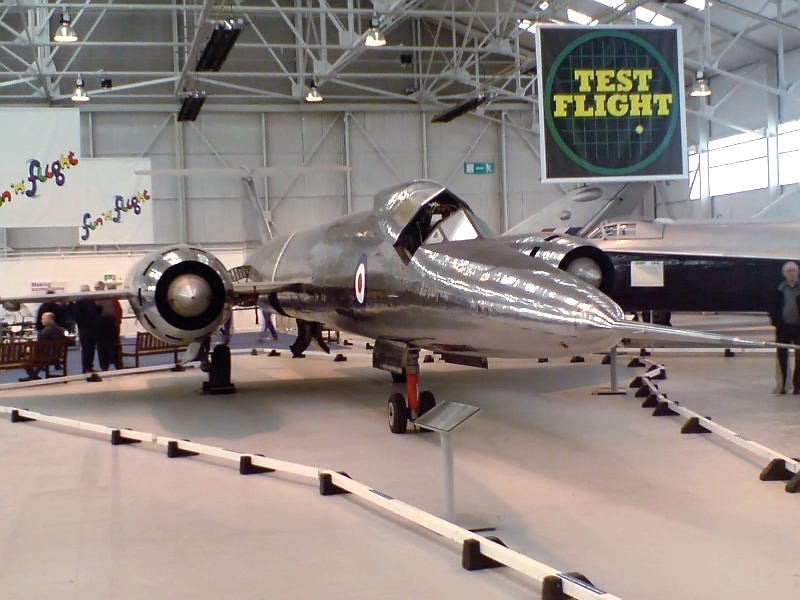
When I first saw photos of this thing as a kid, a gleaming stainless-steel dart nicknamed the “Flaming Pencil,” I assumed I was looking at a hot rod out of a George Lucas-American Graffiti fever dream.
The reality is more British and a lot more Douglas Adams-esque. The Bristol 188 failed because it was a research aircraft built to support a bomber that had already been canceled, it flew on engines salvaged from another canceled aircraft, and those engines drank fuel so fast that pilots got about two minutes at high speed before they had to turn for home.
The Royal Air Force Museum, which owns the surviving airframe, calls the aircraft “a failure” that “never achieved its target.”
Personally, I think the word “failure” is a bit harsh. I mean look at this beast!
A Mach 3 Dream in a Steel Tube
Let’s go back to the early 1950s, when the Royal Air Force, well-funded and still euphoric from winning the Battle of Britain in the skies, was dreaming very big.
I’m serious about being “well-funded.” The RAF was feasting on approximately 10% of the UK’s GDP at the time. This was the development era that birthed the V-bomber nuclear deterrent force (Valiants, Vulcans, and Victors) and early jet fleets.
Under Operational Requirement 330, the RAF wanted a reconnaissance bomber that could cruise at around Mach 3, dash across Soviet airspace, and outrun anything the Russians could send up. Avro answered with the Avro 730… a long, needle-nosed machine that looked like something out of a Dan Dare comic. If it had flown, it would have been one of the most ambitious aircraft of the era.
The engineers had a problem, though, and it was that air is an asshole.
At high supersonic speeds, the air slamming into an airplane’s skin gets compressed and rubs along the surface, and that energy turns into heat. Engineers call it kinetic heating.
At normal jet speeds it’s barely worth mentioning, but past Mach 2 it becomes a structural problem. Aluminum, the metal nearly every airplane was built from, starts losing strength once it gets hot enough, and an airplane cruising for long periods at Mach 2.5 or 3 gets toasty.
Nobody in Britain had real data on what sustained heat did to a full-sized airframe over time.
How would the joints behave?
What about the fuel, the hydraulics, the seals, the canopy and the pilot sitting in a metal tube that was slowly turning into a pizza oven?
So, in February 1953, the Air Ministry gave Bristol a contract to build a flying laboratory. The requirement called for flight at Mach 2.75 for long periods, specifically so engineers could measure “the effect of kinetic heating.”
In an early twist of irony, Bristol beat out a rival proposal from English Electric based on the design that later became the Lightning.
Hang on to that, because it comes back to haunt everyone.
Bristol decided aluminum wouldn’t cut it and built the aircraft mostly out of stainless steel. According to the RAF Museum, the company chose F.V.520 hardened stainless steel; good for roughly 500°C (932°F, John).
But fabricating an airplane out of steel is a miserable job.
It’s heavy, it’s stubborn, and riveting it was considered too difficult, so Bristol developed a technique called puddle welding; that is, joining the panels with an electric arc shielded by inert argon gas to keep the welds clean.
Armstrong Whitworth, a British heavy engineering and manufacturing company, helped build major sections of the airframe.
The cockpit got a fused-quartz windscreen and canopy, plus a refrigeration system to keep the pilot from turning into a Wal-Mart rotisserie chicken.
The aircraft that emerged was gorgeous in a deeply absurd and impractical way: It was nearly 78 feet long, with a wingspan of only 35 feet.
The fuselage was a long, thin cylinder whose diameter was set by the size of the ejection seat (I find that detail delightful, because it means the entire airplane was essentially a big Virginia Slim cigarette you could eject from).
Two big engine nacelles sat on the wings, and the whole thing was finished in bare, polished steel.
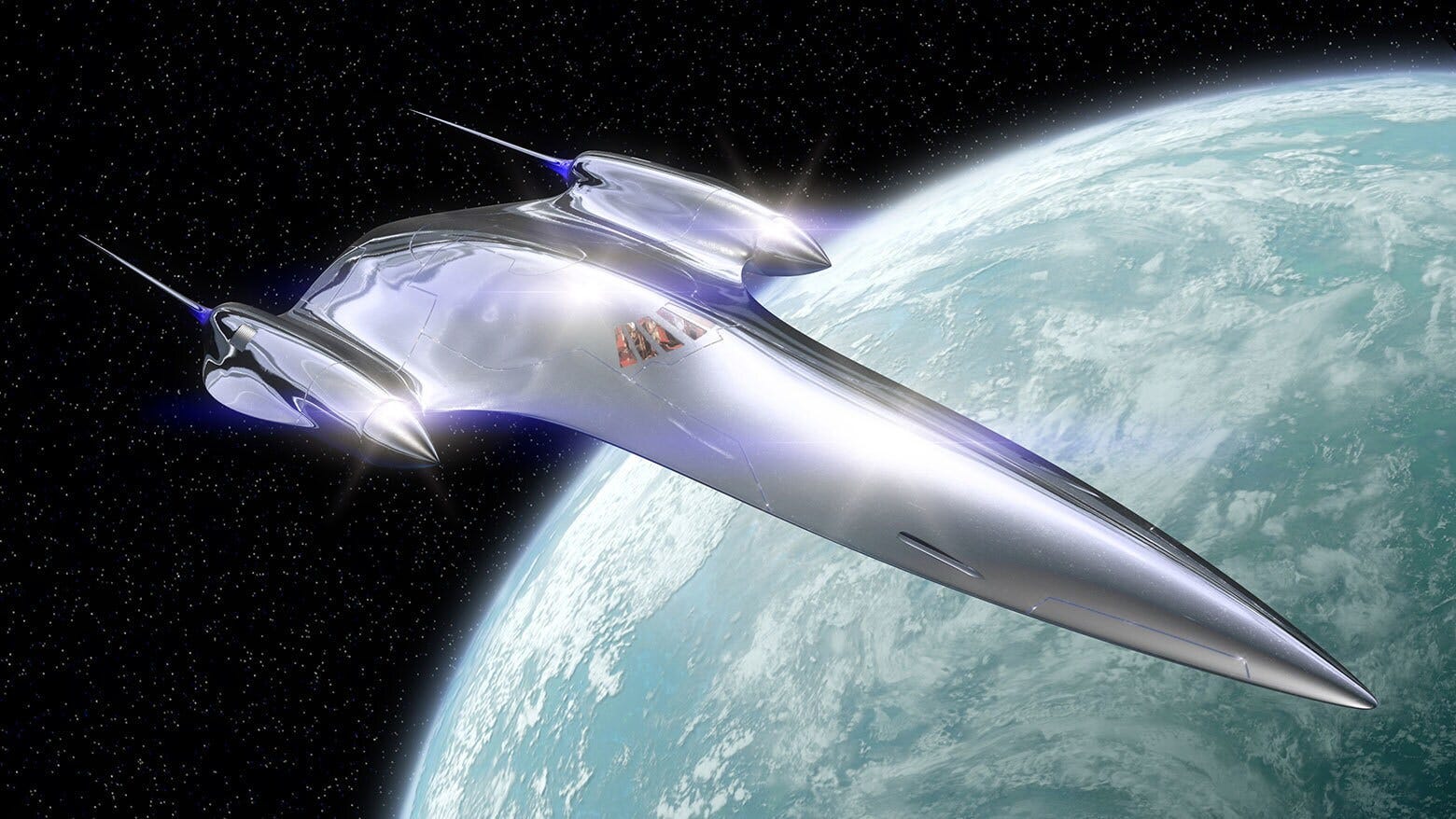
Britain had built a stainless-steel Naboo Royal Starship and put a man inside it.