


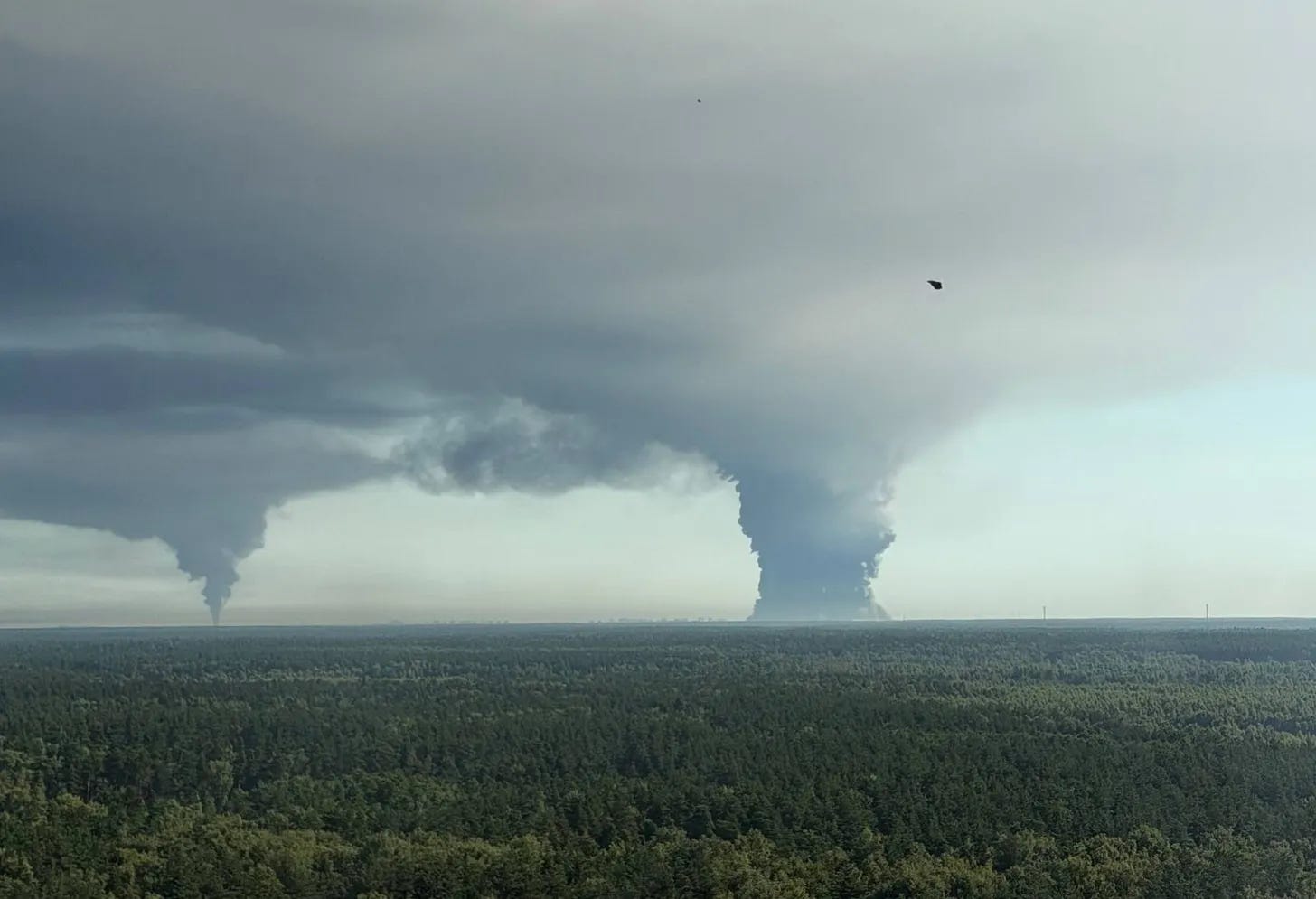
The smoke was easy to see.
On July 18, a fire at a Wildberries logistics warehouse in Elektrostal, outside Moscow, burned for four straight days and threw up a column likely visible from the orbit of Neptune.
That week, I included this strike in my weekly Monday intelligence brief for paid subscribers at Substack and one of my readers commented that the column of smoke looked quite apocalyptic for an Amazon-style warehouse.
And apocalyptic it was. It was obvious something bad had happened there.
While many of my OSINT colleagues across Medium and Substack wrote in detail about how this strike happened, nobody covered how Ukraine got the intelligence to suggest that something fishy was going on at Wildberries in the first place.
At the time, Zelensky said the facility, (along with a sister warehouse in Kotovsk), had been used to supply sanctioned components for drone production and navigation equipment to Russia’s military operating in Ukraine.
Obviously, he didn’t say how Ukraine knew that and he didn’t name the components, the sellers, or the shipments.
But I think we can make some educated inferences.
Somehow, between pulling out burnt up parts of a Russian drone in Ukraine, and maybe 360,000 square meters of a distribution center outside of Moscow, Ukraine’s intelligence was able to find a connection between two things that have no business being connected.
One sells a service that provides fiber optic cables to fund and fully equip an army, and the other sells Adidas to teens in Krasnodar.
The overnight bombings on July 18 left a total of 8 people dead, 7 nighttime employees of the Kotovsk distribution center in Tambov Oblast, and 1 in Elektrostal. A ninth died in the hospital days later.
Hundreds of people were injured, including 61 of the Moscow region’s employees according to their governor.
Then, the bombings continued. 8 Wildberries Logistics hubs were hit after the first night. This comes out to about 10% of the company’s storage capabilities. PBS confirmed bombings in Koledino, Krasnodar, Nevinnomyssk, near St. Petersburg, and even a storage hub in occupied Crimea.
Somebody in Ukraine went after Wildberries with a vengeance.
The company Russia’s volunteers turned into a supply depot
Russia still relies on their defense industry for big projects. But, much of the smaller, urgent materials and tools for day-to-day operations of drone units come through a different method. This involves private manufacturers, volunteer fundraisers, and regular online marketplaces coupled with Telegram.
Since Defense Ministry contracts take time, defense units can rely on fundraisers set up by private citizens to buy things such as flight controllers and motors. These fundraisers operate much like online marketplaces, from which goods are shipped to defense units.
Wildberries became a great online marketplace for these fundraisers.
Even Ukraine relies on these methods of citizen fundraisers. In fact, my subscribers and I have used Car4Ukraine to fund two vehicles which were then up-armored and sent directly to front line drone units in Ukraine. No government bureaucracy required.
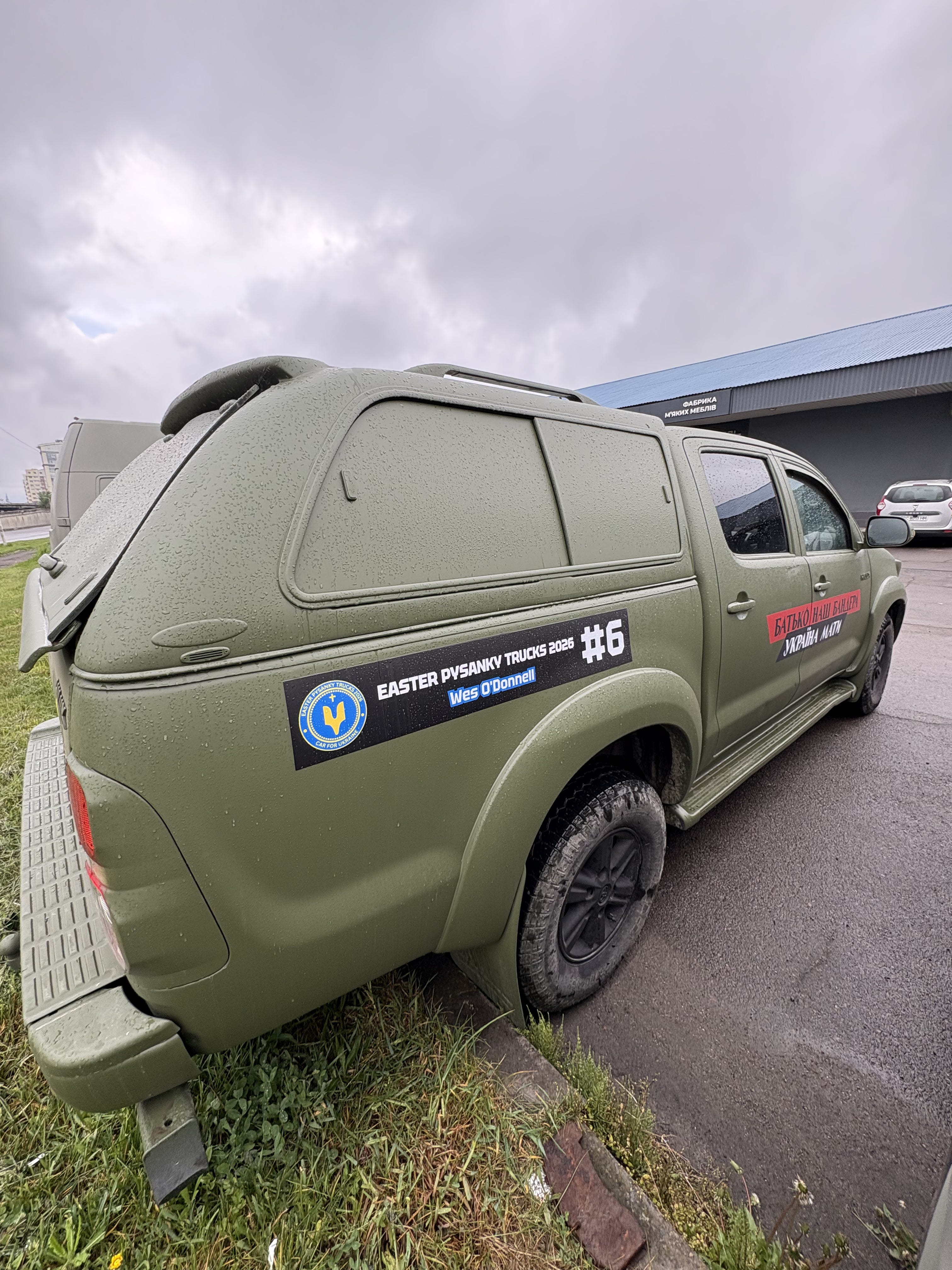
But Ukraine is a small country.
This type of fundraising has been normal-ops for the bootstrapping nation since 2022. By contrast, Russia was ranked as one of the world’s most powerful militaries before the invasion… Implying, at least in theory, that Russia wouldn’t need the same level of civilian-level fundraising.
This points to some level of logistical dysfunction or grift within the Ministry of offense, but I don’t think this is a big surprise to most of my readers.
While researching this piece, I assigned my OSINT AI agent to monitor the company’s own public catalog and found 178 listings for fiber-optic drone spools and 444 for drone-drop equipment, some explicitly advertised as compatible with VOG-17 and VOG-25 grenade rounds, alongside flight controllers, motors, electronic speed controllers, thermal sights, body armor, and anti-drone gear.
