


Here’s the thing about Michigan’s Upper Peninsula: it has a talent for absorbing the strange and refusing to let it go.
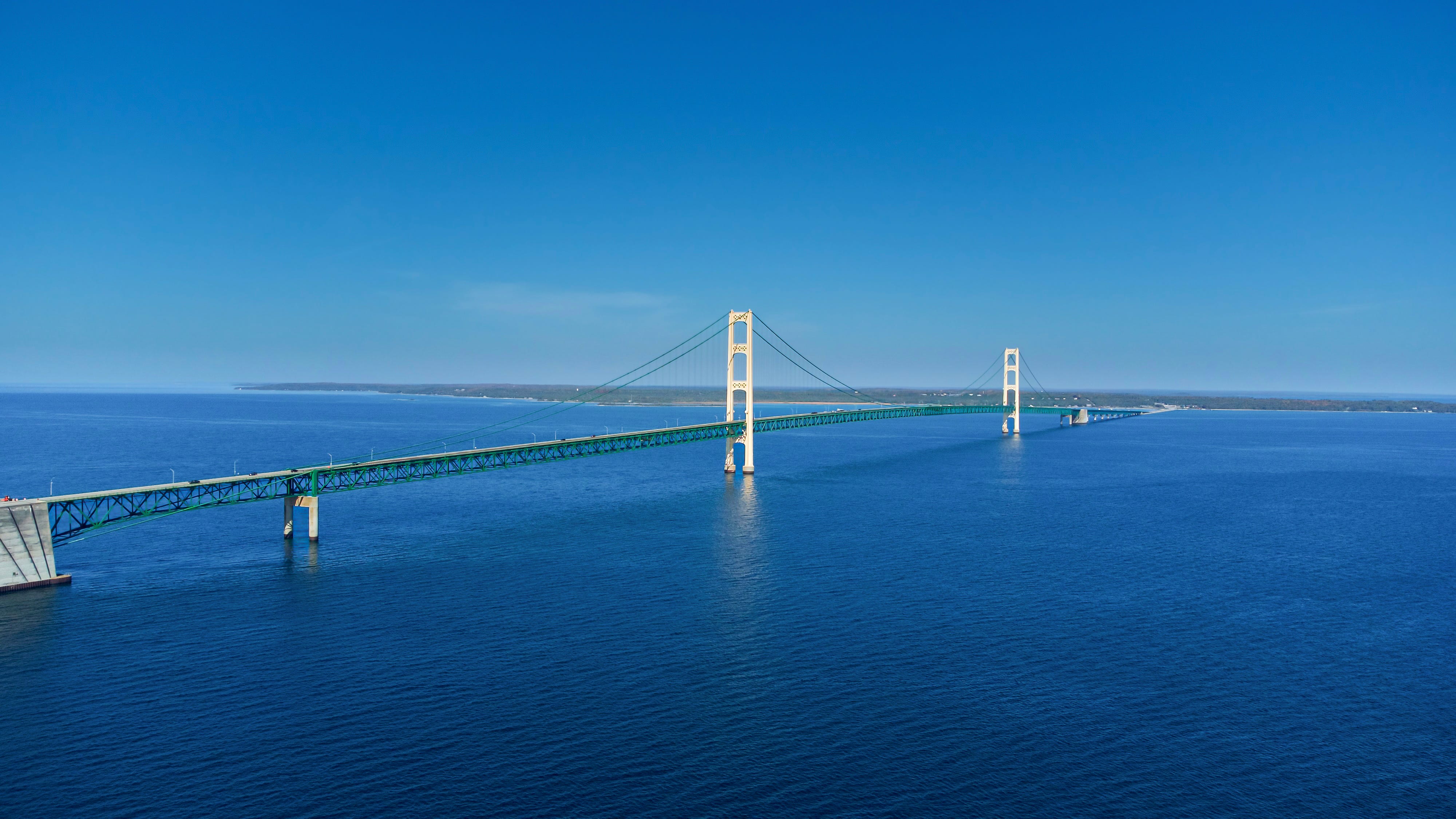
Time moves differently north of the Mackinac bridge. The “UP” has been called a “post-apocalyptic final frontier“ due to its low population density and rugged backcountry.
Shipwrecks sit exactly where they sank. Cold War radar stations rot quietly into the tree line. Entire airfields go from strategic nerve centers to regional afterthoughts without ever fully losing their gravity. Copper mines, once responsible for supplying most of the nation’s copper, now sit silent.
I live in West Michigan and the UP is too remote even for me to visit more than once a decade. Seriously, it would take me 8 hours of driving to get to Marquette. In the same amount of time, I could drive from Michigan to St. Louis, Missouri.

So, when a Ukrainian military tanker the size of a small apartment block showed up in Marquette County and never left, the UP did what it always does. It folded it into the landscape.
Locals call it Boris.
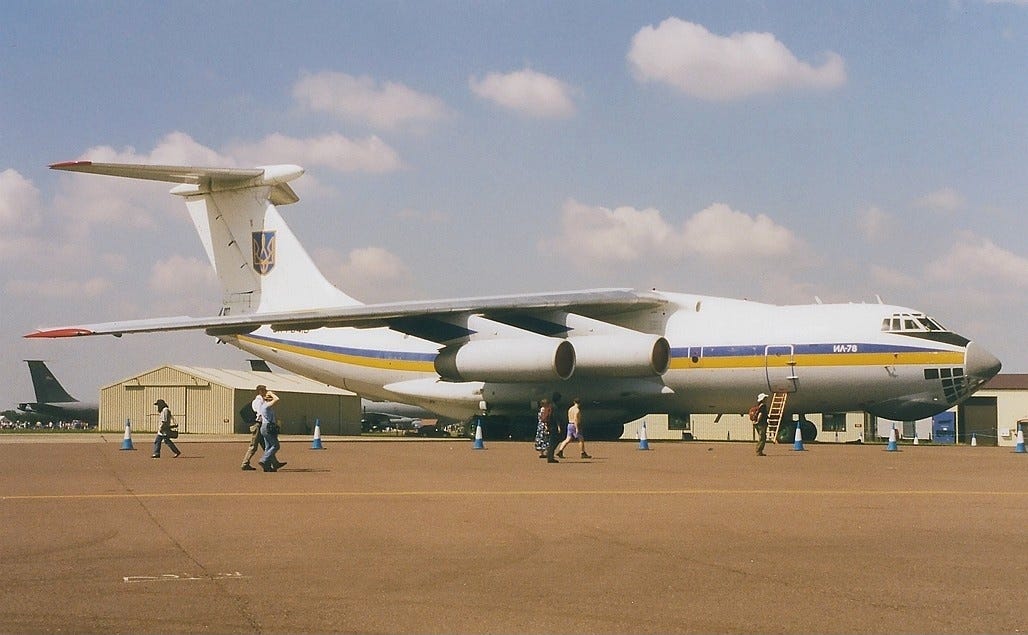
Officially, the aircraft parked in Marquette is an Ilyushin Il-78, a Soviet-designed aerial refueling tanker built to keep fighters alive deep into a war that never quite ended the way Moscow expected.
For years, Moscow’s answer to aerial refueling was to bolt hoses onto bombers and pray to the Slavic machine gods that it worked. Aircraft like the Tu-16 and the massive M-4 could pass fuel in theory, but in practice they were underpowered, inefficient, and increasingly mismatched to the new generation of Soviet strike aircraft coming down the Cold War pipeline.
When bombers like the Tu-22M and the Tu-160 entered service, the math stopped working. You can’t sustain long-range aviation with tankers that barely manage to keep themselves airborne.
So, in 1968, the Soviets did something unusually sensible: they designed a tanker on purpose.
The airframe they chose was the Ilyushin Il-76, a rugged military transport already proving itself as the workhorse of Soviet logistics.
But the baseline Il-76 didn’t cut it. As a tanker, it could pass less than ten tons of fuel, which is barely worth the effort when you’re trying to support a strategic bomber force. The solution was the Il-76MD, an improved variant with greater fuel capacity and stronger performance margins.
That aircraft became the foundation for what would be called the Il-78.
The first Il-78 flew in June 1983 and entered service four years later. Production ran out of the Tashkent Aviation Production Association through the end of the Cold War, turning out a small but potent fleet: a few dozen aircraft, built for a very specific mission at the peak of Soviet airpower.
Structurally, the Il-78 looks exactly like what it is: an Il-76 that traded guns for gas. The tail turret was removed entirely, and the refueling operator took over the former rear gunner’s position. In place of bombs or cargo, the aircraft carries fuel and the plumbing needed to share it.
Early Il-78s relied on removable fuel tanks placed inside the cargo hold, supplementing the aircraft’s internal tanks. The later Il-78M made those tanks permanent, turning the aircraft into a dedicated tanker rather than a convertible transport.
That upgrade mattered. In its most capable configuration, the Il-78M can offload over one hundred tons of fuel in a single mission.
And here’s the part that often gets overlooked: once you strip out the refueling hardware, what you’re left with is still an Il-76. A massive, long-legged cargo aircraft with a rear ramp, a cavernous hold, and the ability to operate from rough airfields.
That dual-use nature is why the Il-78 has survived the collapse of the Soviet Union, sanctions, ownership disputes, and sixteen winters in Michigan.
It was never a delicate machine. It was built to loiter, to endure, and to keep other aircraft alive far from home. Which makes it oddly fitting that one ended up stranded halfway around the world, quietly waiting for a war to remind everyone why it exists in the first place.
This particular Il-78, Boris, arrived in July 2009, engines hot, paperwork in hand, asking for fuel. Sixteen years later, it is still there, sun-faded, snow-dusted, and quietly waiting for permission to exist again.
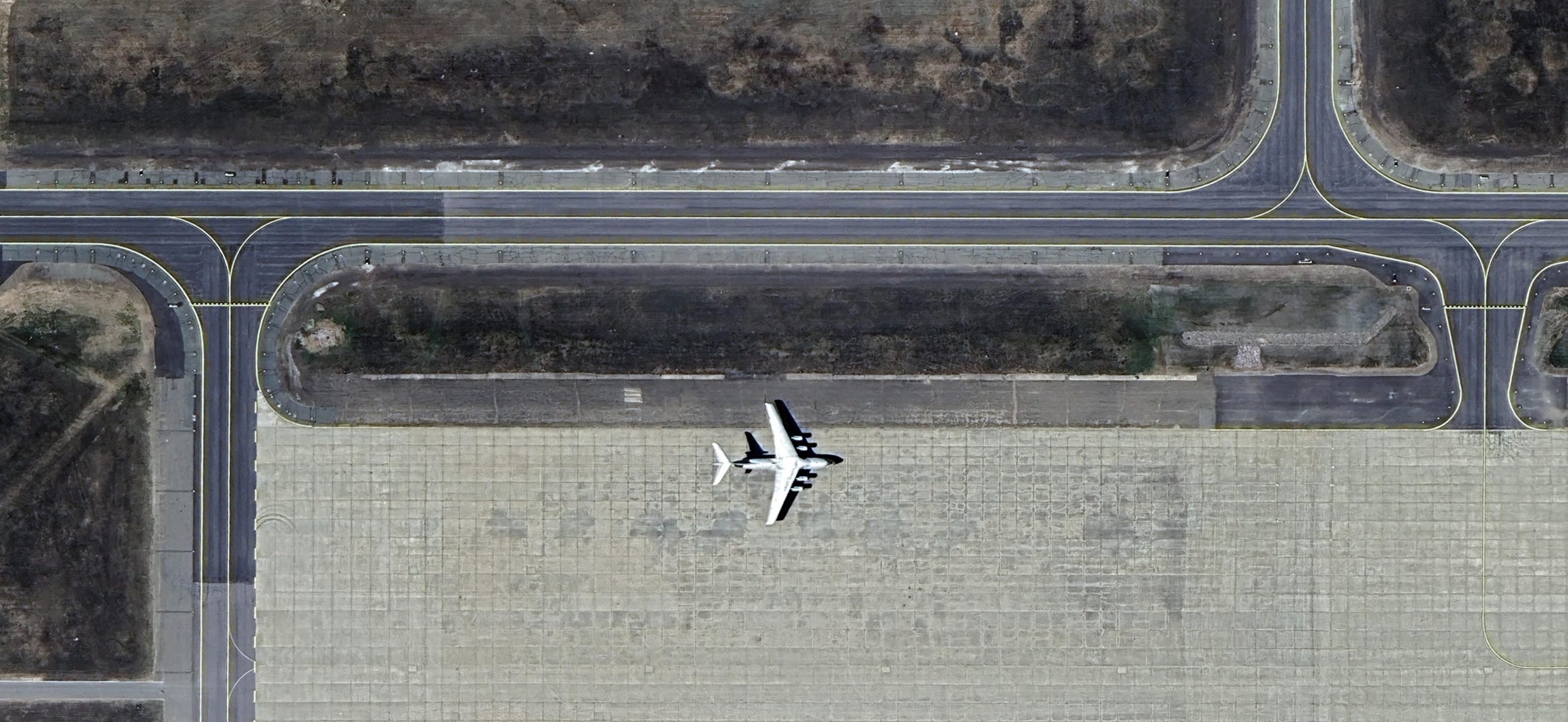
If Boris finally takes off, it will close one of the strangest aviation stories ever to play out on American soil. Not a crash. Not a seizure over espionage. Just a bureaucratic slow-motion pileup involving unpaid bills, expired visas, a furious Texas mechanic, half a dozen creditors, the FBI, and a snowplow parked in exactly the wrong place at exactly the right time.
