


This article is one of three weekly exclusive articles (Sundays, Mondays, and Wednesdays) for my paid subscribers. Thank you for continuing to support independent, approachable military analysis with a heavy dose of pro-Ukrainian sentiment and a side of anti-authoritarian humor. If you’re previewing this article as a free subscriber, consider upgrading for complete access to the vault. Free articles auto-paywall after 45 days. But more importantly, you’re helping support independent journalism. I’d have to sell my soul and write for mainstream media if not for my paying subscribers. Cheers!
Hey friends.
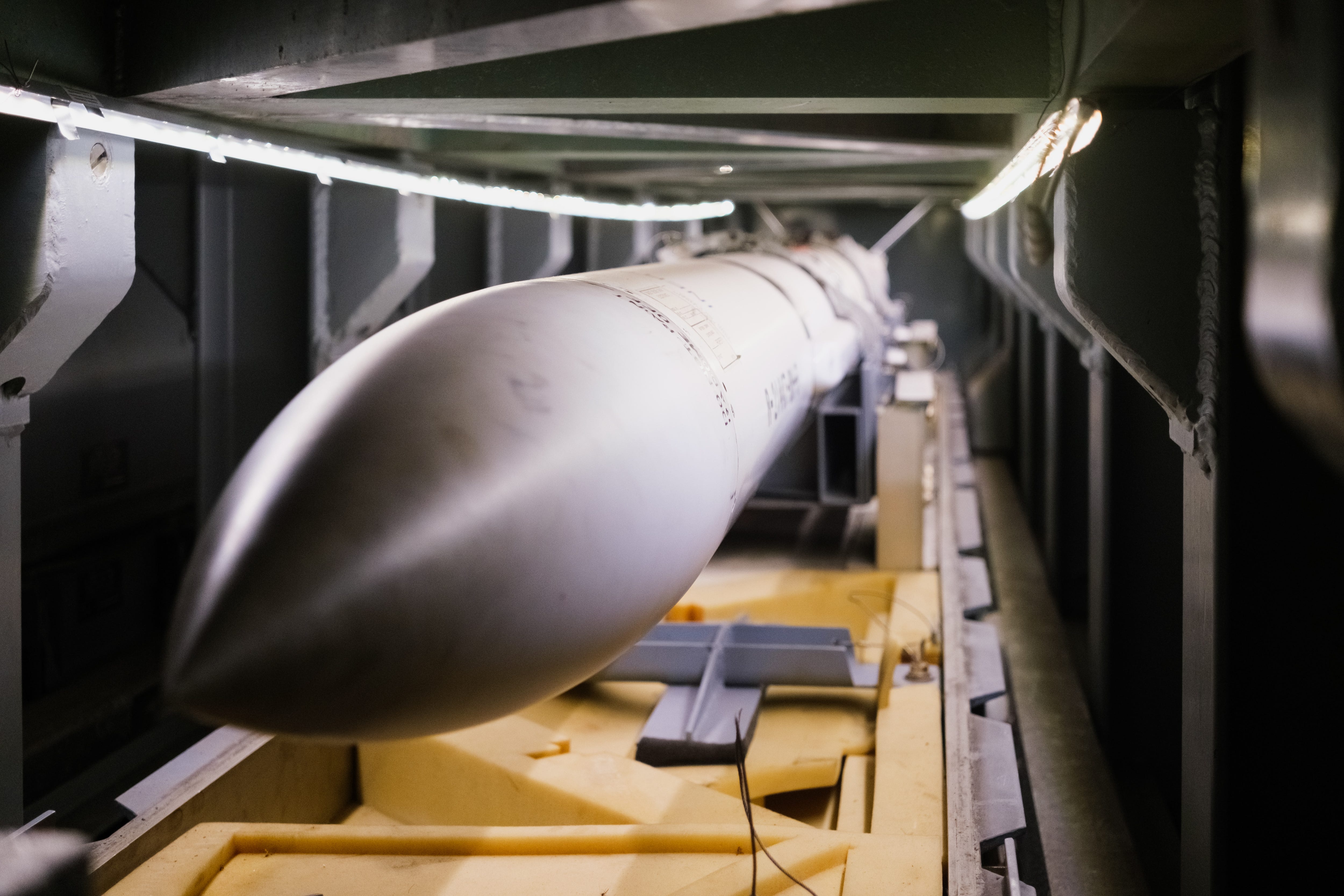
The US Air Force just told the defense industry it wants a missile that can fly at least 1,000 nautical miles (1,150 miles) and shoot down an airplane at the end of the trip.
That’s quite far… And quite hard.
For my readers in the civilized world, that’s about 1,852 kilometers, or the span from Washington to Dallas. And the Air Force wants to cross it and still connect with a moving aircraft that has spent the entire flight trying not to be where the missile thinks it is.
Technically speaking, how do you get a missile to fly 1,000 nautical miles? It would have to be a monster. Also, how do you keep it on target if you’re hunting ships and aircraft that move?
Let’s take a look.
What the Air Force actually asked for
On June 24, the Air Force Life Cycle Management Center’s Armament Directorate at Eglin Air Force Base posted a notice announcing a new program called the Air Force Long Range Weapon, or AFLRW. It’s calling industry to a classified two-day event at Eglin on August 25 and 26, (Secret clearance required at the door), to lay out what it wants and hear what industry thinks it can build.
The shape of the ask is this: A family of missiles in two flavors, air-to-air and air-to-surface, both with a threshold minimum range of 1,000 nautical miles, built to hit priority air, land, and sea targets “far and fast.”
The air-to-air version gets priority for initial fielding, which is the eyebrow-raiser, since that range is roughly ten times the reach of the AIM-120 AMRAAM that has anchored Western air combat for thirty years.
The notice leans hard on modular components, open architecture, and finding a “Master Integrator” to bolt the subsystems into a finished round. There’s $49.5 million in the FY2027 request, so this is still concept refinement, not a production line yet.
Two things tell you where this is pointed. The notice names China-focused defense planning scenarios as the yardstick, and the “air-to-air priority” gives away the target set.
Nobody builds a thousand-mile missile to win a dogfight… They build it to kill the airplanes that make the enemy’s entire air war function.
The reason the Air Force is thinking in four-digit ranges is geography, and the geography is brutal.
From the US base on Okinawa to Taiwan is around 390 nautical miles.
From Andersen Air Force Base on Guam to Taiwan is roughly 1,500.
A war in the Western Pacific is fought across distances that would violently wake up the ghost of Douglas MacArthur; and we don’t need that shit, we have enough ego running the country as it is.
(Actually, I wonder what General MacArthur would make of Donald J. Trump?)
Out there, the airfields are far apart, the ocean is enormous, and everything worth hitting is moving.
China has spent decades building anti-access and area-denial, a thick layer of long-range radars, surface-to-air missiles, and anti-ship weapons designed to shove American airpower farther and farther from the fight.
Push the fight far enough out and the vulnerable pieces start to crack, especially the big, slow, irreplaceable support aircraft.
In the Pacific, range starts being the price of admission. A thousand-mile weapon lets a launch aircraft sit outside the worst of the threat and still hold the good targets at risk.
