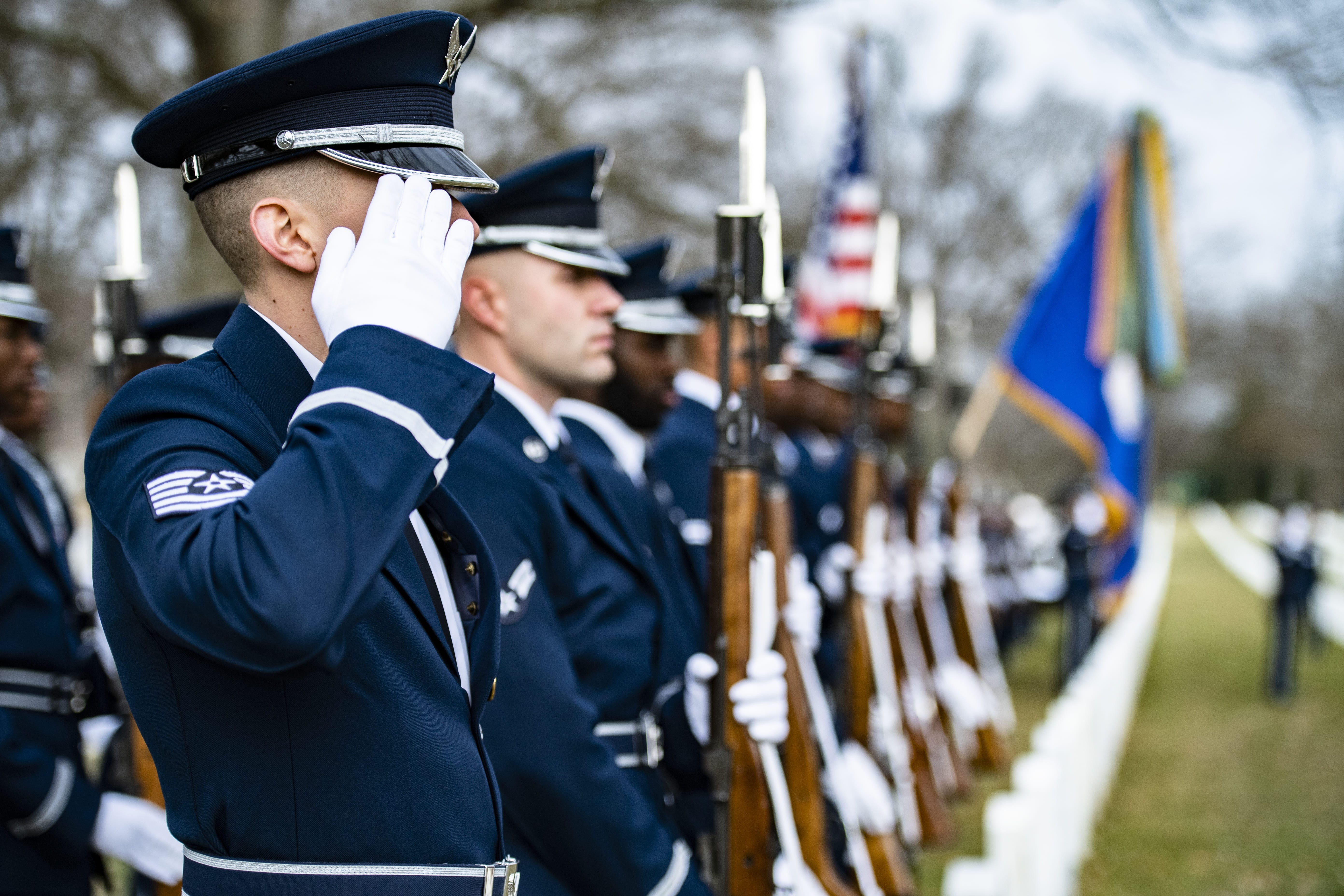
The US Military Is Not Donald Trump’s Personal Army
Professionals inside the military are in an existential struggle happening behind the scenes
In 2015, I gave a series of speeches at the US Air Force Academy’s National Character and Leadership Symposium. The theme that year was, “Professionalism in the profession of arms.”
They even gave me a nifty plaque I still display in my office.
Those cadets I spoke to are, right about now, (eleven years later), halfway through their Air Force careers.
Today, I came across an MSNBC interview with a retired general claiming that mid-level Air Force commanders he spoke with are pushing back on the Secretary of Defense and refusing to hit civilian targets in Iran.
Good. Maybe some of them took my advice to heart. Professionalism should be protected as passionately as you would the homeland.
But there is real danger here.
If what appears to be happening inside the military is true, the professional officers are in an existential struggle happening behind the scenes, and whether they succeed or fail may determine the fate of the military.
So, let me start with this: No matter what you see on Truth Social, the United States military is not the armed wing of a political movement, not a campaign prop in multicam, and not a red-hatted enforcement tool.
It serves the Constitution.
I know… That sounds basic.
It should sound basic.
The fact that it no longer feels basic tells you how badly the line between state and faction has started to blur in American politics.
What pushed this into sharper focus for me was a recent comment from retired Army Major General Randy Manner. Speaking on MSNBC, he said he had secondhand knowledge that military officers at CENTCOM were already pushing back on requests from Pentagon leadership to hit civilian targets in Iran.
He was careful with the claim. He said more than once that he did not have firsthand knowledge.
Still, what he described deserves your attention: Air Force officers and planners quietly refusing to turn illegal targeting into executable policy and redirecting discussion back toward actual military objectives.
If that’s true, then good. That’s how a professional military is supposed to work.
It should also scare the shit out of you.
First, it should reassure you because professional military officers are not there to clap like trained seals when a civilian superior says something stupid. They are there to apply judgment, including legal judgment, operational judgment, and moral judgment, before unlawful bullshit rolls downhill toward people whose job is to execute orders.
But it should alarm you because it suggests that constitutional damage control may already be happening inside the chain of command while officers simultaneously try not to get fired by political appointees above them.
That’s not normal... That’s not a system operating the way it was designed to operate.
The military was designed to belong to the republic, not to the moron who happens to be commanding it at any given moment. The post-World War II officer corps was shaped around that principle.
The tradition held through the civil rights era, Vietnam, Watergate, and every other constitutional stress fracture this country managed to survive because the people inside the institution understood where their legitimacy came from.
It came from law.
That architecture is under real pressure now.
Defense Secretary and middle school bully Pete Hegseth has already removed senior officers, including Army Chief of Staff General Randy George, during an active military operation and without any publicly stated cause.
The removals may be technically within the Secretary’s authority, but the atmospherics are something else entirely.
When senior commanders start getting fired without explanation during wartime, the institutional message is legible to everyone inside the building:
Loyalty to Trump over loyalty to the country, or you’re out.
That message travels down the chain of command faster than Private First Class can buy a Dodge Charger at a 34% interest rate (which is usually the first thing they do).
Real institutional decay seeps in through atmospherics, incentives, and fear. Officers start reading the command climate the way infantry reads a tree line, looking for cover, concealment, and tripwires.
The question inside the building stops being, “Is this strategically sound?” and starts becoming, “Will this get me shitcanned?”
This “CYA” attitude (cover your ass) is the worst part of American corporate culture finally infecting the military.
It’s poison to professionalism in the profession of arms.
It corrodes the one thing a professional military needs from its officer corps more than almost anything else: honest candor.
Civilian leaders need military professionals who will tell them when an idea is illegal, foolish, self-defeating, or all three. A general who tells the Secretary of Defense that a proposed target is unlawful isn’t being difficult. He’s just doing his fucking job.
A colonel who refuses to package civilian infrastructure as a valid military objective isn’t obstructing policy. He’s preventing a war crime.
That candor is one of the load-bearing beams of constitutional government and civilian control of the military is a real, tangible pillar of our functioning system.
But civilian control has never meant that civilian leaders can issue any order they want and expect professional compliance.
The law of war is not optional and cannot be overridden by any president. The Uniform Code of Military Justice contains explicit provisions obligating service members to refuse unlawful orders.
The Army’s own professional ethics guidance, the product of nearly one hundred years of doctrine development, makes clear that officers are required to obey lawful orders and required to refuse those that are not.
That’s the architecture of what makes a professional military different from a paramilitary force serving a strongman. A military that treats legality as someone else’s department is a machine for organized criminality.
The law expects officers to recognize that difference. Professional military education exists to train them to recognize that difference.
So if what Manner described is happening inside CENTCOM, if officers and planners are quietly redirecting illegal targeting requests away from civilian infrastructure and toward legitimate military objectives, they aren’t going rogue. They are performing exactly the function the republic built them to perform.
That is the reassuring part.
Manner reached for a metaphor that captures the dynamic well enough: the Jedi mind trick, steering attention from the illegal target toward a lawful one.
For those of you concerned that the US military is now an arm of “Trump International Holdings” let me restate this: Air Force officers are using a “Jedi mind trick on civilian leadership” because they know what they’re being asked to do is illegal.
Holy shit…
But notice I said “illegal targeting requests.” So far, that’s what these have been: Requests, not orders.
Manner also made clear that he did not know what would happen if Trump were to issue a direct order to strike civilian infrastructure rather than having Hegseth float the idea or “request” it through channels.
That’s the cliff edge in this whole discussion. Quiet redirection works right up until the order becomes explicit, formal, and politically impossible to finesse.
Then the choice narrows to compliance or defiance; promotion board or criminal exposure.
No republic should want its mid-level and senior officers cornered into making that choice without institutional cover.
Because then, senior commanders start protecting themselves. Intermediate officers start deferring upward on decisions they should own. Honest professional disagreement gets rebranded as sabotage. Legal objections become acts of personal courage rather than normal staff work.
The professional filter that is supposed to catch illegal or catastrophically stupid ideas starts leaking.
That is how civilian error turns into war crimes: Through fear. History is full of militaries that went down that road.
It never ends with a stronger force.
Just look at Russia: A force can still have jets, ships, tanks, satellites, and beautifully pressed uniforms while its professional core rots from the inside, rendering them essentially combat ineffective.
Not long ago, the US military enjoyed broad bipartisan public support as one of the most trusted institutions in the nation. The apolitical character of the American military is one of the reasons it has held public trust across party lines for so long.
That trust was never perfect and it has certainly not been evenly distributed.
Still, for decades, broad swaths of the public believed the military belonged to the country rather than to one political tribe.
This is where I think some writers and commentators are getting the story wrong. They look at Trump, look at Hegseth, look at the administration’s open contempt for institutional restraint, and then start talking about “the military” as if the entire force has already merged with MAGA.
That’s too simple, and it misses what is probably the most important fact in the entire picture: It’s easy to misuse a hammer if the hammer has no agency to protest. The professionals inside the military are not the same thing as the political leadership above them.
They don’t have the same obligations.
They don’t necessarily share the same goals.
In fact, if Manner’s account reflects reality even partially, some of the most important resistance to unlawful conduct may be happening inside the uniformed institution itself, quietly, and under real personal risk.
That’s why I won’t tolerate people condemning the entire military as though it were some monolithic extension of Trumpism.
I wore the uniform and I know the culture. The officers and senior NCOs I served with were not looking to become props in domestic MAGA theater. They had political opinions, obviously. Every servicemember does. They voted. They griped. They had the same mix of patriotism, frustration, dark humor, and cynicism you’ll find in any large military organization.
But the common thread was professionalism. They just wanted lawful missions and clear objectives. They wanted to feel proud about what they had done at the end of the day. They wanted to keep their families safe and come home.
If officers at CENTCOM or elsewhere are doing that right now, then they deserve more than a nervous pat on the head from retired generals on MSNBC. They deserve our support with every lawful and constitutional tool available, before the professionals inside the system run out of room to maneuver.
And if I could speak to those same cadets again today, now probably Majors and Colonels in the US Air Force, I would say this: Keep fighting. Professionalism in the profession of arms is worth protecting.
Слава Україні!
Update: Unfortunately, I am restricting comments to paid subscribers due to an influx of trolls. I’ve banned several from the publication, but it’s like playing whack-a-mole.


Very important column.
The deeper issue isn’t whether the military is “with” Trump.
It’s whether a legitimacy-bearing institution can remain impersonal once politics becomes sufficiently personalized.
A professional military is supposed to serve as a constitutional filter, not a factional extension of a leader’s will.
The real test is whether that filter still has enough autonomy to stop illegal or personalized commands from entering the execution stack.