


Back to our regularly scheduled programming. As a reminder, I publish (typically) two free articles every week, one on Tuesday and one on Friday. And (definitely) two exclusive paid articles Wednesdays and Sundays.
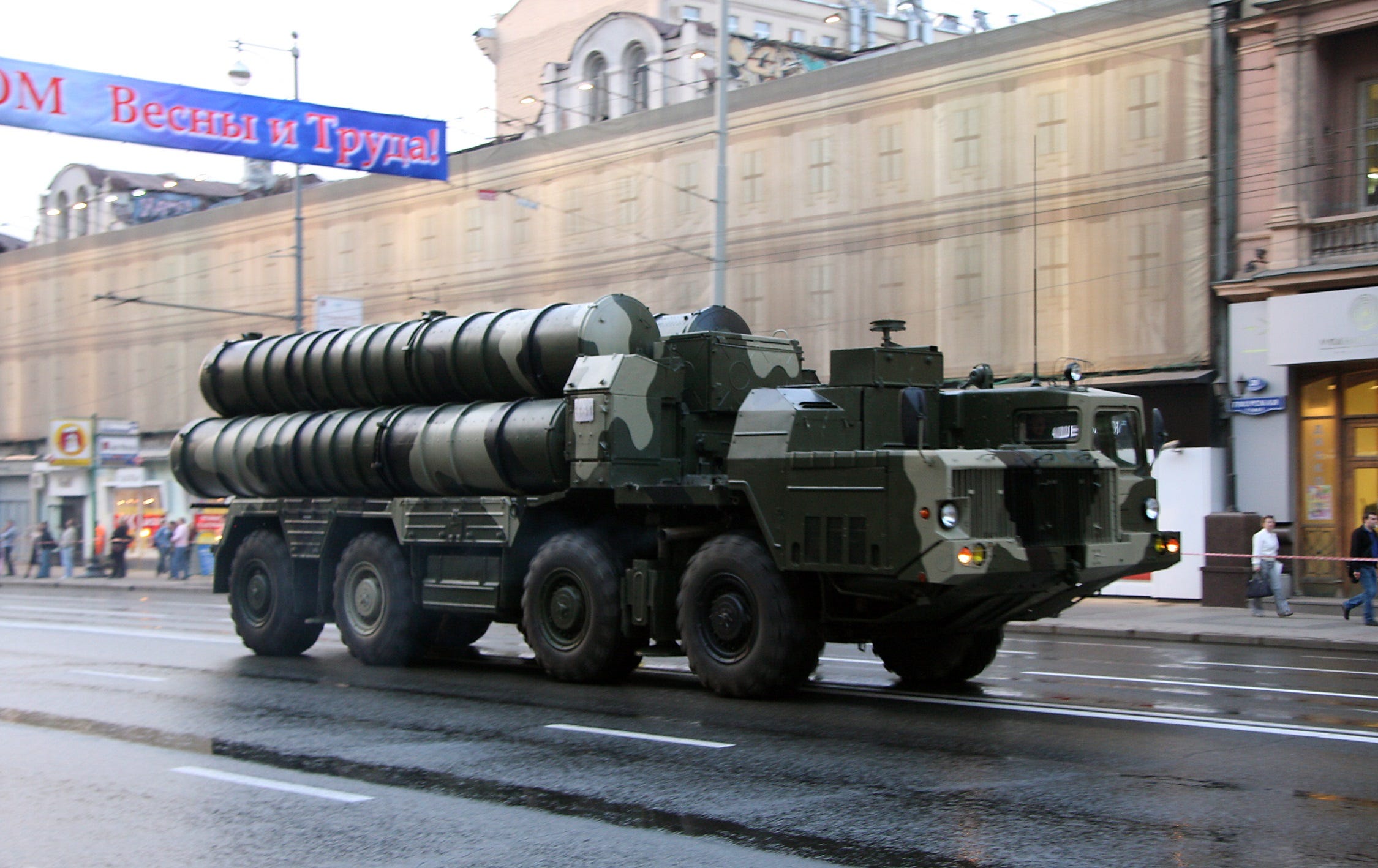
The first clear reporting that the United States suddenly had hands-on access to Venezuela’s Russian-made S-300VM came from We Are The Mighty.
Here’s the scoop: US special operations forces and the CIA are crawling through the wreckage of Venezuela’s premier air defense system right now.
This is a strategic intelligence bonanza with long shadows stretching from Caracas to Tehran, Beijing, Pyongyang, and every other capital that bought into Moscow’s air defense mythology.
This is the autopsy.
The Myth Russia Sold, and Venezuela Bought
For more than a decade, Moscow marketed the S-300 family as the ultimate American spoiler. Not a weapon you casually defeated, but a system that changed the math before the fight even started.
The pitch was never subtle.
Western airpower, Russia insisted, relied on habit, altitude, and electronics. The S-300 was designed to punish all three.
Dense radar coverage.
Overlapping engagement zones.
Missiles fast enough to make those smarmy F-15E pilots second-guess their life choices.
At the top of that sales pyramid sat the S-300VM Antey-2500. This was the export version Russia held up as proof that it could still play in the big leagues.
Anti-ballistic missile capability, at least on paper.
The ability to track dozens of targets simultaneously.
Claimed resistance to jamming.
A system that, according to Russian salesmen, could swat cruise missiles, threaten stealth aircraft, and complicate even short-range ballistic attacks.
In glossy export brochures and carefully stage-managed exercises, the S-300VM looked less like a missile system and more like a force field. The message was not that it would win wars on its own, but that it would make wars too costly to start.
This was deterrence by reputation, amplified by Russia’s long history of air defense success stories and Cold War nostalgia.
Venezuela was fertile ground for that pitch.
Under Hugo Chávez, Caracas made a deliberate turn toward Russian military hardware.
Part ideology, part grievance, part survival instinct. Chávez knew his air force was aging. He knew radar coverage was uneven. He knew the Venezuelan military looked intimidating on parade and brittle under scrutiny.
Russian air defense offered a shortcut. Instead of rebuilding pilots, training pipelines, and sustainment infrastructure, Venezuela could buy a shield.
After Chávez’s death, Nicolás Maduro doubled down. The purchase of two full S-300VM battalions, at a cost hovering around $2 billion, was a strategic bet. The bet was that Russian hardware could compensate for institutional decay. That technology could replace readiness. That deterrence could be imported in shipping crates.
Two battalions meant layered coverage, redundancy, and the appearance of depth. It meant radar vehicles, command posts, engagement radars, reloads, and the logistical tail to keep them nominally alive.
On paper, Venezuela now possessed one of the most capable air defense systems in the Western Hemisphere.
The message Caracas wanted to send was blunt. Touch Venezuela, and you bleed.
That message mattered internally as much as externally. The S-300VM was a psychological crutch. It allowed the regime to project confidence without fixing the harder problems.
Pilot training could languish. Maintenance backlogs could grow. Command culture could rot. The shield would hold.
Or so the story went.
What Russia sold was reassurance. It sold the idea that air defense alone could freeze an adversary’s decision-making. That the mere presence of an S-300 battery would force Washington to pause, escalate slowly, or look elsewhere. Like a porcupine that the eagle looked at and decided it wasn’t worth the effort. There were easier meals elsewhere…
This myth worked for years because it was rarely tested under modern conditions.
On January 3, 2026, it was tested.
And in under twenty minutes, the illusion collapsed.
The force field was gone. The deterrent evaporated. What remained was wreckage, stunned silence, and a long list of other countries quietly re-reading the fine print on their own Russian air defense contracts.
What Actually Failed
The failure of the S-300VM in Venezuela was not a single catastrophic flaw. It was death by assumptions.
Start with the radar. The heart of the system is the 9S32ME engagement radar, known to NATO as “Grill Pan.” On paper, it appears formidable. High-power phased array. Designed to burn through jamming by brute force output. Built to dominate a clean electromagnetic environment.
Modern warfare does not offer clean environments.
The moment Venezuelan operators activated that radar at full power, they did more than search the sky. They turned their position into a blazing lighthouse. In an era of advanced American anti-radiation missiles, passive detection, and real-time electronic intelligence, that kind of emission is not bravery. It is self-harm.
