


Somewhere this afternoon, a Boeing 737-900ER will land at O’Hare in a 20-knot crosswind. The tires will chirp, the thrust reversers will roar, and before the aircraft has reached the gate, one guy will be standing in the aisle yanking his roller bag out of the overhead bin while a flight attendant asks him, for the third time, to PLEASE SIT THE FUCK DOWN.
Nobody on that airplane will think about the FAA inspector who signed off on the engine maintenance.
Few will engage a single neuron considering the controller who sequenced them around a thunderstorm over Joliet.
And I guarantee you that no one will spare a thought for the engineer who wrote the rule requiring the airline to replace a cracked fitting after no more than 200 flight hours.
If those people did their jobs well, the passengers will never know their names.
Historian Sarah Paine, who teaches at the Naval War College, has a useful way of thinking about this:
Some objectives are positive… You build something, attack something, launch something, or create something, and when you’re finished, Trump can snap a photo of the result and post it to Truth Social.
Other objectives are negative. Not negative in the “bad” sense, mind you. But negative in that they prevent something from happening: like the bridge doesn’t collapse, the bank doesn’t fail, the airplane doesn’t crash, or the enemy doesn’t invade.
Success in the realm of negative objectives leaves you with almost nothing to show for it. And this is kind of a big problem for some Americans who can’t (or won’t) think about the bad things that don’t happen.
The trouble with nothing
A government can prove it spent $5 billion because they keep all the receipts. But a government has a harder time trying to prove that spending the $5 billion stopped something worse from happening.
The price we had to pay exists in our timeline. The catastrophe exists in a timeline that never happened.
Of course, some negative objectives are more quantifiable than others: visit any factory floor in Michigan and notice the sign that says, “281 days without a workplace accident!” Great! Whatever you did to achieve that outcome is called a negative objective.
Remember Y2K?
Governments and corporations spent obscene amounts of cash during the late 1990s fixing software before computer clocks rolled from 1999 to 2000. Then January arrived, nothing happened, and a HUGE number of pundits concluded that Y2K had been overblown.
Overblown? Really?
My point is that the repairs worked so well that the success itself became evidence that the repairs had never been necessary in the first place.
This thinking would be hilarious if it weren’t so tragic, and impacted so many of us around the world.
Back when I was studying for a UN security certification during my coursework for my international relations bachelors, I encountered a name for this: the preparedness paradox.
You spend heavily to prevent a disaster.
The disaster doesn’t happen.
People then point to the absence of disaster as proof that you wasted the money.
Most of us experience government through forms, fees, taxes, inspections, and waiting rooms, all of which are visible and annoying.
What those systems are designed to prevent usually isn’t visible at all: Food inspectors, bank examiners, bridge inspectors, weather forecasters, air traffic controllers, nuclear security specialists, epidemiologists, and intelligence analysts all work in the business of nothing happening.
When they do their jobs, citizens don’t experience “government success.” They experience just another average day in a democracy.
That makes preventive institutions, the so-called “deep state,” easy targets to cut. The budget sheet shows their mid-range government salaries, but it doesn’t show the disaster that never happened.
Eighty years of shit that didn’t happen
The people who built the postwar order understood this instinctively because they had lived the version of the world where everything went to hell in a handbasket.
They watched a global depression feed protectionism and trade wars, and those feed populist leaders and extremism.
They watched democracies appease aggressors one annexation at a time, watched collective security fall apart, and watched America try to sit the whole thing out.
Then they spent four years burying tens of millions of people across Europe and Asia in a war that industrialized death on a scale we had never seen up to that point. Those people came out of that experience convinced that stability must be engineered.
So, they built a system made almost entirely of negative objectives:
Bretton Woods was there to prevent monetary chaos and economic collapse, and GATT, the forerunner of the World Trade Organization, was meant to stop the tariff jerkoffs that had wrecked the 1930s.
The Marshall Plan kept a starving Western Europe from falling to radicals.
NATO was formed to prevent another war in Europe, and forward-deployed American troops meant no aggressor could take a country before America finished mobilizing.
The US Navy kept the sea lanes open, nuclear deterrence kept the bombs in their silos, and the United Nations, for all its flaws, gave disputes somewhere to go other than the battlefield.
If we look at what that system actually produced, we’ll see a whole lot of nothing.
There was no third world war. The Soviets never rolled into Western Europe, France and Germany never went to war again, Imperial Japan never reemerged, no hostile power ever dominated all of industrial Europe, and no nuclear weapon has been used in anger since 1945.
“Nothing happened” is the greatest achievement in modern history…
The generation that built the system knew what “the failure” looked like because they’d lived in it. But their MAGA grandchildren inherited the benefits without ever seeing the alternative…
They can see the NATO budget, the overseas bases, the foreign aid line items, and the underpaid diplomats. They can’t see the war NATO prevented or the state collapse that the aid prevented.
By the mid-2010s, the postwar order became vulnerable exactly because it worked so well.
Now we have Trump and MAGA.
Traditional conservatives always understood negative objectives… at least in national security.
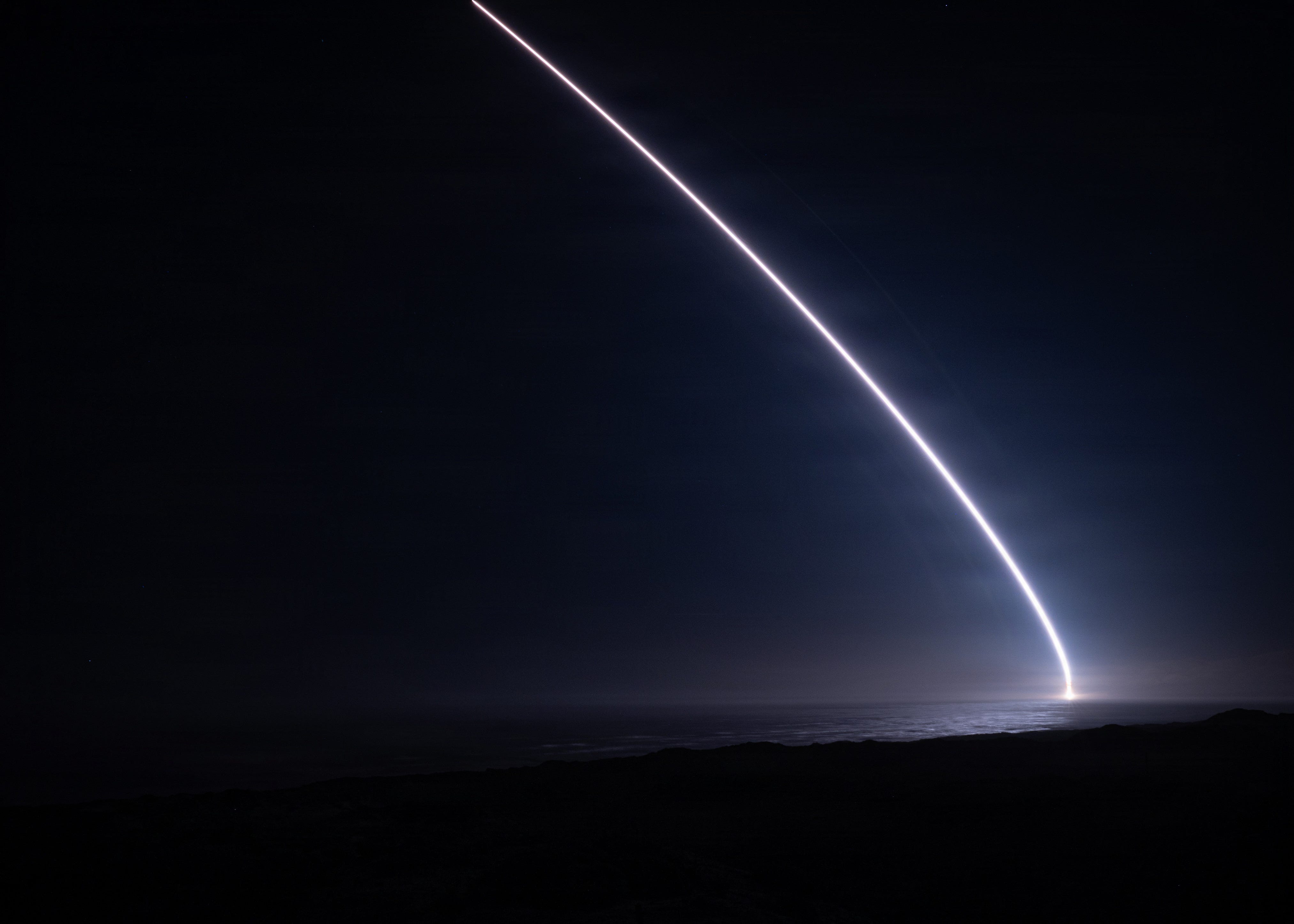
Reagan-era Republicans could explain nuclear deterrence in their sleep. The whole point of a Minuteman III missile is that it never launches.
The populist movement that now controls Washington is something different.
It’s built around a theory of government that only values what it can see, film, and take credit for. A border wall can be photographed… So can a military parade, a tariff announcement, a stack of executive orders signed in front of cameras, or a chainsaw waved on stage to celebrate gutting federal agencies.
But a wildfire that never spread, a midair collision that never happened, or a war that never expanded can’t be photographed, so in Trump’s America, it doesn’t exist.
The government jobs whose success looks like nothing
The Trump administration came into office promising to dismantle large parts of what it called the “deep state,” reduce the federal workforce, eliminate redundant programs, and restore political accountability over career government employees.
The trouble comes when you try to identify waste inside organizations whose primary product is prevention.
According to the Government Accountability Office, nearly 378,000 employees left 22 major federal agencies during 2025 while about 127,000 were hired. The net reduction was nearly 256,000 people, more than 11 percent of the civilian workforce across those agencies.
Not all of them were fired. Some retired, resigned, accepted buyouts, or left because of hiring freezes and reorganizations.
Imagine the scale…
Thousands of years of accumulated institutional knowledge disappeared from the federal government in a remarkably short period.
Let’s look at the National Weather Service.
Roughly 600 positions disappeared from a workforce of around 4,200 during the initial reductions. Staffing shortages became serious enough that NOAA later received permission to hire hundreds of people back. But veteran meteorologists warned that institutional knowledge couldn’t simply be regenerated by posting a vacancy announcement.
The National Weather Service has an almost comically bad public-relations problem because success looks like nothing.
A forecaster detects hook echo that could signify a tornado’s rotation.
A warning goes out.
Families move to basements.
The storm passes.
Nobody dies.
The next morning, nobody writes a Fox News story about the federal employee whose forecast saved six people in Moore, Oklahoma.
Then there’s FEMA.
More than 4,300 employees separated from the agency during fiscal year 2025, according to GAO, roughly 17 percent of its workforce. Additional employees left during 2026 while hiring remained constrained. GAO warned that FEMA risked lacking sufficient personnel to manage large or simultaneous disasters.
Again, FEMA doesn’t prevent hurricanes.
It prevents hurricanes from becoming larger human disasters than they already are.
If everything works, FEMA’s contribution disappears into the background: Water arrives. Shelters open. Search teams deploy. Resources move. Power gets restored more quickly.
The hurricane is still shitty, only less shitty than it might have been without FEMA.
The same pattern appeared in food and drug safety.
The Department of Health and Human Services announced sweeping reductions in 2025 that included thousands of positions at the FDA and CDC.
One particularly revealing episode involved an FDA proficiency-testing program used to verify that roughly 170 laboratories could accurately identify dangerous pathogens and contaminants in food. Staffing reductions suspended the program.
What does that program actually produce? Nothing.
No contaminated spinach.
No undetected salmonella outbreak.
No children in intensive care.
The public sees laboratory techs, federal salaries, equipment, inspections, paperwork, and regulations.
Cybersecurity is even harder to see.
The Cybersecurity and Infrastructure Security Agency lost or sidelined a substantial share of its workforce through departures, reductions, and reorganizations beginning in 2025. Programs dealing with election security and cyber threat hunting were reduced as the administration argued that CISA had become too political and too broad in its mission.
But look at what CISA exists to prevent.
Russian, Chinese, Iranian, North Korean, and criminal hackers look for vulnerabilities in electrical grids, telecommunications networks, water systems, government servers, pipelines, hospitals, and election infrastructure.
Then there’s aviation safety.
On January 29, 2025, an American Eagle jet and an Army Black Hawk collided over the Potomac and killed 67 people. Barely two weeks later, the administration fired hundreds of probationary FAA employees, people who maintain the communications, radar, and computer systems that air traffic controllers depend on, at a moment when the agency was thousands of controllers short.
The CIA has offered voluntary early retirements to any staff who want it. The CIA doesn’t publish its workforce numbers publicly, but rumblings from inside the agency should alarm every American. They say: WE ARE LESS SAFE.
There are many more examples.
I could do this all day… but we need to get to Ukraine
The Trump administration’s genius, if you can call it that, is re-labeling.
Once a weather forecaster, a nuclear engineer, a career diplomat, or a food inspector gets flattened into the category of “deep state bureaucrat,” the preventive function disappears from the conversation.
The question stops being what catastrophe a job was designed to prevent and becomes why taxpayers are paying this person at all.
This is incredibly reckless… and they’re applying the same logic to Ukraine.
On October 20, standing in the Oval Office, the president said this about American support for Ukraine: “We’ve gotten absolutely nothing back except grief, death, tremendous monetary loss.”
Trump thinks this because the main thing America has bought is something that hasn’t happened. A government that can’t value an absence will eventually pay to cancel its own insurance policy, and that’s what scares me.
Why are we spending our tax dollars on Ukraine?
The invisible answer, that MAGA appears incapable of thinking about, is American support helps keep Ukraine from collapsing and keeps Russia from absorbing Ukraine’s population, industry, farmland, and strategic depth.
It prevents Moscow from learning that conquest pays and from turning next toward Moldova or the Baltics.
It heads off a much bigger NATO buildup later and a direct war between NATO and Russia.
Critics usually compare Ukraine aid to zero, but that’s the wrong comparison. The real choice is between supporting Ukraine today and paying for the plausible world where Ukraine loses.
In that dark world, there’s a victorious Russian army sitting on a much longer border with NATO, permanent American brigades stationed in Poland and the Baltics, new bases, bigger European and American defense budgets, millions more refugees, an economic shock across Europe, and a much higher chance of American soldiers dying by the tens of thousands.
The alternative to spending money now usually isn’t spending nothing later. It’s spending vastly more later, in worse conditions, with American lives instead of American hardware.
The fucked up part of this is that MAGA already understands this in their own lives.
They pay homeowner’s insurance every year and hope they never use it, and when their house doesn’t burn down, nobody calls the premiums wasted. Better still, think about your local fire code, the smoke detectors, the hydrants, and the building inspections. You’ll never know which of those prevented the fire that would’ve taken your neighborhood, and that doesn’t make any of them wasteful.
The absence of catastrophe isn’t evidence that prevention was unnecessary.
This is also why Ukraine’s battlefield map misleads Trumpers.
If the only metric is liberated territory, a front line that barely moves looks like failure. Add the negative territory, that is the Ukrainian territory Russia has failed to take, and the whole picture changes. Russia has thrown hundreds of thousands of soldiers at Ukrainian lines for over four years, and Ukrainian manpower and ingenuity, Western weapons, intelligence, fortifications, and air defense have kept 80 percent of the country out of Moscow’s hands.
A stalemate against a much larger enemy is a negative objective being achieved in real time. The front holding is the proof.
Somewhere in America there’s a 19-year-old private first class who will never fight a war in Poland, and a family who will never get a knock on the door from a casualty notification officer.
There’s a Pentagon budget that will never triple because NATO had to mobilize against a triumphant Russia.
There will never be a line in the federal budget that reads “Russo-American war avoided: several trillion dollars saved, zero Americans killed. 281 days without a workplace accident!”
Deterrence has always looked wasteful until it fails.
So wasteful, in fact, that this was the entire plot of the movie “Spies Like Us” with Chevy Chase and Dan Aykroyd. The villainous character General Sline (played by Steve Forrest) justifies launching a Russian ICBM at his own country (the USA) with the line, “A weapon unused… is a useless weapon.”
The aircraft carriers that never fight a peer fleet, the Canadian NORAD fighters that never intercept a real attack over the arctic, and the troops in South Korea who have never had to stop an invasion - all look like money for nothing, and chicks for free.
And the most important return on Ukraine aid may simply be a war that never gets bigger.
None of this means every program deserves to live forever. Some regulations are damned idiotic, some agencies are massively bloated, lots of aid gets wasted and misused, and some military commitments far outlive their purpose.
I understand that “prevention” can’t become a blank check, or the argument collapses into a defense of every odious bureaucrat everywhere.
But a competent government asks four questions before it cuts something: what does it cost, what specific failure this institution exists to prevent, how likely that failure is, and what it would cost if the prevention disappeared?
The Trump administration only asks the first one: “What does it cost?”
Applied to Ukraine, along with asking how much we’ve spent, we should ask what we’re preventing.
Along with asking how much territory Ukraine has liberated, we should ask how much Russia has failed to take.
And along with asking what we get for our money, we should ask what failure would cost.
By the way, that airplane at O’Hare is at the gate by now.
The passengers are filing out, still annoyed about the asshole who stood up and started getting his carry-on before the captain turned off the fasten seatbelt sign…
Not one of them is thinking about the mechanic who made the landing routine. That’s what success looks like when the objective is negative.
Trump supporters can protest every Patriot missile, every artillery shell, every dollar sent to Ukraine. But for some reason, they have the mental inability to count the wars that never started, and the folded flag that was never handed to a young son at Arlington.
The most expensive lesson of World War II was that preventing catastrophe is far cheaper than defeating it after it arrives.
Please vote.
Слава Україні!
One of your best, Wes.
Precisely the same paradox haunts epidemiology and infectious disease prevention (vaccinations).
People who are transactional have no 'negative' imagination.
Thanks!
Brilliant analysis and context! Thank you.
I had to look up Слава Україні! - Slava Ukrayini! - Glory to Ukraine.