



Think of this as your weekly, quick strategic weather report for paid subscribers. Five things to watch and what could break next in war, defense tech, and geopolitics. Just the pressure points most likely to shape the next seven days. This doesn’t necessarily telegraph what I’ll be writing about this Tuesday (free), Wednesday (paid), Friday (free), or Sunday (paid); rather, these hit my radar and are worth mentioning to kick off your week!
If you want to understand how I build my OSINT dashboard, I wrote about my full workflow here:

Let’s jump in:
1. The Hormuz “Guidance” Mission Is the Most Dangerous Thing Happening Right Now
Let’s be precise about what the US just announced, because the word “guidance” can be confusing. The US Navy is planning to escort commercial vessels through the Strait of Hormuz, a waterway Iran’s parliament is now on record saying will “not return to its pre-war state.” Iran has explicitly warned that the escort mission violates the ceasefire.
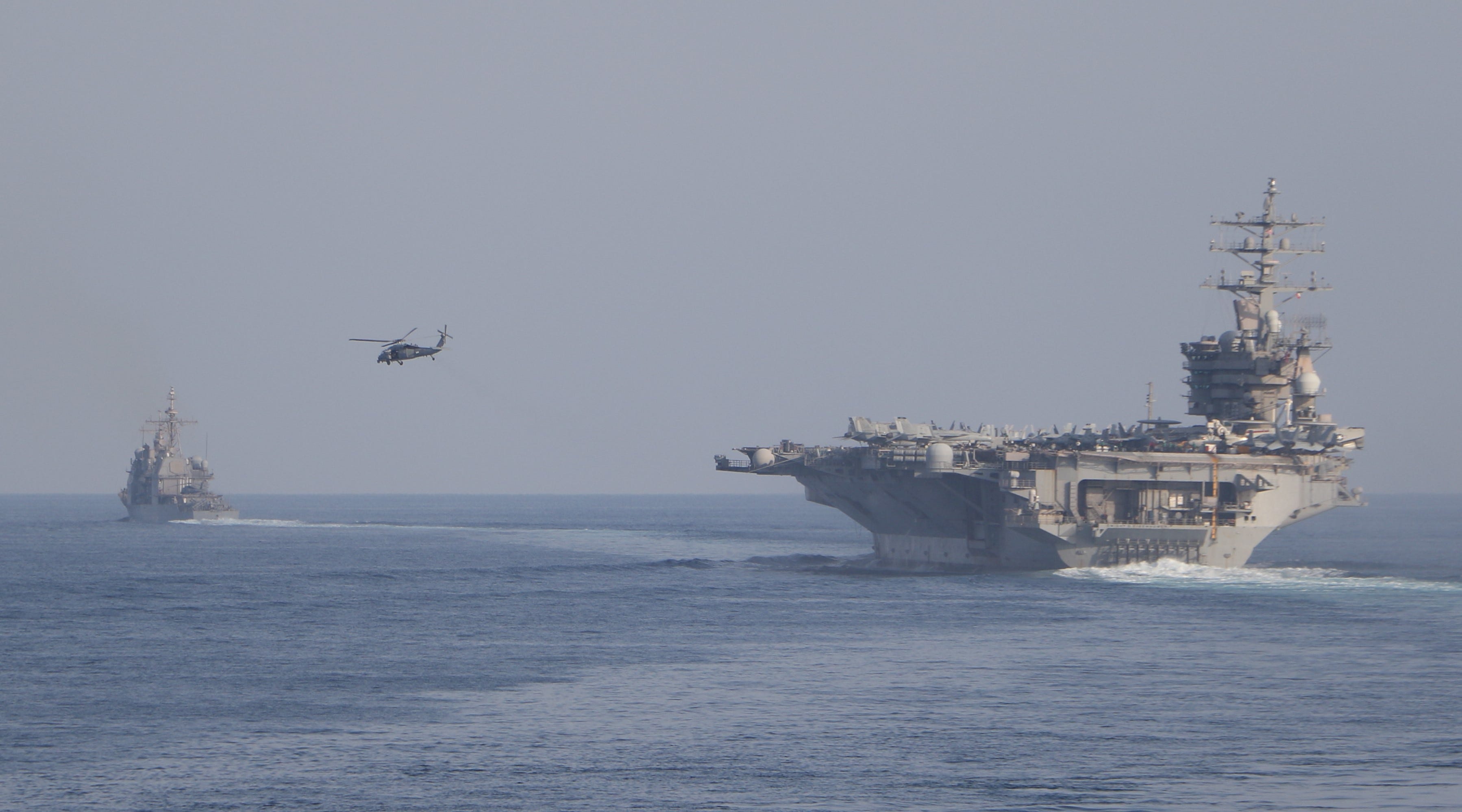
Two carrier strike groups, Abraham Lincoln and George H.W. Bush, are sitting in the Arabian Sea.
Trump’s plan, dubbed “Project Freedom,” may soon produce the first US Navy escort convoy in the Strait of Hormuz that draws fire. Iran has declared that Hormuz will not return to business as usual. The United States is now preparing to physically escort commerce through it. Put those two policies in the same narrow waterway and you don’t need a crystal ball to see where the sparks are likely to fly.
Iran has staked domestic credibility on controlling access to Hormuz. The United States has staked credibility on freedom of navigation. Those two positions cannot comfortably coexist inside a 21-mile chokepoint, especially when both sides have already climbed high enough up the ladder that climbing down looks politically expensive. That’s how crises stop being press statements and start becoming radar contacts.
What I’m watching: The first actual convoy movement announcement. Watch Iranian naval and IRGC positioning in the strait in the 24 hours before and after any announced escort. Watch whether China or India formally protests US escort operations on their behalf. And watch Trump. His “not yet paid a big enough price” framing is either a negotiating posture designed to extract maximum concessions from Iran’s 14-point proposal, or it’s a genuine policy disposition that ends with airstrikes resuming.
The escort mission will clarify which one.
2. Ukraine Just Hit Moscow and Three Shadow Fleet Tankers in the Same Week
The overnight Ukrainian drone strike on the Mosfilm Tower, a luxury high-rise in western Moscow, represents something categorically different from previous Ukrainian long-range strikes on Russian territory in this escalation cycle.
