Ukraine Didn't Break America's Arsenal. We Did
A response to Responsible Statecraft's munitions crisis piece, and a lesson in confusing symptoms with causes

There’s a piece making the rounds from Responsible Statecraft that tries to explain America’s mounting munitions crisis. Here’s the spoiler version: Biden giving weapons to Ukraine put us in this position.
It’s got a clean argument and some real numbers. It also has a thesis that will land well with the isolationist wing of both parties.
The article’s author is Katherine Thompson, a senior fellow at the Cato Institute and former Pentagon official. Her Senate perch before that was as national security advisor to Sen. Mike Lee of Utah, one of the loudest and most consistent critics of Ukraine aid on Capitol Hill.
None of that makes her wrong. I’m sure she’s very qualified.
But it does explain why the piece front-loads blame onto Ukraine and PDA (the Presidential Drawdown Authority) while treating the Iran war and the industrial base as secondary complications rather than the primary drivers.
Institutional priors have a way of doing that.
The article’s core claim is that Presidential Drawdown Authority, wielded recklessly by Biden and a compliant Congress to arm Ukraine, is the primary driver of America’s munitions shortfall. Also, the Iran war made it worse… And Congress should reform PDA, so it never happens again.
There’s just enough truth in that paragraph to make it dangerous.
But here’s where I need to push back.
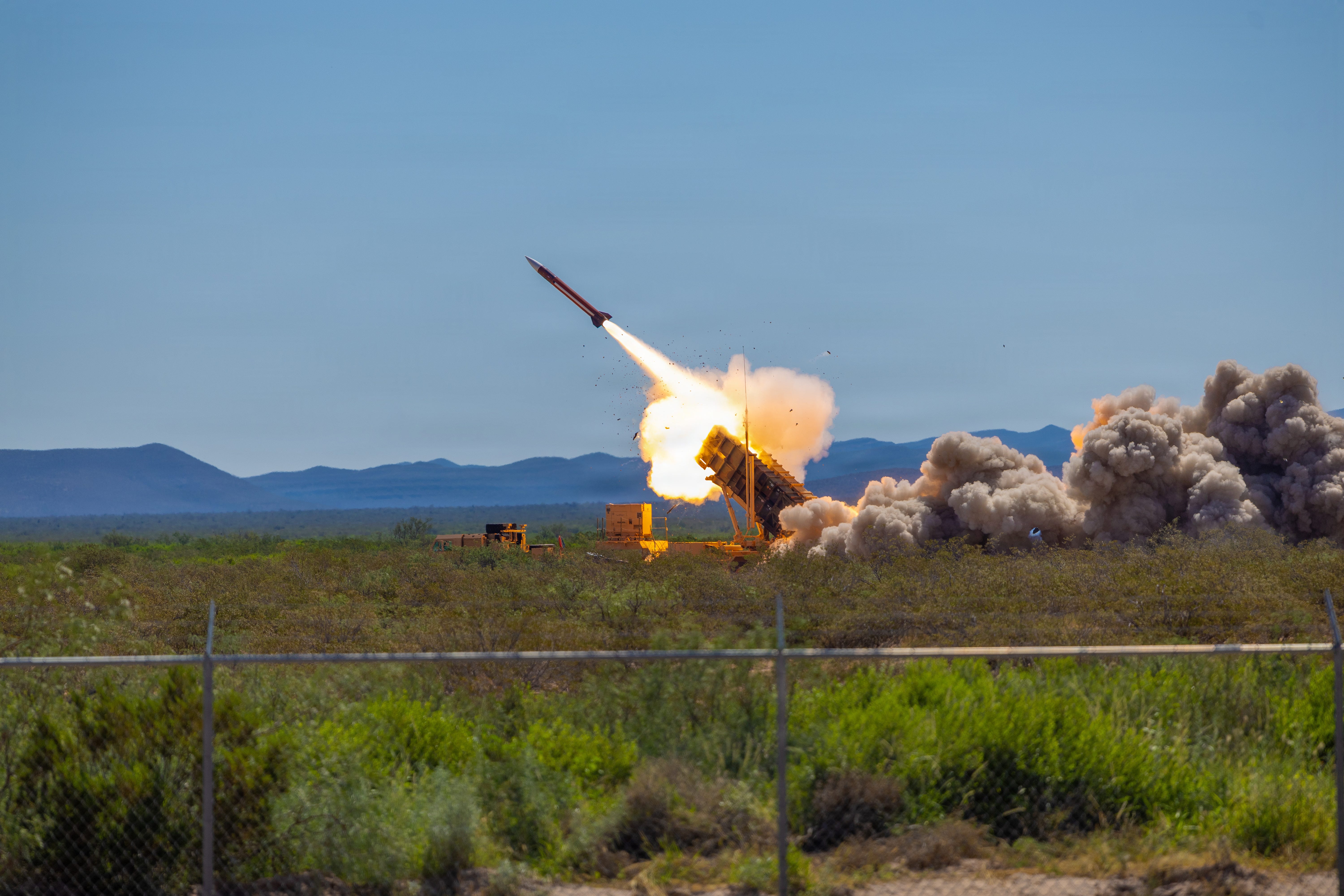
Ukraine did receive some advanced systems: Patriot batteries with munitions. HIMARS with GMLRS rockets. JDAM-ERs. GLSDB. ATACMS.
Those are legitimate high-value items.
But the bulk of what flowed through PDA, (the vast majority), wasn’t exotic. The Pentagon’s own Ukraine security assistance fact sheets (PDF warning) tell the story: more than three million 155mm artillery rounds, more than 800,000 105mm rounds, more than 10,000 Javelins, more than 2,000 Stingers, more than 40 HIMARS launchers, and three Patriot batteries.
The Patriots are the highest-end line item of the bunch.
The majority of the drawdown was ground-war consumables like artillery shells, anti-armor missiles, infantry fighting vehicles, MRAPs, Humvees, and Soviet-caliber ammunition for Ukrainian systems.
News flash: That’s not the missile inventory America needs to fight Iran. It’s the surplus shelf America accumulated over 40 years of preparing for a land war in Europe. We’re lucky American Pickers didn’t get to it first.
And that distinction is kind of a big deal for the Responsible Statecraft thesis, because the article’s most alarming numbers: 785 Tomahawks requested versus 55 procured last year, massive increases for JASSM, SM-3, SM-6, Patriot interceptors… those aren’t Ukraine-driven categories. Those are Iran-driven categories.
Tomahawk wasn’t a significant PDA item.
JASSM wasn’t a significant PDA item.
The missile-defense interceptor shortage is a consequence of prosecuting a hot war in the Middle East, not of shipping Javelins to Kyiv.
Conflating those two problems is analytically convenient.
But it’s also wrong.
Here’s the part the Responsible Statecraft piece glosses past entirely: the fragility of America’s defense industrial base did not begin in 2022.
For decades, the Pentagon optimized for boutique precision lethality in small, short wars against non-peer adversaries.
We built a just-in-time arsenal suited to counterterrorism and Amazon deliveries. We gutted surge capacity, allowed supply chains to atrophy, and tolerated production rates so low that a single year of sustained combat would exhaust stockpiles that took two generations to accumulate.
We basically designed a procurement system that works brilliantly, (when nobody is actually shooting back at scale).
Ukraine didn’t create that problem. Actually, the Iran war didn’t create it either. The Iran war accelerated a tab Washington had been running up for thirty years and paying the minimum balance on.
Well, that shit has now gone to collections. We should have tried Dave Ramsey’s debt snowball.
There’s a reason the Navy procured only 55 Tomahawks last year before the Iran war started.
That wasn’t Biden’s fault.
That wasn’t the PDA’s fault.
That was a defense industrial posture built around the assumption that we’d never need to sustain a major conflict.
Well. Mister Enemy gets a vote, too.
The article also frames the PDA drawdowns as a reckless hole dug with “little regard for the long-term consequences” and no replenishment plan.
Objection, your honor!
The Defense Department Inspector General would disagree with part of that characterization: Ukraine supplemental appropriations provided roughly $39.3 billion in replenishment funding to offset $31.8 billion in PDA-provided equipment, munitions, services, and training.
That doesn’t mean replenishment happened fast enough. It didn’t. That’s the real indictment; not that nobody planned for replenishment, but that the industrial base couldn’t execute it at the required pace even when Congress wrote the check.
Which brings us back to the actual root cause: production capacity, not political negligence. The weapon is only as good as the factory behind it.
Now here’s where I’m going to say something loud enough so the folks in Washington can hear me all the way from Michigan:
Arming Ukraine was the best defense deal the United States has made in a generation.
Maybe ever.
I spent time in the Air Force. My branch didn’t train me to think in terms of strategic ROI, but I’ve spent enough time since then studying how wars start and how empires overextend to recognize a bargain when I see one.
And what the United States got out of arming Ukraine, measured against the alternative, is almost embarrassingly good math. Sort of like a $700 Citizen watch I once found at a thrift store for 50 quid. Hell yeah, I’ll take that deal.
Here’s the alternative: Russia’s full-scale invasion, if left unanswered, had a realistic path to Western Ukraine in the opening months.
A collapsed Ukraine doesn’t end the war. It relocates it. Suddenly NATO’s eastern flank, Poland, the Baltics, Romania, is staring at a victorious Russian army sitting on a dramatically longer border, flush with momentum, testing Article 5 in ways that would demand a US response.
A real US response.
American soldiers. American aircraft. American ships. American casualties.
For decades, the United States built weapons systems, forward-deployed forces, maintained NATO commitments, and spent trillions on contingency war plans built around one central fear: a major European land war involving Russia.
Then Ukraine walked into that scenario like a gunslinger in the Old West and fought it themselves.
They absorbed the casualties themselves.
They shattered massive portions of Russia’s conventional military capability like ground forces, armor, aviation, logistics… sometimes with Western equipment, much of it older stock already depreciating in US storage facilities.
Let’s talk raw numbers for a moment. Total US military assistance to Ukraine across the entire war runs somewhere in the range of $65 to $70 billion when you account for all security packages.
That sounds like a lot until you compare it to the cost of a single large-scale US ground deployment to Europe.
The Iraq War cost the United States over $2 trillion and counting, including long-term veteran care.
The Pentagon disclosed on May 12, 2026 that Operation Epic Fury, AKA “Desert War IV: Keeping Up With the Ayatollahs,” has cost American taxpayers $29 billion to date. That’s, uh, (carry the one) just under half of all the military aid provided to Ukraine.
A major NATO-Russia conflict in the Baltics or Poland, with peer-level air defenses, ballistic missiles, and potential nuclear signaling, would make Iraq and Iran look like a field exercise at Fort Polk (truly the armpit of Army posts).
The operational costs alone, burning through precision munitions at wartime rates against a near-peer opponent, would dwarf every dollar sent to Kyiv.
Oh, and that’s before you count the American lives.
Russia entered this war with one of the largest land armies in the world. It’s bleeding out at catastrophic rates in personnel, equipment, and institutional knowledge that can’t be regenerated on a short timeline.
The army that was supposed to scare NATO for a generation is getting systematically dismantled by the world’s foremost experts in drone warfare. And the United States did not put a single armored brigade in the line of fire to make that happen.
That’s called deterrence by proxy. And, for the love of God, it’s working.
The critics who argue Ukraine aid was an unaffordable strategic indulgence need to answer one question: what exactly do they think we spent fifty years building NATO for?
The alliance exists to prevent a Russian military threat from metastasizing into a direct confrontation with American forces.
In Ukraine, that outcome was achieved without an American ground commitment. We paid in equipment and funding. Ukraine paid in blood. If that ratio offends your strategic sensibilities, I’d like to know what alternative you’re proposing, and I’d like you to attach a price tag to it.
There’s a version of the Responsible Statecraft argument that would be genuinely compelling: that the US supported Ukraine without simultaneously fixing the industrial base that made the drawdowns so costly.
That’s true. That’s the real failure. But that critique doesn’t lead you to “we shouldn’t have armed Ukraine.” It leads you to “we should have rebuilt the factory while we armed Ukraine.”
Those are very different policy conclusions.
What the article gets right
To be fair, the piece is correct that Congress should condition munitions funding on an actual strategy for the Iran war.
That’s reasonable.
It’s correct that PDA has been stretched beyond its original intent and warrants reform.
That’s also mildly reasonable.
It’s correct that America faces genuine strategic overextension managing simultaneous conflicts across multiple theaters.
Absolutely correct. And it’s correct that there’s no quick industrial fix.
But the diagnosis matters, because the wrong diagnosis produces the wrong treatment, although I’m not a doctor; I just play one on TV. If Congress accepts the “blame Ukraine” framing and reforms PDA as the primary fix, the underlying industrial fragility goes unaddressed.
And we’ll be back in this exact conversation in a decade, debating the next PDA recipient while the Tomahawk production line still can’t hit triple digits annually.
Look. The US munitions crisis is real. The cause is not.
Washington built a peacetime boutique arsenal for a world that no longer exists.
Ukraine exposed the gap, Iran blew it wide open, and China’s military modernization makes it genuinely terrifying.
The wrong lesson is “stop arming allies.” (What few we have left, that is.)
The right lesson is “build an industrial base capable of arming allies without cannibalizing your own readiness.”
Those are not the same lesson. Treating them as equivalent is how you end up with 55 Tomahawks a year and a surprised face when the budget request comes in at 785.
I have no doubt a Raytheon executive (the maker of Tomahawk) saw that number in his email one morning (785) and immediately felt the urge to visit his or her executive bathroom.
So, America didn’t lose its strategic edge because it sent Javelins to Kyiv. It lost it by spending forty years pretending a peacetime production schedule was a war-fighting posture.
This is the lasting legacy of the Global War on Terror on procurement policy: Fighting insurgents for 20 years will make you feel all-powerful; until Xi Jinping enters the chat.
Fix the factory.
Refill the shelves.
And maybe thank Ukraine for showing us the problem before China forced us to find out the hard way.
Слава Україні!


Really great article and really great rebuttal of a horseshit argument from Responsible Statecraft. The only real problem here is that you are arguing with political hacks who have absolutely zero interest in listening to reason. They're there to push a partisan political position, not to openly and honestly debate the real nuances of foreign policy and military procurement processes.
As a man who has spent his entire adult life in the business of developing, manufacturing and selling munitions to the DOD, I can promise you that Joe Biden, for whatever else his faults may have been, did not "give away the farm"; that farm was long gone even when I first entered the defense industry back in 1999 😁.
I skimmed so I may have missed it: the bulk of what was sent to Ukraine was too old for DOD to use. Using Ukraine as the disposal mechanism likely created significant savings on the various obsolete systems shipped.