


The drone war has a habit of humiliating everyone equally.
The side that thinks it found a clever trick gets about six weeks of superiority, then the other side finds a counter, then somebody bolts a third solution onto a civilian quadcopter with zip ties and spite.
We have watched that cycle play out with GPS jamming, inertial backups, decoy emitters, thermal camouflage, and now the newest battlefield religion: fiber-optic drones.
And here comes the next evolution... One I’ve written about several times here on Eyes Only.
Now, Ukraine is testing domestically developed microwave weapons meant to disable drones with high-power electromagnetic radiation.
The Brave1 platform’s CEO, Andrii Hrytseniuk, publicly acknowledged that Ukraine is already conducting tests, while also admitting microwave weapons sit outside Ukraine’s traditional comfort zone.
That honesty alone is refreshing, because it implies Ukraine is treating directed energy as engineering, not as a Marvel movie.
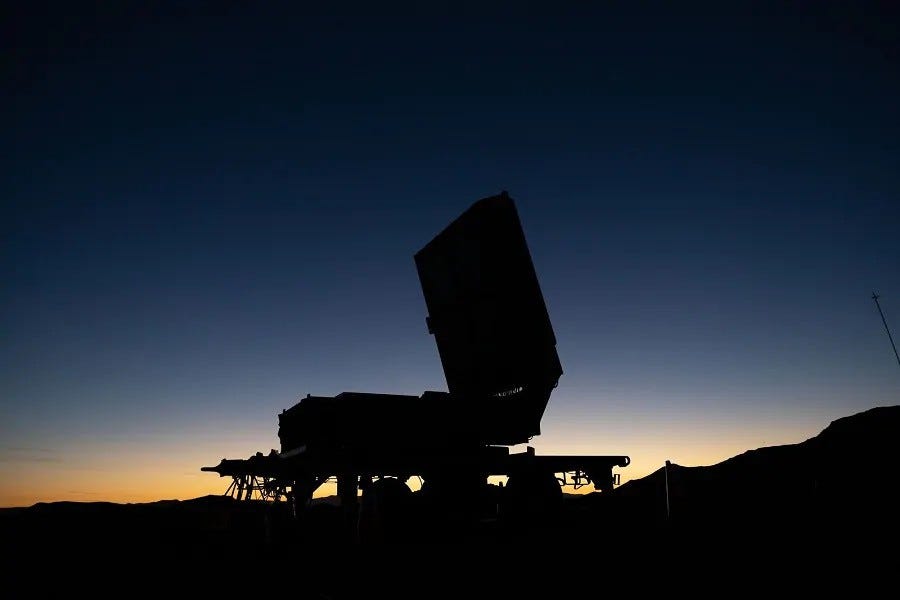
At the same time, the United States just did something that matters for the near future of this war. Epirus, the company behind the Leonidas high-power microwave system, says it successfully defeated a fiber-optic controlled drone during trials at a US government test range in December, and announced the results on January 13.
Epirus calls it the first recorded instance of an electromagnetic effects system disabling a fiber-optic guided unmanned aircraft.
Put those two news items together and you get a clear signal.
Everyone is staring at the same problem. The problem is not “drones,” because that word now covers everything from a hobby quadcopter to a one-way cruise missile with delusions of grandeur.
The problem is control, survivability, and cost. The problem is what happens when you cannot jam the link, cannot shoot everything down with bullets, and cannot afford to trade a six-figure interceptor for a cheap terror weapon with wings.
Microwaves enter the chat because the old counters are breaking.
Fiber-optic drones exist because electronic warfare works.
Russia and Ukraine both operate in a battlespace where the electromagnetic spectrum is a knife fight. Traditional FPV drones rely on radio-frequency links. Jam the link, you cut the operator’s eyes and hands off the drone. So, both sides adapted. If radio is contested, run a wire.
Fiber-optic FPVs spool out cable as they fly. The drone remains physically connected to the operator’s control station. No radio link to jam. No data stream to interfere with.
You can still detect the drone and shoot it, but the easiest electronic kill switch disappears.
Ukraine’s Ptashka Drones has even released combat footage of fiber-optic guided FPVs and claimed ranges up to 50 kilometers, which tells you how fast this concept is moving from novelty to routine.
