


Hey friends.
Last week, I started working on a YUGE explainer of Ukraine’s veritable zoo of an air defense stack; the different systems, their ideal targets, how each system finds and tracks targets… the whole shebang.
I had just finished when Ukraine revealed the Koral yesterday! So, I was able to insert that system here at the last minute and actually use that news to kick off the whole piece.
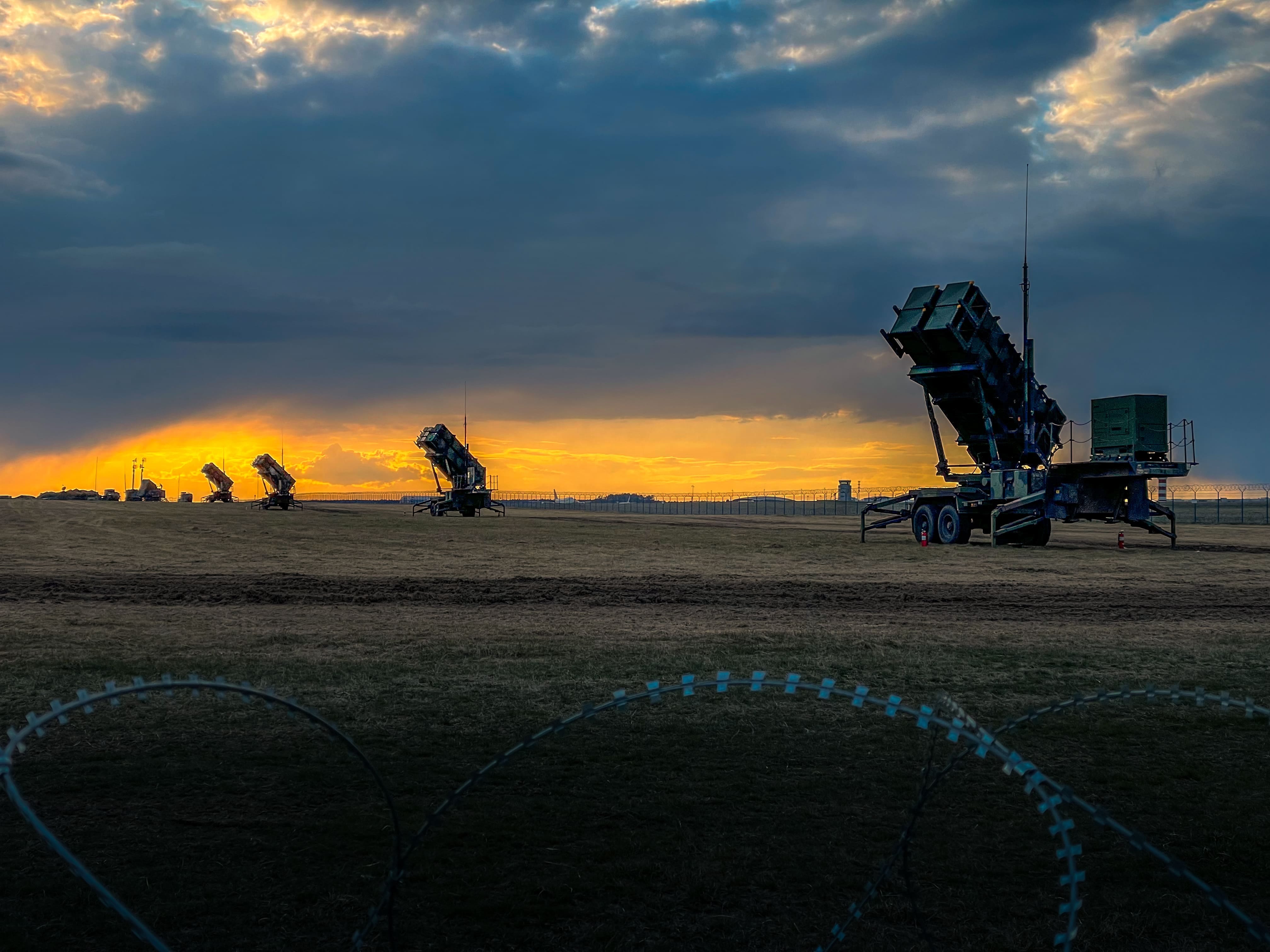
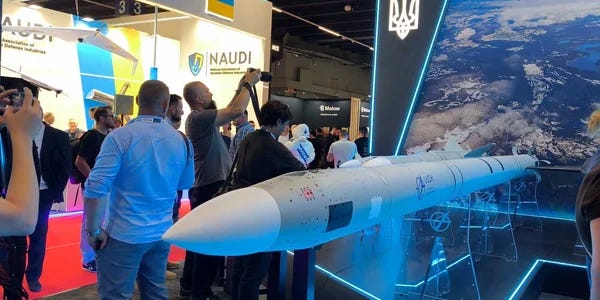
On September 8, at Poland’s MSPO defense exhibition, Ukraine’s state defense conglomerate Ukroboronprom put a photograph on a screen that most of us scrolled past without a second thought: A missile launching from a boxy self-propelled system riding on a Czech Tatra truck chassis.
That’s Koral, Ukraine’s homegrown surface-to-air missile, and the launcher had never been shown publicly before.
Koral’s guidance system combines three completely different methods of finding its target: Inertial navigation, radio correction, and active radar homing. So, why in God’s name does one missile need three different ways to find the same object in the sky? Because each one solves a different piece of a very hard problem.
Let’s build this thing from the ground up.
By the end, you’ll understand not just what Koral is, but why Ukraine operates roughly two dozen fundamentally different ways to kill something in its own sky.
How a missile finds anything at all
Before strolling through the zoo, let me explain the three-part dance almost every guided weapon performs, because Koral’s specific combination is really just the modern standard dressed up in Ukrainian components.
Start with inertial navigation, or INS.
Picture a tiny set of gyroscopes and accelerometers riding inside the missile, constantly measuring how the missile itself is accelerating and rotating after launch.
It doesn’t need GPS, radar, and critically, it isn’t looking at the target at all. The missile launches toward a calculated intercept point in the sky, a spot where the fire-control computer predicted the target would be and then flies there using nothing but its own sense of motion, the same basic principle a submarine uses to navigate underwater without ever surfacing to check a star.
That works fine for the first stretch of an engagement. The problem is that targets have the extremely rude habit of moving after you’ve already committed to a flight path; plus tiny positional errors accumulate the longer the missile flies blind.
So Koral needs a second layer. That’s radio correction, AKA the midcourse update.
A ground radar keeps tracking the real target the entire time the missile is in flight. The fire-control system recalculates a fresh predicted intercept point as the target maneuvers, and beams that update to the missile over a radio datalink.
Then the missile adjusts its course accordingly.
I want to be detailed about what’s happening here, because it’s easy to misread:
The missile isn’t searching for anything during this phase. Someone else already found the target. The missile is simply receiving updated directions, the way an Amazon delivery driver gets a text saying the customer actually wants this delivered on the back porch, while the driver was already en route.
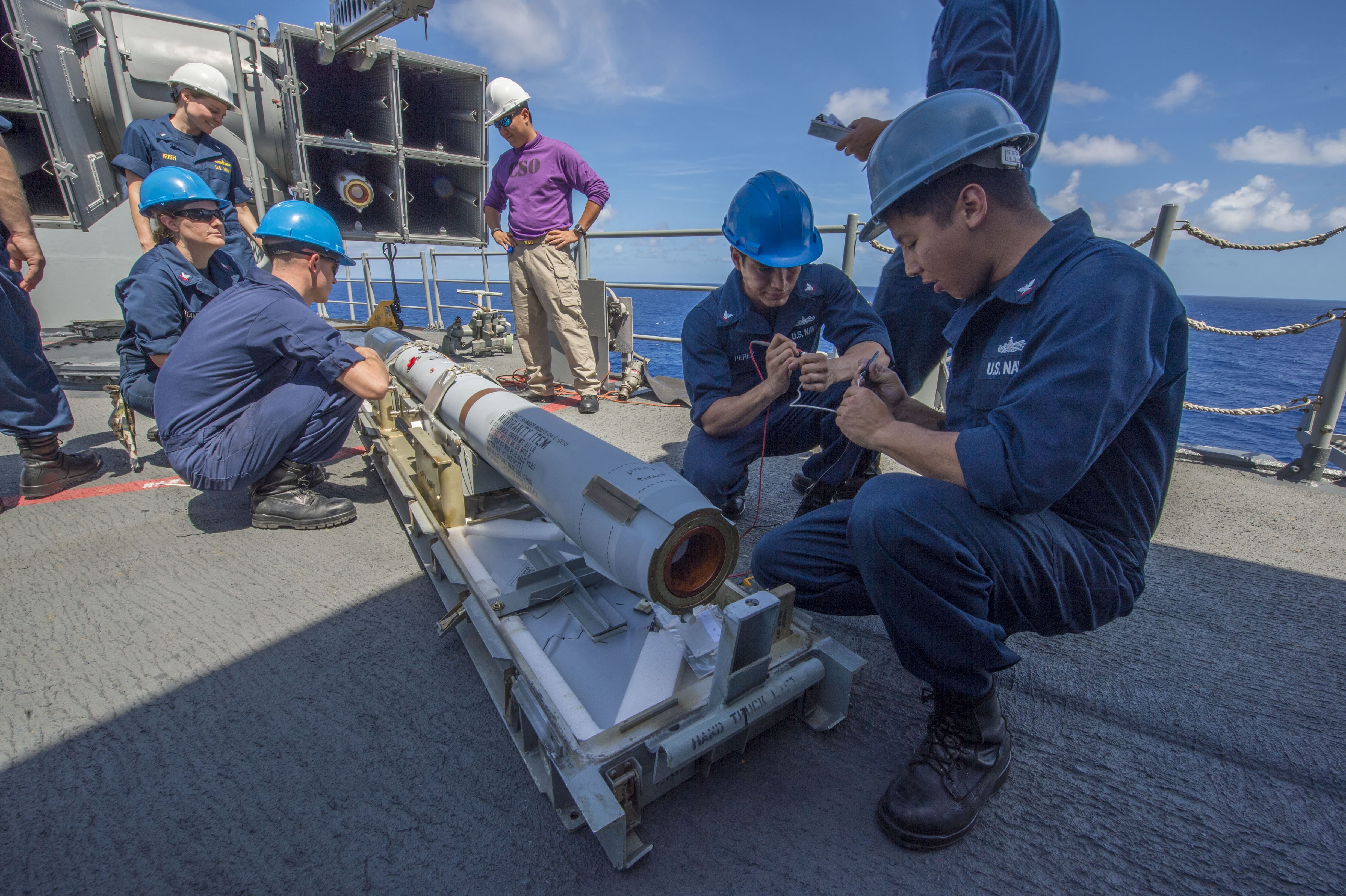
AMRAAM works on this exact principle during long-range engagements, flying inertially at first while soaking up datalink updates the whole way.
Then, somewhere near the endgame, the third layer wakes up.
Active radar homing means the missile itself starts transmitting radar energy from its own nose, listening for the reflections bouncing back, and using that information to calculate the target’s exact range, bearing, and closing geometry, then steering itself into the intercept without anyone’s further help.
That’s what “active” actually means in the phrase ‘active radar seeker.’ (As opposed to semi-active. Hang with me. We’ll get there).
The radar transmitter rides inside the missile, not on the ground. AMRAAM uses this. So does the French Aster 30. So does the terminal phase of Patriot’s PAC-3 MSE, running an active Ka-band seeker in the final seconds of flight.
Put all three stages together and you get the full Koral engagement sequence:
Ground radar detects the target, then
Fire control computes an intercept, then
Koral launches, then
Inertial navigation flies it toward the intercept area, then
Radio updates correct the course along the way (midcourse guidance), then
The active radar seeker finally wakes up, acquires the target, and takes over for terminal homing, then
Intercept, then
Boom!
The six ways a missile can actually be told where to go
Active radar homing is only one branch of a much bigger family tree.
Semi-active radar homing is the older cousin of active radar.
Here, the missile carries a receiver but no transmitter of its own capable of illuminating the target. A ground radar shines energy directly at the target instead, and the missile simply follows the reflected signal home, like a moth chasing a beam of light somebody else is holding steady.
HAWK works this way. So does the legacy Soviet Buk 9M38 family during its terminal phase.
It’s a simpler, cheaper missile to build, but it comes with an obvious weak point. Somebody has to keep that ground radar shining on the target the entire time, and killing or jamming that radar breaks the whole engagement.
Track-via-missile is a clever middle path, and Patriot’s older PAC-2 GEM-T uses this architecture. The missile catches radar reflections bouncing off the target and relays what it’s seeing back down to the ground station, which does the heavy computational lifting and radios steering commands back up to the missile.
The missile is functioning partly as a remote sensor while the expensive brain stays safely on the ground.
Notice something important here… That’s a completely different guidance philosophy running inside the exact same Patriot battery that fires PAC-3 MSE, which hits its target through pure kinetic collision rather than a blast-fragmentation warhead.
Same launcher. Two entirely different weapons underneath the same delicious brand name. Also, it’s part of a balanced breakfast…

Command guidance strips the seeker out of the missile entirely. A ground system tracks both the missile and the target simultaneously, works out the geometry, and continuously radios steering commands the missile simply obeys, no thinking required on the missile’s part.
Crotale, which I’ve written about before, uses exactly this command-to-line-of-sight approach, and plenty of older Soviet systems lean on it too.
The advantage is a cheap, dumb missile, since all the expensive intelligence lives on the ground rather than getting thrown away every time you fire a round.
Infrared homing turns radar off completely and looks for heat instead.
Stinger works this way. So does the IRIS-T family, and the modern SLM variant is particularly interesting because it blends in-flight datalink updates with a somewhat sophisticated imaging infrared seeker for the terminal phase, one that builds something closer to a real thermal picture than a crude heat blob, letting it pick a real aircraft out of flares and background clutter far more intelligently.
No radar emissions from the seeker at all. No need to illuminate anything. Jamming an enemy’s radar does nothing to an infrared seeker.
And then there’s Starstreak, one of my faves, because apparently British engineers looked at every existing guidance method and decided none of them has a cool enough name.
Starstreak uses semi-automatic laser beam riding. The operator keeps a sight fixed on the target, the launcher projects guidance information through a laser field, and three separate darts ride that beam toward the target at speeds beyond Mach 3.
No radar seeker to jam.
No infrared seeker to fool with a flare.
The tradeoff is that a human has to keep the sight steady on the target for the whole engagement, which is a very different kind of vulnerability than an electronic one.
Okay, friendos, hold that whole taxonomy in your head, because it’s the key that unlocks everything below.
The Ukrainian air defense stack:
Layer one: where Patriot earns its terrifying price tag
Let’s start with the hardest problem Ukraine faces. Russian Iskander-M ballistic missiles and air-launched Kinzhals come in fast, at speeds and angles nothing cheap can touch, and you cannot send a machine-gun truck after one.
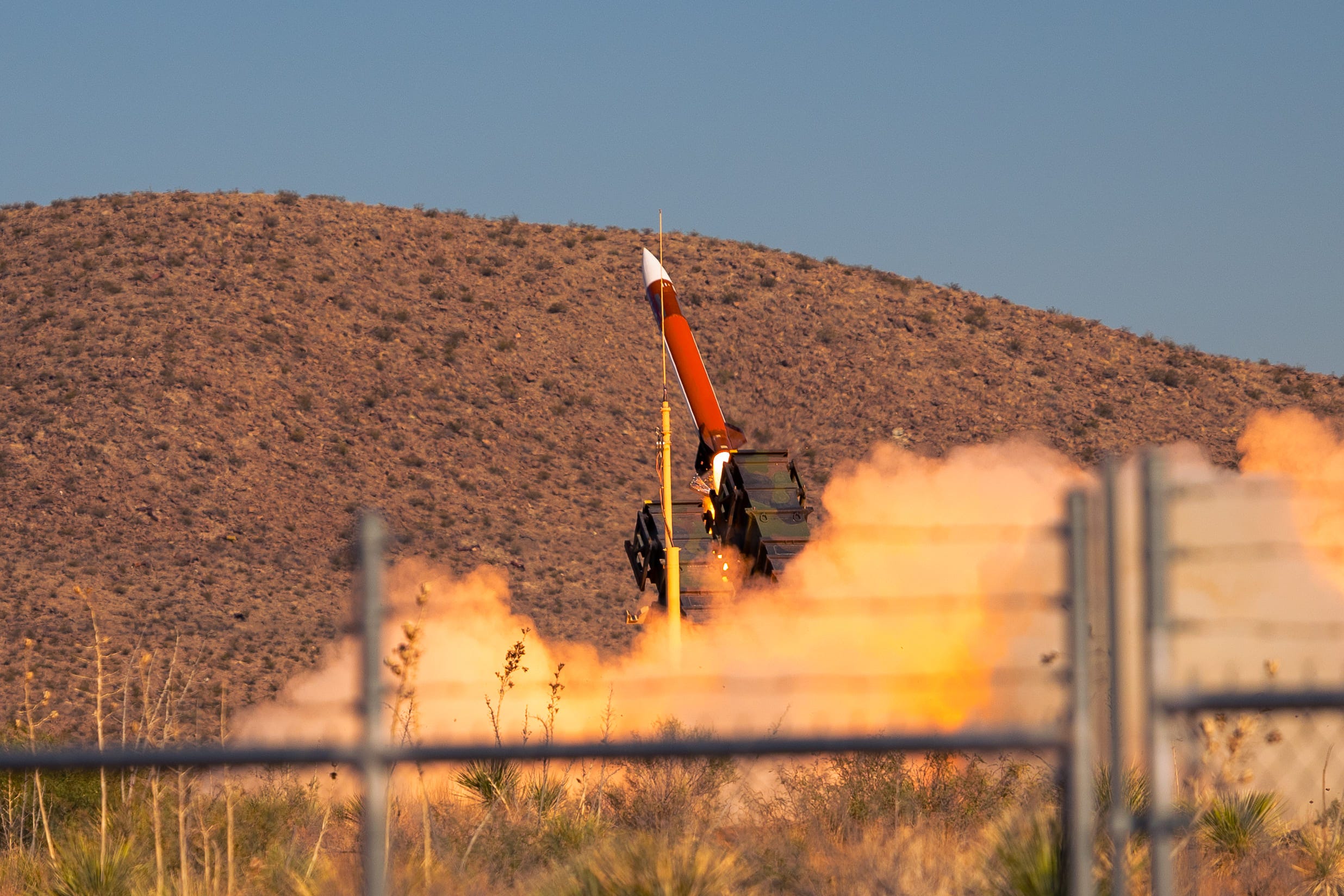
This is where Patriot lives, and specifically PAC-3 MSE, the missile I’ve written about extensively as Ukraine’s supply of it keeps dwindling toward crisis levels. Ground radar detects and tracks. Fire control predicts an intercept point. The missile launches, flies inertially at first, gets corrected over an RF datalink, and near the intercept point its active Ka-band seeker wakes up and locks onto the actual incoming missile.
Then, unlike almost every other weapon on this list, it doesn’t explode near the threat. It physically rams into it, body against body, what Lockheed calls hit-to-kill. For a ballistic missile potentially carrying a large warhead, smashing the incoming object directly beats spraying fragments nearby and hoping.
Here’s the twist:
The same Patriot battery can also fire PAC-2 GEM-T, using entirely different track-via-missile guidance and a traditional blast-fragmentation warhead instead of a kinetic hit.
I wouldn’t call that a downgrade, it’s a different tool sitting in the same toolbox, useful against aircraft and cruise missiles while carrying some capability against certain ballistic threats too.
Even a single Patriot system, in other words, secretly contains two separate air-defense philosophies wearing the same uniform.
Honorable mention: FREYJA
FREYJA is being designed specifically around the ballistic-missile problem. Fire Point says the FP-7.X is intended to intercept ballistic missiles below roughly 25 km altitude, with an engagement radius around 80 km in the current development concept. The missile has already undergone several flight tests, with Fire Point saying the current version reaches about 1,800 m/s, roughly Mach 5.
The goal is eventually around 2,200 m/s, roughly Mach 6.5.
But, FREYJA is still a program; not operational.
Layer two: SAMP/T, Europe’s other answer to a screaming missile
Aster 30, the missile running inside France and Italy’s SAMP/T system, gives us almost a mirror image of the Koral guidance chain, which is exactly why Koral is worth paying attention to.
Aster launches vertically, rides inertial guidance through the midcourse phase, receives refreshed target data over a datalink, and then hands off to an active electromagnetic seeker for terminal homing.
What makes Aster sexy is a system called PIF-PAF, [Pilotage en Force (pilotage / control by force) and Pilotage Aérodynamique Fort (strong aerodynamic control)] combining conventional aerodynamic fins with small lateral thrusters that let the missile make brutally abrupt last-second course corrections, closer to Patriot’s attitude-control philosophy than to a normal missile’s fins alone.
Unlike PAC-3, though, Aster still uses a proximity fuse and a fragmentation warhead rather than a direct hit.
Ukraine is already flying SAMP/T, and as I’ve reported, it’s slated to become the first combat operator of the newer SAMP/T NG variant, with licensed Aster 30 production coming to Ukrainian soil.
That gives you a clean comparison worth remembering. PAC-3 MSE hits the threat directly. Aster 30 maneuvers close enough that a precisely timed fragmentation burst does the job instead.
Both demand extraordinarily accurate terminal guidance to pull off either trick.
Layer three: the Soviet heavyweights Ukraine inherited
Ukraine walked into this war already carrying a large Soviet-era air-defense architecture built around systems like the S-300 and Buk. There’s no single “S-300 missile,” there are multiple generations running different missiles with different guidance arrangements entirely, so let’s keep the S-300 focused on its operational role rather than its internals.
Long-range area defense. Denying Russian aircraft the sky. A serious deterrent against cruise missiles. It’s a big part of why Russian pilots remain so reluctant to fly deep over Ukrainian-held territory even now.
Buk is easier to explain, and Ukraine’s Ground Forces still publicly list Buk-M1 among their active systems. The 9M38 missile family flies inertially at first, then switches to semi-active radar homing for the terminal phase, meaning a ground radar has to keep illuminating the target the entire way in.
And that requirement set up one of the most Ukrainian moments of this entire war: FrankenSAM.
Layer four: FrankenSAM, because adapters apparently work on missiles too
Eventually Ukraine started running low on Soviet-standard Buk missiles, and somebody asked a question that could only come from a country fighting for its survival with whatever was lying around.
Could we bolt an American naval missile onto a Soviet launcher instead?
Ukraine and the United States modified Buk-M1 systems to fire RIM-7 Sea Sparrow missiles, and Ukraine’s own Ministry of Defense openly identifies this as FrankenSAM. The RIM-7 itself is semi-active radar homing, chasing continuous-wave or pulse-Doppler energy reflected off the target, with later variants able to pick up midcourse datalink updates too.
This is the moment Ukraine stopped simply accumulating disconnected weapons and started actively breaking down the walls between them.
Soviet launcher. Western missile. Modified fire control. Ukrainian engineering gluing the whole thing together. Keep that theme in your back pocket, because it’s about to show up again, twice.
Layer five: NASAMS, the battery that isn’t really one battery
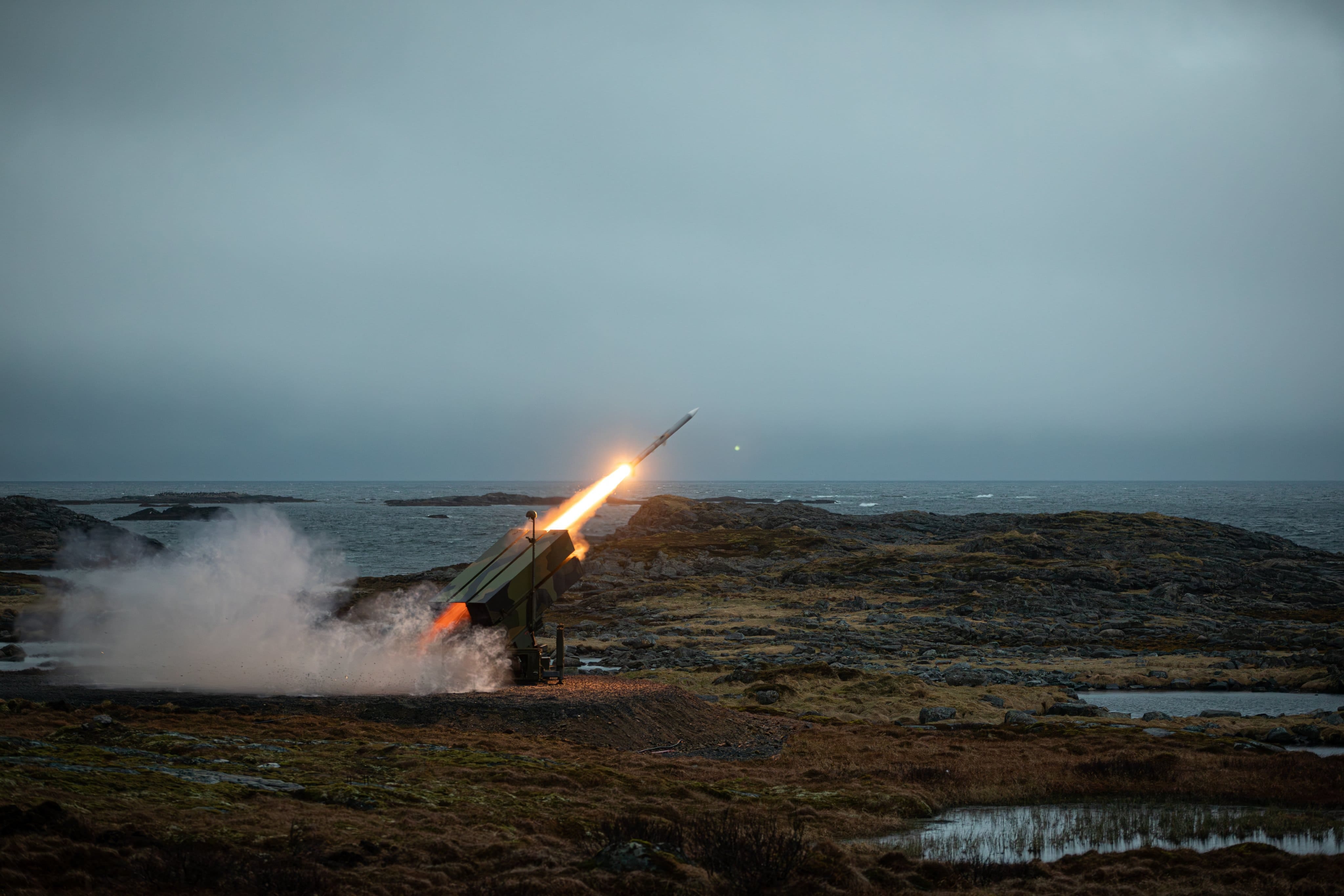
NASAMS flips the traditional monolithic SAM battery inside out.
A typical fire unit combines an AN/MPQ-64 Sentinel radar, a Fire Distribution Center, electro-optical and infrared sensors, and a cluster of physically separate launchers, all tied together over a network rather than bolted onto one vehicle.
Its primary missile, AIM-120 AMRAAM, originally built for fighter aircraft, runs the same three-stage philosophy Koral does: Inertial guidance, datalink updates, then an active radar seeker takes over near the target.
NASAMS can also fire AIM-9X depending on the configuration, which means the launcher itself no longer really defines the weapon… Software and networking do.
Layer six: IRIS-T, the missile that skips radar for the kill
Ukraine runs both the longer-range IRIS-T SLM, reaching roughly 40 kilometers, and the shorter SLS variant out to around 12, with nine systems reportedly guarding Ukrainian skies by the end of 2025.
The interesting part is the seeker. A traditional heat-seeking missile just hunts for a hot blob. IRIS-T’s modern imaging infrared seeker builds something much closer to an actual infrared picture, letting it discriminate the real target from clutter and countermeasures with real intelligence rather than chasing whatever’s hottest.
That gives Ukraine a way to kill things without ever depending on terminal radar homing, and on a battlefield this heavily jammed, that redundancy is worth its weight in gold.
Layer seven: HAWK, the Eisenhower-era system that refuses to retire
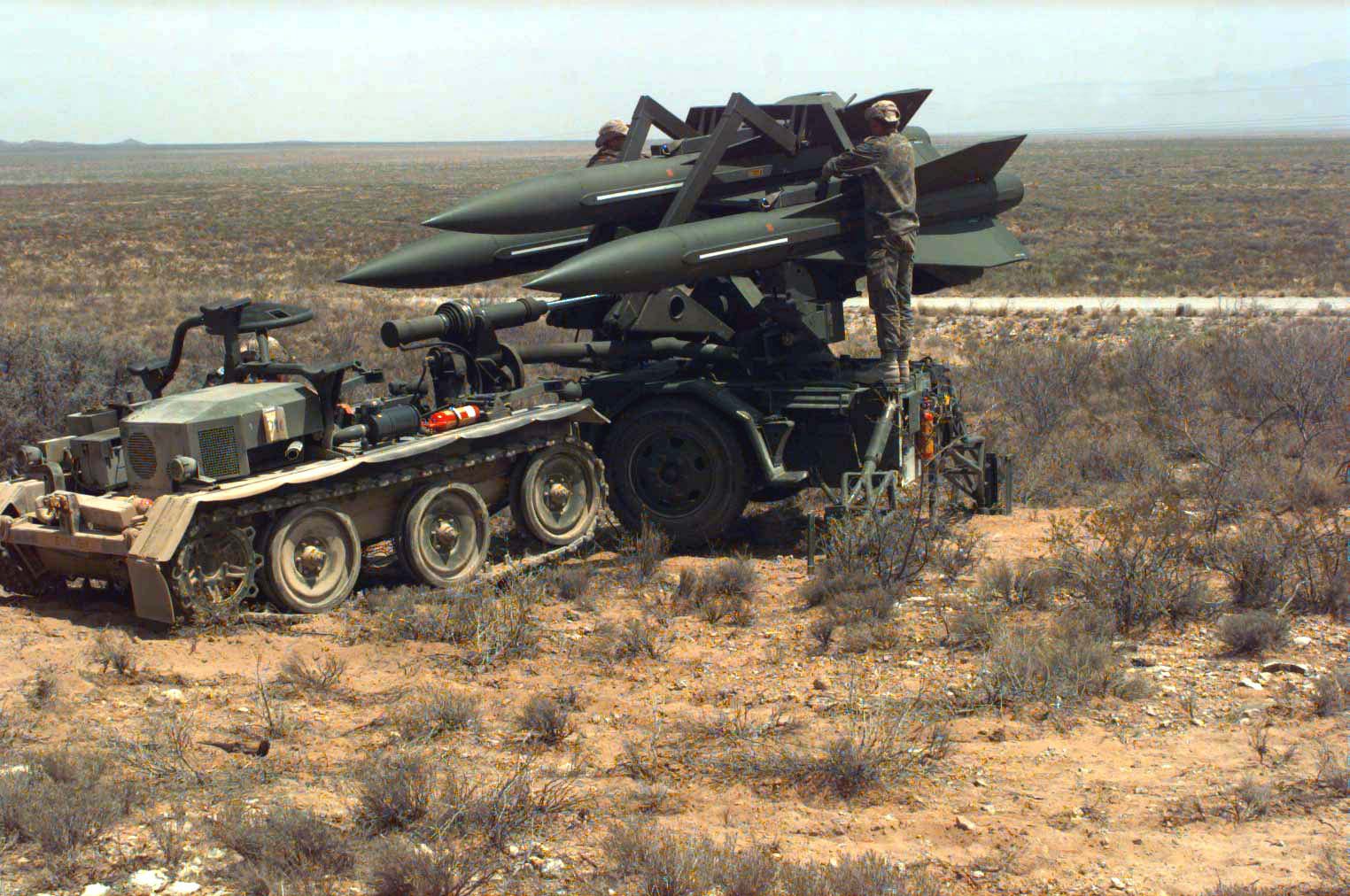
MIM-23 HAWK entered American service under Dwight Eisenhower and is still shooting at Russian weapons in 2026.
Ukraine’s authorities continue listing it among the Western systems in active service. Its missile runs classic semi-active radar homing, riding the reflected energy of a ground radar illuminating the target the entire way in, which makes it the perfect direct comparison to Koral.
HAWK needs an outside radar shining on the target through the whole endgame. Koral’s active seeker is designed to eventually find and lock the target entirely on its own. Same basic problem both weapons are solving.
Sixty-plus years of electronics separate the two solutions.
Layer eight: the command-guided family
Let’s group a handful of systems together by philosophy rather than giving each their own section otherwise this piece would be 10k words and I have videos to edit.
Crotale, which I’ve covered in detail before, uses command-to-line-of-sight guidance, with the fire-control system tracking both missile and target and radioing continuous steering corrections.
Ukraine’s Ground Forces also list Osa-AKM, Strela-10, and Tunguska.
Osa runs a radar-centric short-range approach with radio-command missile guidance. Strela-10 leans on a passive electro-optical and infrared family depending on the specific missile variant loaded. Tunguska combines radar and command-guided missiles with a pair of 30mm cannons bolted right onto the same vehicle.
All three were built to move with ground forces rather than defend a fixed strategic asset. A Patriot battery protects a huge swath of territory. A Tunguska protects the specific battalion currently driving down a muddy road.
Layer nine: Starstreak, the British system nobody else copied
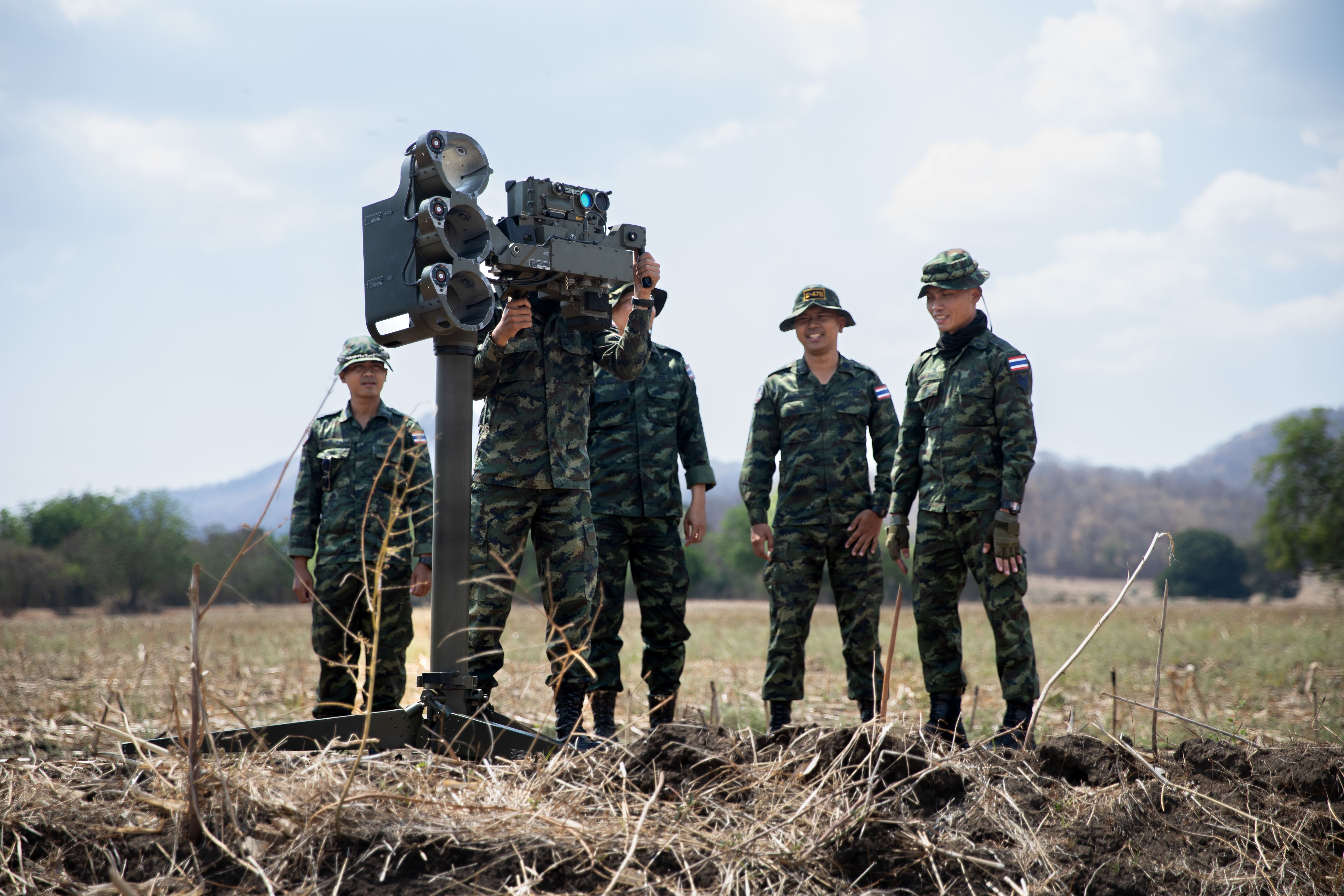
Britain’s Stormer vehicle carries Starstreak HVM, and the whole concept is delightfully strange once you understand it. As I mentioned above, an operator keeps a sight tracking the target while a laser guidance field gets projected toward it.
The missile accelerates past Mach 3, then three separate darts split off and ride that laser beam the rest of the way in.
