


This article is one of two weekly exclusive articles for my paid subscribers. Thank you for continuing to fund independent military analysis with a moderate dose of pro-Ukrainian/ anti-authoritarian humor.
US military commanders love range because range looks clean in a chart. Bigger number, bigger circle on the map, more smug nodding in the Tactical Operations Center. This mindset is very “Indo-Pacific” where a weapon must cross vast stretches of ocean.
Ukraine needs range for a different reason: Russia is a big place.
But just as important is where a missile gets launched from, how much warning the defender gets, what direction the threat is coming from, and whether the aircraft carrying it can stay outside the worst of the enemy’s air-defense coverage.
That’s where air-launched ballistic missiles get interesting, and where Russia could be staring down a fresh operational headache.
Which brings me to Fire Point, now famous for the FP-5 “Flamingo” ground-launched cruise missile.
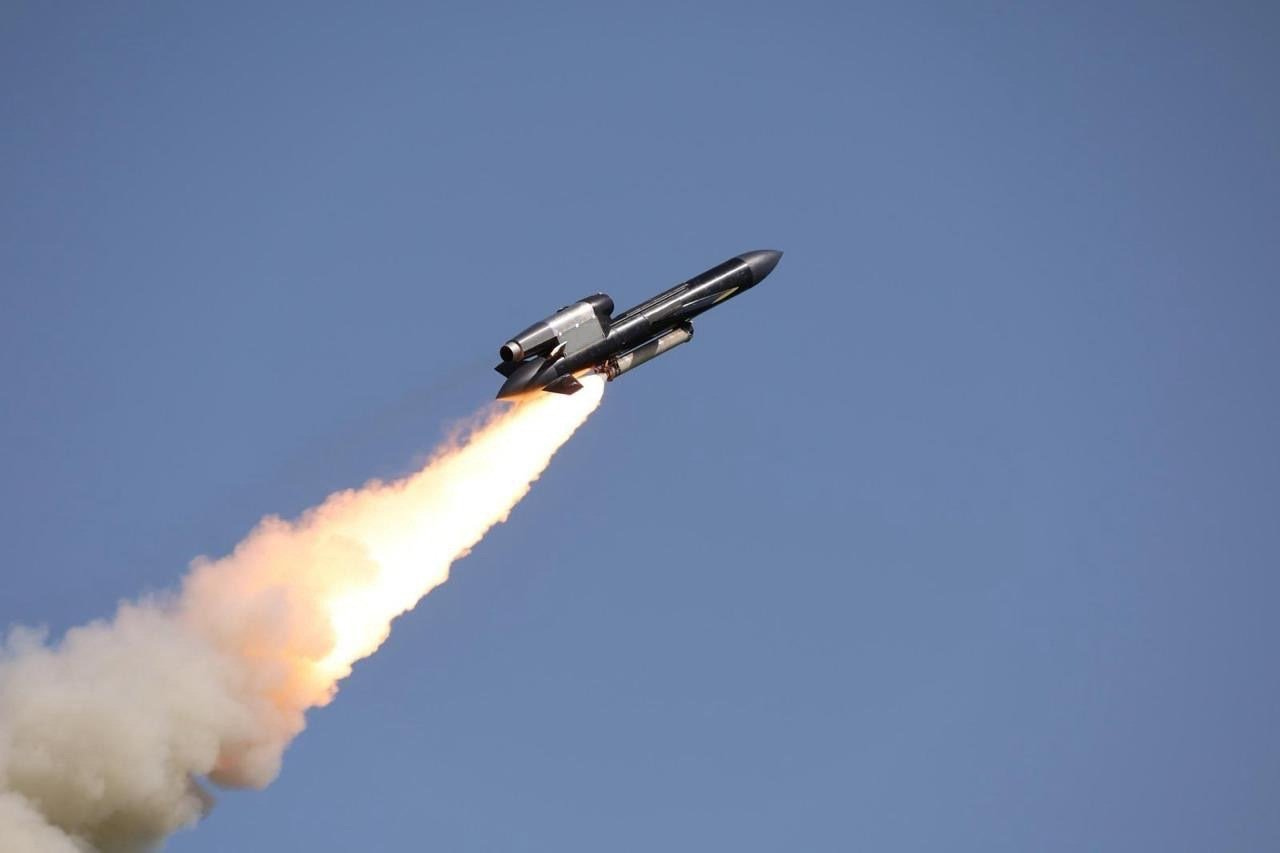
Dylan Malyasov at Defense Blog highlighted that the Ukrainian company is developing an air-launched ballistic missile based on its FP-9 platform after chief designer Denys Shtilerman discussed it publicly.
Fire Point is already in the final stages of two ground-launched supersonic ballistic missile programs, the FP-7 and FP-9, with the FP-9 described as capable of carrying an 800-kilogram warhead to about 850 kilometers.
It’s safe to assume that the air-launched version will extend the range well beyond 850 kilometers.
Think of it less as a fixed percentage boost and more as a physics discount. The aircraft pays the climb penalty and part of the acceleration bill, so the missile can spend more of its propellant on forward flight.
In practice, that can mean a substantial gain, often measured in hundreds of extra kilometers.
Just for reference, I’ve used the map below showing how many Russian military installations, including all of them surrounding Moscow, already fall under the 850-kilometer umbrella. With an extra 80–100-kilometer range, all of the units around St. Petersburg are at risk also.
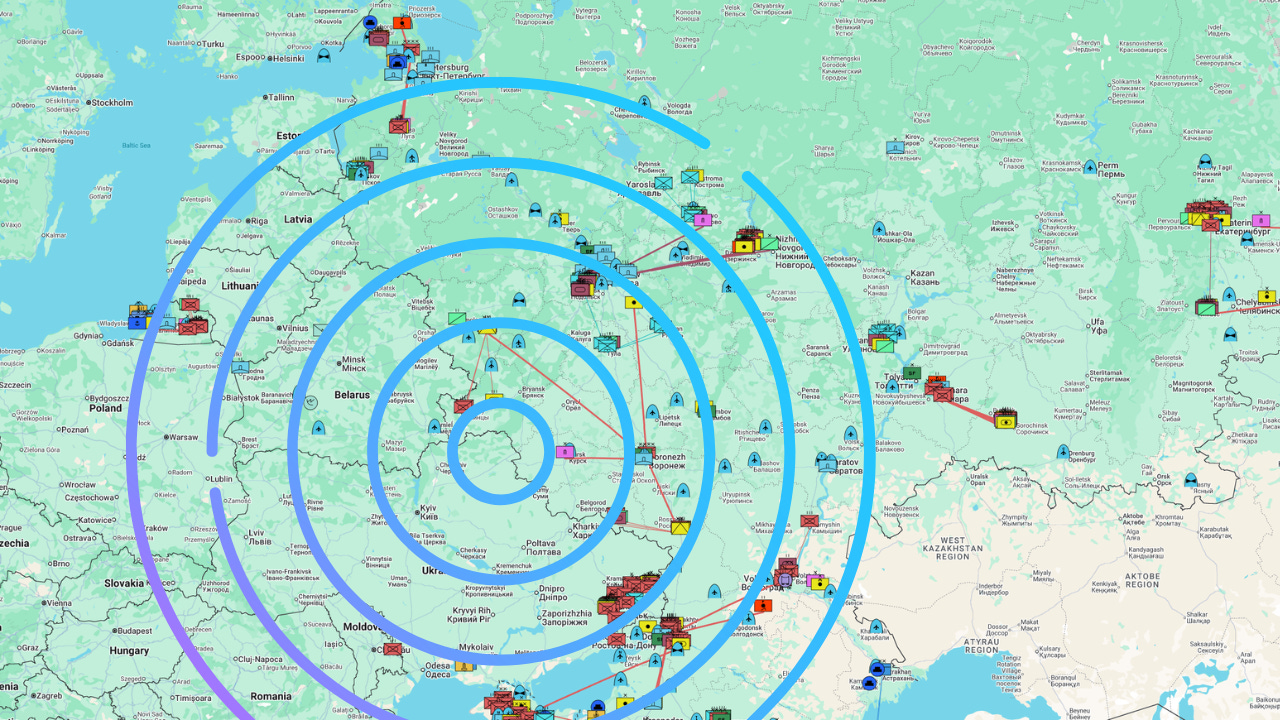
By the way, if you’re interested, here’s a good map of all Russian military unit installations inside mother Russia.
So, this Ukrainian air-launched ballistic missile is kind of a big deal. Not even NATO possesses an air-launched ballistic missile in the true sense.
The best historical comparison is Skybolt.
That was the US GAM-87/AGM-48, a true air-launched ballistic missile from the early Cold War. The RAF expected to carry it on Vulcan bombers, (PDF warning) and RAF material describes it as an American ALBM with roughly a 1,000-mile reach, intended to let British bombers launch outside Soviet air defenses.
It was canceled in 1962, which is one reason NATO never really built a lasting ALBM tradition.
The closest recent US comparison is ARRW, the AGM-183 Air-Launched Rapid Response Weapon. That was not a classic ballistic missile in the old Skybolt sense. It was a boost-glide hypersonic weapon launched from a bomber.
Still, in practical terms it sat in the same family of “air-launched, very fast, hard-to-intercept deep-strike weapon.”
The Air Force said in 2023 that ARRW would end after its remaining tests and that there was no follow-on procurement planned.
The closest operational NATO analogue today is probably France’s ASMPA-R, with one important asterisk: it is not ballistic.
France’s defense ministry and MBDA describe it as the renovated ASMPA air-to-surface strategic missile carried by Rafale on nuclear strike missions. France’s own material contrasts its propulsion with rocket propulsion, which is a tell that this is a ramjet-powered stand-off missile, not a ballistic one.
So, it fills a similar deep-strike air-launched role, yet it gets there by a different path.
The future French ASN4G also belongs in the conversation, again with an asterisk. French defense material describes ASN4G as a future hypersonic nuclear missile for the Rafale F5, and other French defense publications tie it to a scramjet-type propulsion concept.
So again, it looks more like a very fast air-launched missile than a classic ballistic missile.
What about Russia?
Well, the clearest Russian equivalent is the Kh-47M2 Kinzhal, derived from the ground-launched Iskander-M.
That makes it the closest match in concept to what Ukraine appears to be trying with an air-launched FP-9: take a ground-based ballistic missile family, adapt it for aircraft carriage, and gain range, flexibility, and uglier launch geometry for the defender.
