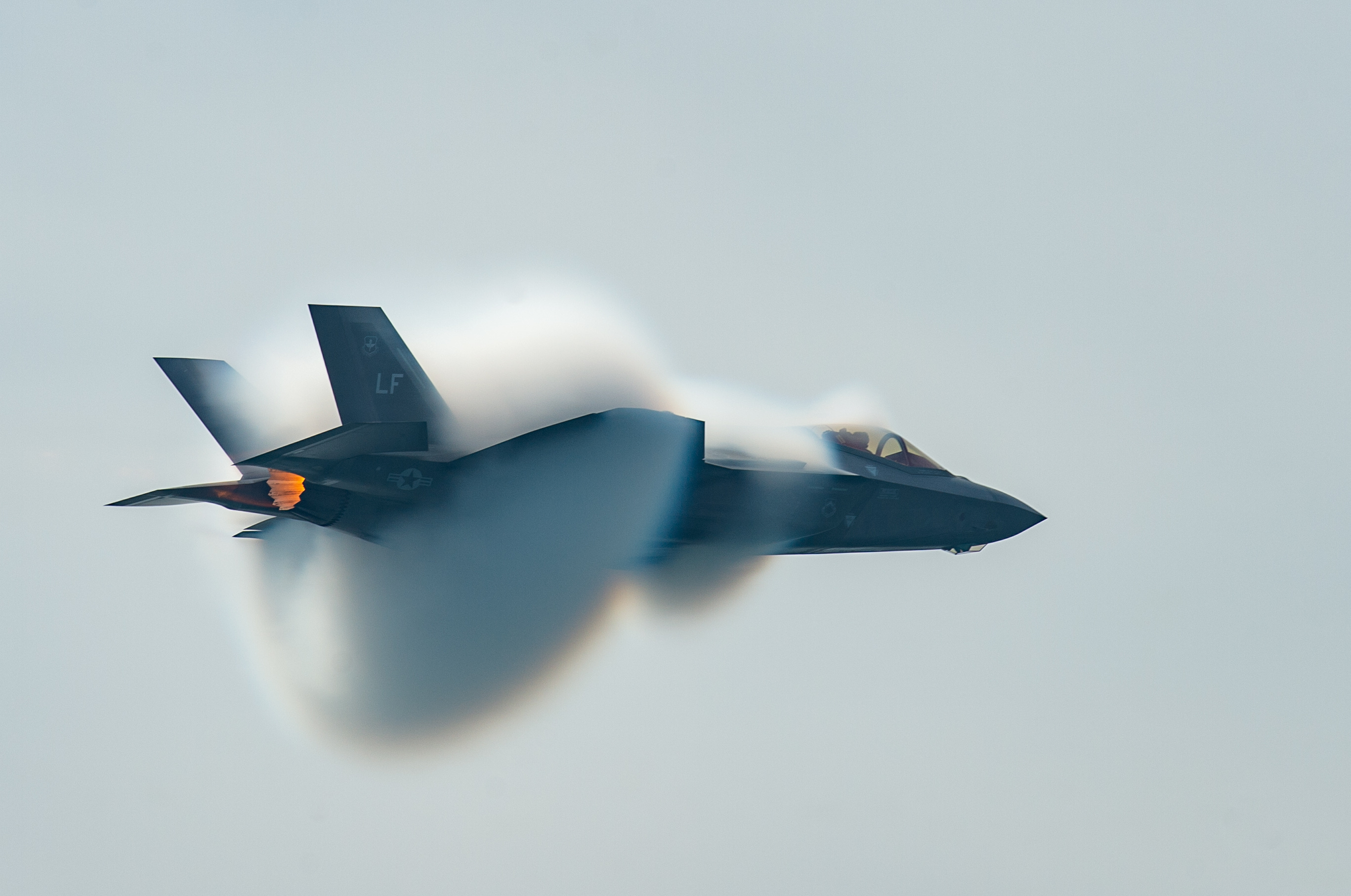
US Warns Canada “Buy the F-35, or Else”
US says buy American or accept less control over your own skies

Canada didn’t ask for a fighter jet referendum wrapped in a sovereignty crisis, but that’s more or less what it’s been handed.
On January 14, CBC News reported that Saab has formally proposed a package deal to Ottawa: 72 Gripen fighters paired with six GlobalEye airborne early warning aircraft.
Saab says the deal would support roughly 12,600 Canadian jobs, with final assembly, sustainment, and long-term support rooted inside Canada.
It’s not a subtle pitch. I am personally quite fond of the Gripen and Saab’s AWACS. But this is a direct challenge to Canada’s existing plan to buy 88 F-35s from Lockheed Martin, a plan that’s already buckling under ballooning costs and political pressure.
Then the United States decided to add gasoline… Because, why the fuck not at this point.
Now, the US ambassador to Canada warned that if Ottawa backs away from the F-35 deal, Washington may “fill the gaps” by flying American fighters more frequently in Canadian airspace and potentially rewriting parts of NORAD.
The subtext wasn’t subtle either. Buy American or accept less control over your own skies.
Under the existing NORAD arrangement, the US and Canada already have the legal and operational ability to operate in each other’s airspace for aerospace defense, tracking, and intercept missions.
That’s the whole point of NORAD. It’s a binational command built for speed, shared radar picture, shared decision-making, and the ugly reality that a bomber doesn’t care about a border line on Apple Maps.
What Ambassador Pete Hoekstra did was take that normal NORAD logic and weaponize it as leverage in a procurement fight.
He didn’t just say, “We prefer you buy the F-35.” He implied that if Canada buys fewer than the 88 F-35s, Washington will be forced to “fill those gaps” with American jets, and that doing so would mean NORAD itself would have to be “altered.”
That’s a big sentence.
“Altered” doesn’t mean a memo and a handshake. It means renegotiating the terms of how the US and Canada manage air defense across the continent, how often American fighters operate in Canadian airspace, who pays for what, and who gets to call the shots when a track goes hot.
In other words, it drags a procurement decision into the command-and-control architecture of continental defense.
Hoekstra’s warning also came with a specific escalation: he suggested US intervention would go further than what the current NORAD framework already allows, and that new terms would be required if Canada shifts away from the F-35. That reads less like alliance coordination and more like a conditional subscription model.
Pay the premium tier, or the service changes.
Now layer in the political context. Canada started this review because the F-35 program’s costs have risen sharply, with an audit pegging the program around $27.7 billion after earlier estimates were far lower. Yeah, that sounds about right for a major US defense contractor… Welcome to the party, Canada. Your Southern neighbors have been overpaying for this crap since at least the first Gulf War.
Add in rising US-Canada tensions over tariffs, and you’ve got a situation where Ottawa isn’t just reviewing a fighter purchase. It’s trying to figure out how much strategic independence it has left while doing it.
So yes, the subtext isn’t subtle. The message to Canada wasn’t “we’re worried about interoperability.” It was “if you don’t buy what we want, we’ll redefine the partnership in a way that puts more American jets over your territory.”
That’s not a technical argument. That’s pressure, dressed up in a flight suit.
So, back to Saab.
Saab’s proposal isn’t just about jets. It’s about offering Canada a complete airpower ecosystem rather than a single aircraft plugged into an American-controlled supply chain.
The Gripen and GlobalEye are designed to operate together, not as independent acquisitions stitched together later. One hunts and fights. The other sees, coordinates, and manages the battlespace.
Gripen E is a 4.5-generation fighter built for countries that don’t enjoy the luxury of sprawling airbases and unlimited budgets.
It’s fast enough, with a top speed around Mach 2. It carries a modern AESA radar, the Raven ES-05, paired with an infrared search-and-track system that lets it see without broadcasting.
Its avionics are designed for data-sharing, not solo heroics. Gripen was built to fight as part of a network, passing targets and tracks between aircraft, ground sensors, and command nodes in near real time.
This matters for Canada, because Canada doesn’t fight wars by massing squadrons over friendly territory. It defends vast airspace, often over water or tundra, with limited basing options and long distances between everything that matters.
Gripen’s ability to operate from shorter runways and dispersed locations makes it a perfect aircraft for Canada, actually. It assumes that runways may be cratered, logistics may be stressed, and turnaround speed matters more than prestige.
GlobalEye is where the proposal gets strategically interesting.
Based on Bombardier’s Global business jet, GlobalEye carries Saab’s Erieye ER radar along its spine, paired with maritime and ground surveillance sensors. From altitude, it can track air and surface targets hundreds of kilometers out.
More importantly, it stays up for roughly eleven hours. For a country like Canada with enormous maritime approaches and Arctic blind spots, that persistence fills a real gap.

Canada’s northern warning infrastructure is constrained by geography and curvature of the Earth. Ground-based radars can only see so far. GlobalEye extends that horizon. It doesn’t just detect aircraft. It helps coordinate intercepts, manage air traffic, and cue fighters long before a threat gets close enough to cause political embarrassment.
This is where the Gripen-GlobalEye pairing starts to look less like a consolation prize and more like a coherent doctrine.
Gripens intercept. GlobalEye sees and directs. The system scales to Canada’s geography rather than forcing Canada to contort itself around a single exquisite platform.
Contrast that with the F-35.
The F-35 is an impressive aircraft. It’s also overpriced, complex, and deeply embedded in a US-controlled ecosystem. Canada’s planned 88-jet fleet has already seen projected costs climb to roughly $27.7 billion, up from initial estimates closer to $19 billion.
Sustainment costs remain a looming question mark, and production delays haven’t helped.
More importantly, the F-35 isn’t just an aircraft. It’s a relationship. Software updates, mission data files, parts supply, and long-term upgrades all flow through US-controlled pipelines. That’s fine if you trust Washington to remain a predictable partner. Less fine if the US ambassador is publicly floating the idea of routinely violating Canadian airspace because Ottawa dared to review a procurement decision.
I know I’m an American, but I just have to say that I live in “Ottawa County” in Michigan so I’m practically Canadian.
Okay, so this is where the politics bleed into strategy.
NORAD has always been a partnership, but it’s never been value-neutral.
Canada trades some autonomy for shared defense and access to American capabilities. The current rhetoric changes the tone of that bargain. When a US official implies that choosing a non-American fighter would justify deeper US intervention in Canadian airspace, that stops sounding like alliance management and starts sounding like leverage.
Saab, for its part, is leaning hard into industrial sovereignty.
The company says Gripens would be assembled in Canada, with long-term sustainment handled domestically. Partners named include IMP Aerospace, CAE, GE Aviation, and Peraton. Production facilities would be based in Ontario and Quebec. GlobalEye aircraft would be built in partnership with Bombardier, using Canadian airframes.
This is strategic positioning. Saab knows Canada wants jobs, control, and flexibility. It’s offering a way to turn defense spending into domestic industrial capacity rather than a long-term foreign dependency.
Public opinion reflects that tension.
Polling shows stronger support for Gripen or mixed fleets than for an all-F-35 solution, especially in Quebec and British Columbia.
Conservative voters skew more toward sticking with the F-35.
Liberal, NDP, and Green supporters lean toward Gripen or a hybrid approach.
That split maps neatly onto how Canadians view the US relationship right now.
There’s also the elephant in the room: interoperability.
The US argument is that anything short of the F-35 degrades NORAD interoperability. That’s a little overstated. Gripen is NATO-interoperable. It uses NATO weapons. It integrates with allied networks. What it doesn’t do is hand Washington the same level of software and sustainment control that the F-35 does.
That distinction matters more today than it did five years ago. We’re watching the US openly pressure allies over trade, Greenland, tariffs, and now fighter jets. The idea that procurement choices should be insulated from political coercion isn’t naïve. It’s increasingly urgent.
From a purely military perspective, Canada could operate a mixed fleet. But it wouldn’t be painless. Training pipelines, maintenance, and logistics get more complicated. But mixed fleets aren’t unheard of… Ukraine is pulling it off and Canada’s operational requirements don’t demand a single monolithic solution. They demand coverage, persistence, and resilience.
From a sovereignty perspective, the Saab offer is a stress test. It asks whether Canada wants maximum technical integration with the US, or greater control over its own defense industrial base, even if that means tolerating friction with Washington.
The US warning about “inferior” platforms rings hollow in that context.
Inferior to what mission?
Intercepting bombers over the Arctic?
Coordinating maritime surveillance?
Sustaining operations across enormous distances with limited basing?
Those are problems Gripen and GlobalEye were designed to solve.
What’s happening here isn’t just a fighter competition. It’s a referendum on how medium allies navigate an increasingly transactional American foreign policy. Canada isn’t rejecting the US alliance, yet. It’s asking whether that alliance now comes with a receipt, a deadline, and a threat stapled to it.
If Canada ultimately sticks with the F-35, it won’t be because Saab’s offer lacked substance. It’ll be because Ottawa decided that friction with Washington is more dangerous than dependence on it.
That’s a grim calculus, and one that more US allies are being forced to make.
For decades, NORAD symbolized shared trust. Right now, it’s being used as a bargaining chip.
That should worry Canadians and Canadian-supporting Americans like me far more than the logo on the tail of their next fighter jet.
Слава Україні!


Looks like the USA blackmailing Canada is exactly the reason to move away from depending on them for defence weapons.
Do not buy f-35. No trust. Costs are spiralling up. Look at the never ending swiss problem. And trump (or somebody else) can always render your air force quite inoperable. It’s like a tesla… they update their software (no source code of course), what they want when they want and you have no say in the process. Go swedish please. Thank you for your attention into this matter. Best of luck