


Think of this as your weekly strategic weather report. Five pressure points around the world that could become more important over the next seven days.
I try to keep the Preflight relatively light on snark because several of these stories involve people having a terrible week. We’ll see how successful I am.
Source links are included throughout.
BLUF:
A Russian military satellite has spent weeks maneuvering alongside one of Ukraine’s most important intelligence satellites, and today brings the closest predicted encounter yet.
Ebola has reached Nairobi while the outbreak in the Democratic Republic of Congo continues accelerating.
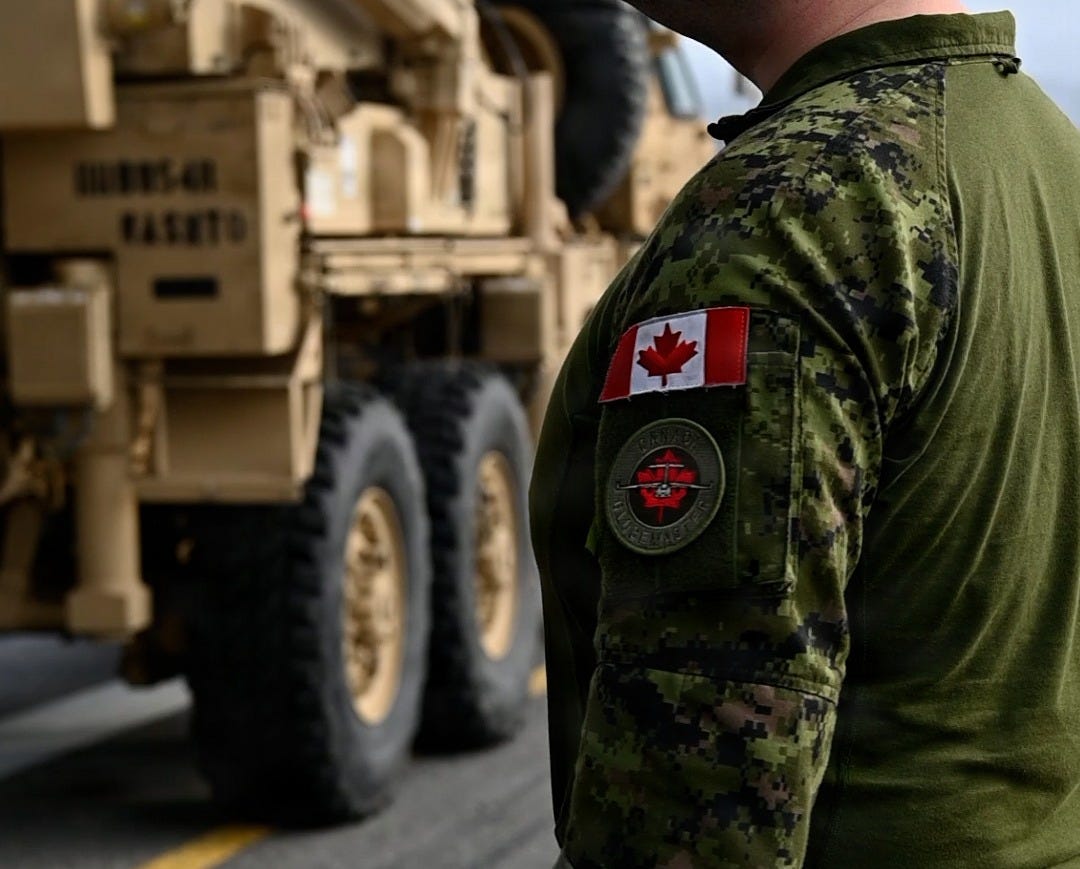
Four Canadian soldiers are dead after a grass fire tore through a live-fire exercise, with 19 more critically injured.
China appears to be building a second vessel capable of supporting large underwater drones.
And Brazil votes Sunday in an extraordinarily close presidential runoff.
1. A Russian military satellite pulled alongside Ukraine’s Finnish intelligence satellite. Today is the closest pass
Something unusual has been happening in orbit above us, and Russia appears to have spent a fair amount of precious satellite fuel making it happen.
On October 16, Russia’s Cosmos 2612 maneuvered to within roughly five kilometers of ICEYE-X36, the Finnish-built synthetic aperture radar satellite used extensively by Ukrainian military intelligence. Rather than continuing past it, Cosmos 2612 began stationkeeping, essentially matching the other spacecraft closely enough to remain alongside it.
Orbital tracker Jonathan McDowell described the event on X as potentially “the first LEO rendezvous of two active satellites where the owner of one of the sats did not give approval.”
Current orbital modeling projects the two spacecraft making a close pass on October 19 with a miss distance of approximately 150 meters.
Ukraine’s military knows ICEYE-X36 as the “People’s Satellite.” By May 2026, Ukraine’s Main Directorate of Intelligence had received more than 5,900 radar images from the spacecraft and used them to locate and monitor Russian military equipment.
Russia knows exactly what ICEYE-X36 does.
Beginning September 30, the Russian spacecraft spent roughly two weeks adjusting its altitude and waiting for its orbital plane to align with ICEYE-X36. On October 12, it performed another maneuver, spending approximately 27.9 meters per second of delta-v to become coplanar with the Ukrainian intelligence satellite. Four days later, it had closed the distance enough to begin stationkeeping.
The Center for Strategic and International Studies has noted that a spacecraft operating at this proximity could potentially take action that threatens another satellite. That doesn’t establish hostile intent, and Cosmos 2612’s precise mission hasn’t been publicly confirmed. Close approaches can support inspection, intelligence collection, characterization of another spacecraft, electronic surveillance, or potentially something considerably less friendly.
What I’m watching: The predicted 150-meter pass and, especially, whether ICEYE-X36 experiences any unusual communications or imaging behavior around the encounter.
2. Ebola is in Nairobi, and the outbreak in the DRC is getting worse
Kenya confirmed its eighth Ebola case Monday morning.
The newest patient is a 49-year-old man who worked as a patient attendant and cleaned utensils and linens used by Kenya’s first confirmed patient, a 40-year-old Kenyan man who traveled from the Democratic Republic of Congo through Uganda. He arrived in Nairobi on October 3 and died at Nairobi Hospital two days later.
