


Think of this as your weekly strategic weather report. Five things to watch and what could break next in war, defense tech, and geopolitics. Just the pressure points most likely to shape the next seven days.
Source links in the text. Let’s get to it:
BLUF:
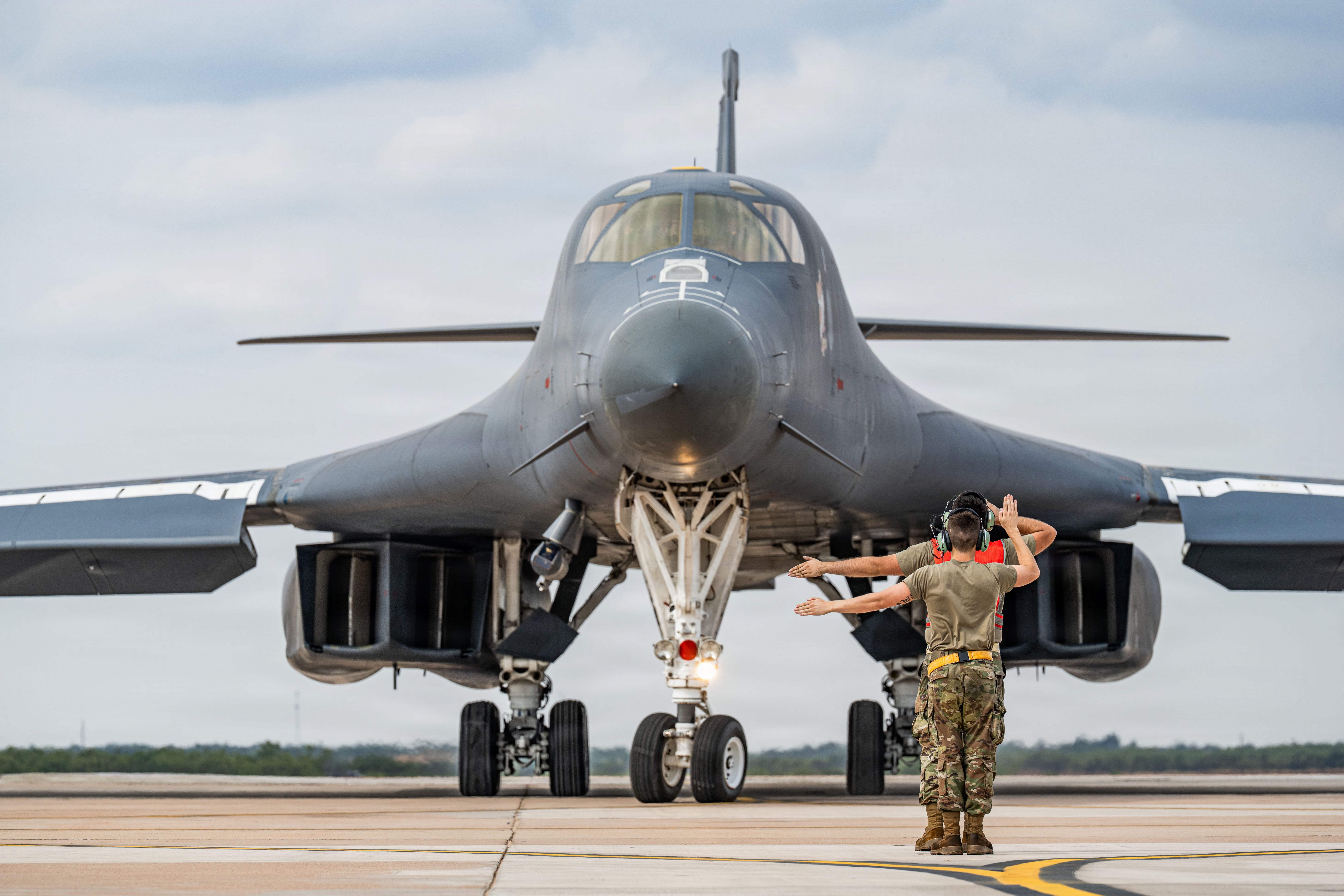
Iran’s parliament is talking openly about leaving the Nuclear Non-Proliferation Treaty. Ukraine destroyed roughly $150 million worth of Russian combat aircraft at an airfield 500 kilometers inside Russia. Flávio Bolsonaro finished ahead of Lula in Brazil’s first round and is heading to a runoff while his father sits in prison. The B-1s at RAF Fairford have departed shortly after an alleged bomb plot outside the base. And Russia may have used its new S-8000 Banderol cruise missile against one of Kyiv’s major bridges.
1. Iran is discussing leaving the NPT, which is about as comforting as it sounds
This one has been building for weeks, and we may finally be approaching the point where Iran has to decide how far it actually wants to push the nuclear confrontation.
On September 9, the International Atomic Energy Agency’s Board of Governors voted 23-3 to formally refer Iran’s nuclear non-compliance to the United Nations Security Council. It was the first such referral in twenty years, submitted by the United States, United Kingdom, France, and Germany.
Iran condemned the decision and said it would “not bring any results.”
Then Iranian lawmakers introduced a bill calling for withdrawal from the Nuclear Non-Proliferation Treaty.
That got my attention.
The IAEA says Iran has been violating its safeguards obligations for more than a year and has denied inspectors access to most of its 22 nuclear sites since the current conflict began. Director General Rafael Grossi has said the agency believes Iran possesses approximately 400 kilograms of highly enriched uranium, theoretically enough material for roughly ten nuclear weapons if it were enriched further.
The inspectors can’t currently verify where that material is, what condition it is in, or whether any has been diverted.
The NPT is one of the last pieces of legal architecture still connecting Iran’s nuclear program to international inspection and nonproliferation obligations. Tehran withdrawing would not magically produce a nuclear weapon the following morning, although it would remove a major mechanism through which the outside world monitors what Iran is doing.
Only one country has previously withdrawn from the treaty: North Korea.
That is not a club whose membership anyone should be excited to expand.
What I’m watching: Whether this bill actually reaches a formal vote in the Majlis.
There’s a difference between Iranian lawmakers threatening withdrawal because they are angry at the IAEA and the Iranian government deciding that abandoning the NPT advances its interests.
I’m also paying close attention to Grossi. If he begins talking about the inspectors’ absence as something permanent rather than a temporary condition he expects negotiations to resolve, my concern level goes up considerably.
Right now, the IAEA knows enough to be worried and not enough to know exactly what it should be worried about.
Wonderful.
2. Ukraine just destroyed $150 million worth of Russian glide-bomb carriers 500 kilometers from the front
This is probably my favorite story of the five, for reasons regular readers can probably guess.
During the night of October 3 into October 4, drones operated by the Security Service of Ukraine’s Special Operations Center Alpha flew approximately 500 kilometers into Russian territory and attacked Khanskaya military airfield in the Republic of Adygea.
The strike destroyed an Su-35 multirole fighter worth roughly $100 million and an Su-34 fighter-bomber worth around $50 million. An ammunition depot containing aircraft weapons and ordnance was also hit, and satellite imagery by morning showed destruction around the aircraft taxiways.
The dollar figure is fun but the aircraft types matter more.
Su-34s and Su-35s are among the Russian aircraft used to deliver the guided glide bombs that have become an absolute nightmare for Ukrainian troops and cities. FAB-500 and FAB-1500-class bombs can be released from Russian aircraft at standoff distances, allowing the launch platform to remain farther from Ukrainian short-range defenses while the bomb glides toward its target.
Ukraine has spent years trying to figure out how to deal with this problem.
Shooting down the bomb itself is extremely difficult.
So, Ukraine has increasingly gone after the guy carrying it.
And Khanskaya is part of a pattern.
On August 21, Ukraine struck a Su-34 at Akhtubinsk.
On August 28, it hit a Tu-95MS strategic bomber-missile carrier at Engels.
Now two more tactical aircraft have reportedly been destroyed at Khanskaya.
That begins looking less like a collection of drone raids and more like an airfield attrition campaign.
What I’m watching: Russia’s dispersal decisions.
