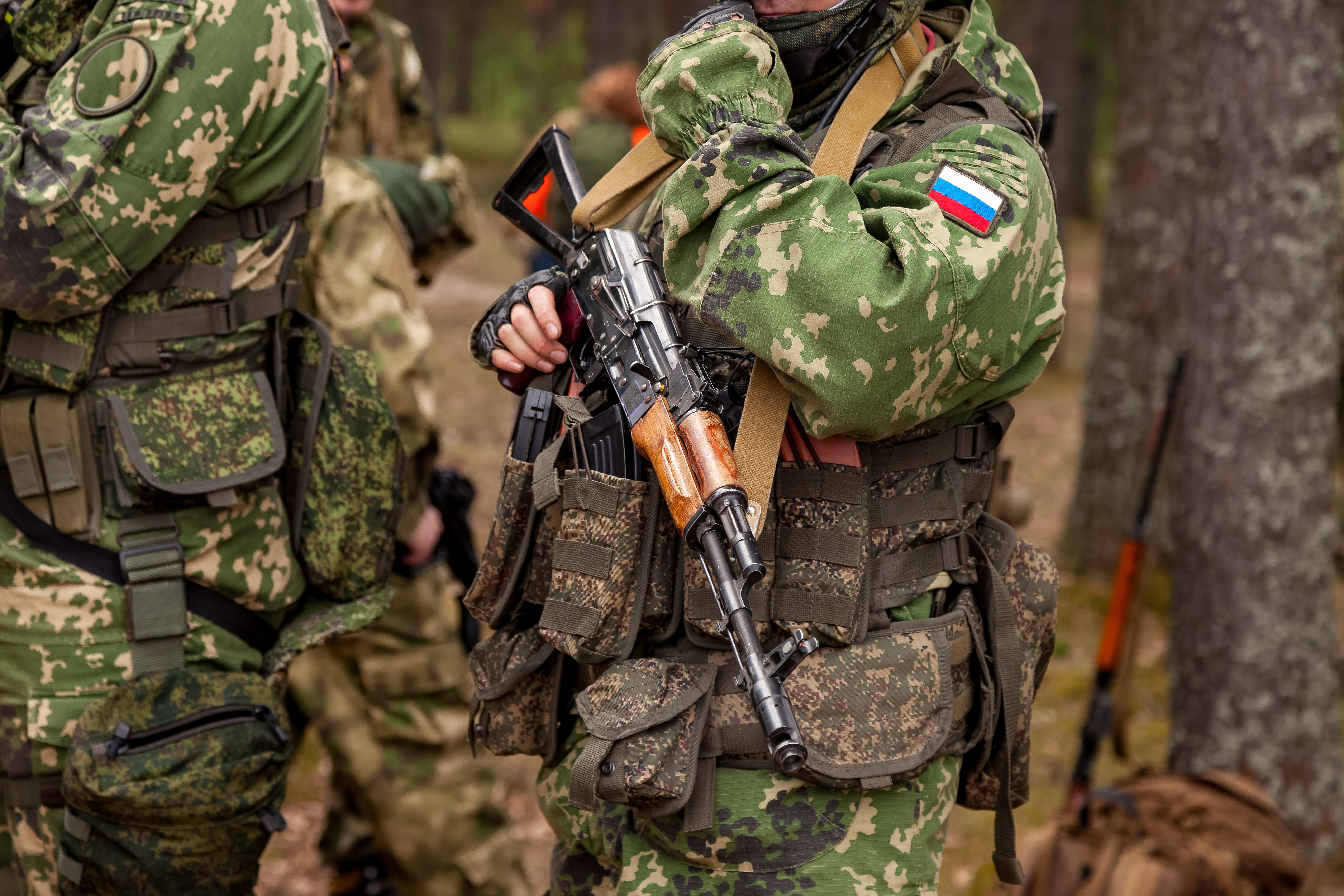
What 500,000 More Russian Troops Would Actually Do in Ukraine
Mobilized Russian personnel can be used to reinforce and fill existing, thinned out defensive positions, but don't expect a huge push toward Kyiv.
There’s been some chatter that Putin is considering a mass mobilization of half-a-million conscripts this fall. This info comes from Andriy Kovalenko, head of Ukraine’s Center for Countering Disinformation.
Just to be clear, I haven’t seen a published Russian decree, regional call-up order, or independent intelligence assessment confirming the 500,000 figure, (and I have AI agents listening to Russia 24/7).
But it’s definitely possible… Ukrainian intel is often right nine times out of ten, they have better resources than I do, and Putin hasn’t exactly been making good decisions lately.
So, how would a fresh injection of 500,000 poorly trained “soldiers” affect the front lines?
First of all, these would probably be mobilized reservists, not ordinary conscripts; the kind serving their standard period of national service. Russia could pressure regular conscripts into signing contracts, as it already does, but a half-million-man expansion would require another involuntary reserve call-up or some new legal mechanism.
As of right now, Ukraine’s Foreign Intelligence Service estimates that Russia recruited approximately 195,000 contract soldiers during the first half of 2026, or about 1,070 to 1,090 per day.
That’s actually below Moscow’s annual target of 409,000.
Ukrainian estimates place Russian casualties during roughly the same period close to recruitment totals, which suggests Russia’s voluntary system is simply replacing current losses rather than “expanding the force.”
If Russia called up another 500k over six months, it would add about 83k new recruits per month before accounting for medical rejections, evasion, desertion, training accidents, support assignments, and ongoing battlefield casualties.
Even after those deductions, Moscow could potentially create a net force increase measured in the low hundreds of thousands by spring 2027.
This is just my estimate; not really a prediction. Russia may very well conscript men quicker than it can provide the necessary training and equipment. In fact, that’s almost guaranteed.
We saw the same thing in 2022 complete with soldiers outfitted with old, rusty rifles, no personal body armor, and family members shopping for medical supplies to send to the front lines.
The defensive effect would be much greater than the offensive effect
Ukraine’s current drone overmatch makes troop and vehicle concentrations more hazardous for Russia, but they don’t render infantry obsolete.
Infantry are still needed to occupy trenches, observe and guard against enemy tree lines, maintain patrols, and prevent Ukrainian infantry from crossing and occupying ungarrisoned positions.
In theory, mobilized Russian personnel can be used to reinforce and fill existing, thinned out defensive positions, construct additional defensive lines, establish defensive position reserves, rotate existing defensive position personnel, protect and defend logistics routes, command and control nodes, airfields, and munitions storage, and establish defensive positions in lower priority areas.
All of these would serve to improve and strengthen Russian defensive operations against future Ukrainian counter offensives.
And the impact would be compounded by the fact that Ukraine’s own defensive operations are also suffering from a lack of personnel. Even an unskilled Russian infantry soldier in a defensive position can create a problem for a Ukrainian offensive if that unit does not have the personnel to clear and occupy the position.
But I think the bigger danger is what mobilized troops free up…
Russia could assign these new soldiers to rear area positions and static locations. They could then send experienced contractors, drone operators, engineers, scouts and the remaining assault specialists to be organized into focused units.
Russia’s more experienced soldiers would be able to stop covering the less active sections of the line of contact.
Imagine Russia adds 300,000 usable troops after training and administrative losses. Perhaps only a minority ever conduct offensive operations. The rest could still free up tens of thousands of experienced personnel for attacks around Pokrovsk, Kostiantynivka, Kupiansk, Sumy, or whatever sector Moscow chooses.
Russia could also afford to send small teams forward continuously, probe more locations, replace losses quickly, and force Ukraine to expend drones, artillery, mines, and operator attention on a greater volume of targets.
But I do think Ukraine’s drone overmatch limits some of the offensive payoff. Ukraine has built a deep zone of drone surveillance and interdiction extending from the front into Russia’s operational rear. And large troop formations are just begging for a SCALP or Flamingo cruise missile strike.
Huge groupings of troops require a few things that can be planned for, like transport trucks, fuel, food and water, and staging areas… All of these would have a big fat Ukrainian target on them because each one creates a detectible signature.
I think it’s more likely that Russia disperse the new mobiks into small groups and feeds them into existing formations rather than create one massive, visible army.
Current Russian attacks use small infantry groups that infiltrate through tree lines, ruined buildings, drainage ditches, and gaps in Ukrainian surveillance.
There are two reasons for this: These small-group assaults require less sophisticated command and control, which the Russian military is just plain bad at. As an added benefit for Russia, these small groups expose fewer troops to Ukrainian drones at any one time.
A fresh batch of conscripts would allow Russia to repeat those small attacks much more frequently across the front. This would burn through Ukrainian drones, artillery ammo, and probably patience.
Still, the training issue may be the true bottleneck for Russia.
They already have massive administrative and training problems at their current recruitment rate. Any future large, involuntary call-up would create massive pressure on already-existing shortages of instructors, facilities, and officers.
In theory, training 300k to 500k Russians to wear a uniform and fire a rifle is possible, but these so-called soldiers would have no knowledge of infantry battle drills, secure communications, artillery coordination, how to operate in an electronic warfare environment, combat medicine, vehicle maintenance, or any type of basic discipline whatsoever.
Two weeks simply isn’t enough time to make a new private off the street into a combat-effective soldier.
The last big Russian mobilization, World War II, gives us a glimpse into how Russia could do it, although Stalin never really solved the training issue.
It’s not a perfect comparison; before Germany invaded, the Soviet system combined universal military service, pre-military instruction, reserve obligations, and organizations that taught marksmanship, aviation, physical fitness, and other military skills.
A contemporary American assessment estimated roughly five million trained Soviet reservists and another six million with partial training before the war even started.
But for training, Stalin created a sort of national training conveyor belt: In September 1941, the State Defense Committee ordered compulsory military instruction for male citizens between 16 and 50. The basic program totaled 110 hours and emphasized drill, rifles, machine guns, grenades, and chemical-defense skills.
It was intended to provide at least rudimentary preparation before men entered the Red Army.
But it didn’t really work…
A 1942 Soviet inspection found poor discipline, desertion, inadequate weapons instruction, weak marksmanship, poor camouflage training, insufficient practice in combining fire and movement, and commanders who didn’t understand the weapons they were supposed to teach.
Putin’s wartime bargain, and what mobilization would break
The Kremlin’s deal with Russians has been clear: as long as you “support” the war (aka shout about your support for the war), and ignore it privately, the State will ensure that this war doesn’t disrupt your everyday life, your job, or your son.
So far, Moscow has kept this promise (barely) by using contract incentives, prisoners, migrants, debtors, and recruits from the poorer regions.
A call-up of 500,000 men puts the kibosh on that arrangement.
If you count the parents, spouses, children, and siblings of the half a million conscripts, the politically affected population would be in the millions.
The September 2022 partial mobilization was the greatest domestic impact of the war’s early years. Polling showed 47% reported anxiety, fear, or horror, while 23% reported shock.
Two-thirds of the surveyed population believed a wider mobilization was inevitable.
Protests occurred in cities with historically low levels of protesting. Draft offices were also attacked.
Putin was able to survive the call-up because of the limited scope.
Protests largely remained localized and borders were kept open just long enough for the most likely dissenters to leave. The burden for the war was then focused onto the poorer regions and ethnic minorities.
A second one would land on much worse ground
According to Levada’s June 2026 data, Putin’s approval rating dropped from 79 to 74 percent, disapproval rating increased from 15 to 21 percent, and the percent of Russians who think the country is on the right track decreased from 61 to 52 percent.
Compared to some Western countries, these numbers seem trivial. But in Russia, the numbers reflect a monumental shift.
The second call-up would follow multiple years of losses, increased inflation, loss of workers, Ukrainian attacks on Russian soil, and a long series of broken promises that victory was “just beyond the horizon.”
Mobilizing an additional 500,000 men would admit that the first mobilization didn’t touch the manpower problem.
Russian state media could call it the final push. But, Russian families have heard the phrase “final push” enough to do the math on what a second one implies..
The real danger for Putin sits with the elites, not the streets
Putin’s type of dictatorship is most vulnerable when a restless public meets a divided “establishment,” or the people who actually run the country, like higher-ups in the security services, governors, military leaders, aides to the president, and business leaders.
Currently, Russia’s elite seems stuck and unable to make a move against Putin, who, as it stands, still controls their finances. After two decades of dominating Russian politics, Putin’s regime has made the elite submissive.
The Carnegie Endowment for International Peace explains that the elite of Putin’s Russia have become managerial and bureaucratic in nature. Personalist dictatorship regimes can also rely for an extended period on repression, wealth, and a sense of mutual fear until the elite start to believe that the regime can no longer protect them.
This type of war demands ‘passive’ patriotism from the public. And if this intelligence is true, Russian citizens are about to drink from the patriotism firehose.
So, regardless of what happens to Putin’s prestige, here’s what I see in three stages in Ukraine:
In the first stage, maybe the first two months, there would likely be chaos within the Russian system: Overflowing training centers, under-equipped and unprepared recruits arriving at the front. The immediate benefit here would be filling depleted units.
During the next stage, after three to six months, there may be an improvement of defensive depth, with more frequent rotations of Russian troops, more personnel in the rear, and more attacks with concentrated experienced personnel. This would result in more pressure on Ukraine with weaker defended areas.
In the last stage, say six to twelve months, (and only if Russia is able to prepare, equip and organize the mobiks), then Russia may be able to create a meaningful operational reserve and may be able to launch attacks from the north.
I still don’t think this would be enough to break Ukraine’s defenses.
And I guess that’s my big takeaway…
Putin can pour more Russian souls into the meat grinder, may take some additional land in small amounts, but still wouldn’t be able to make meaningful gains in central or Western Ukraine.
It would, however, make any future Ukrainian counter-offensive more difficult by allowing Putin to “flood the zone” he’s captured already with enough Russian meat to make any Ukrainian attack a slog.
The best we can hope for is that any future mobilization hits an already weakened Putin regime and hastens his downfall.
Слава Україні!


A question you do not discuss in this posting is Ukraines reaction to the mobilization. They could conceivably use this to do some own mobilization, based on a needs must argument. I see this is a political issue really, but Ukraine would certainly do something as well.
Basically you are saying that to gain from a mobilization Russia must plan for a period of 6 months of training, organization, preparation of using those additional people. Seems logical to me. That the system creating the mess they are in should be able to be so well organized is in my opinion unbelievable. If Putin mobilize he will waste no time in sending those new recruits to the front for assault. Training? Weapons? You just charge in the direction of the enemy…