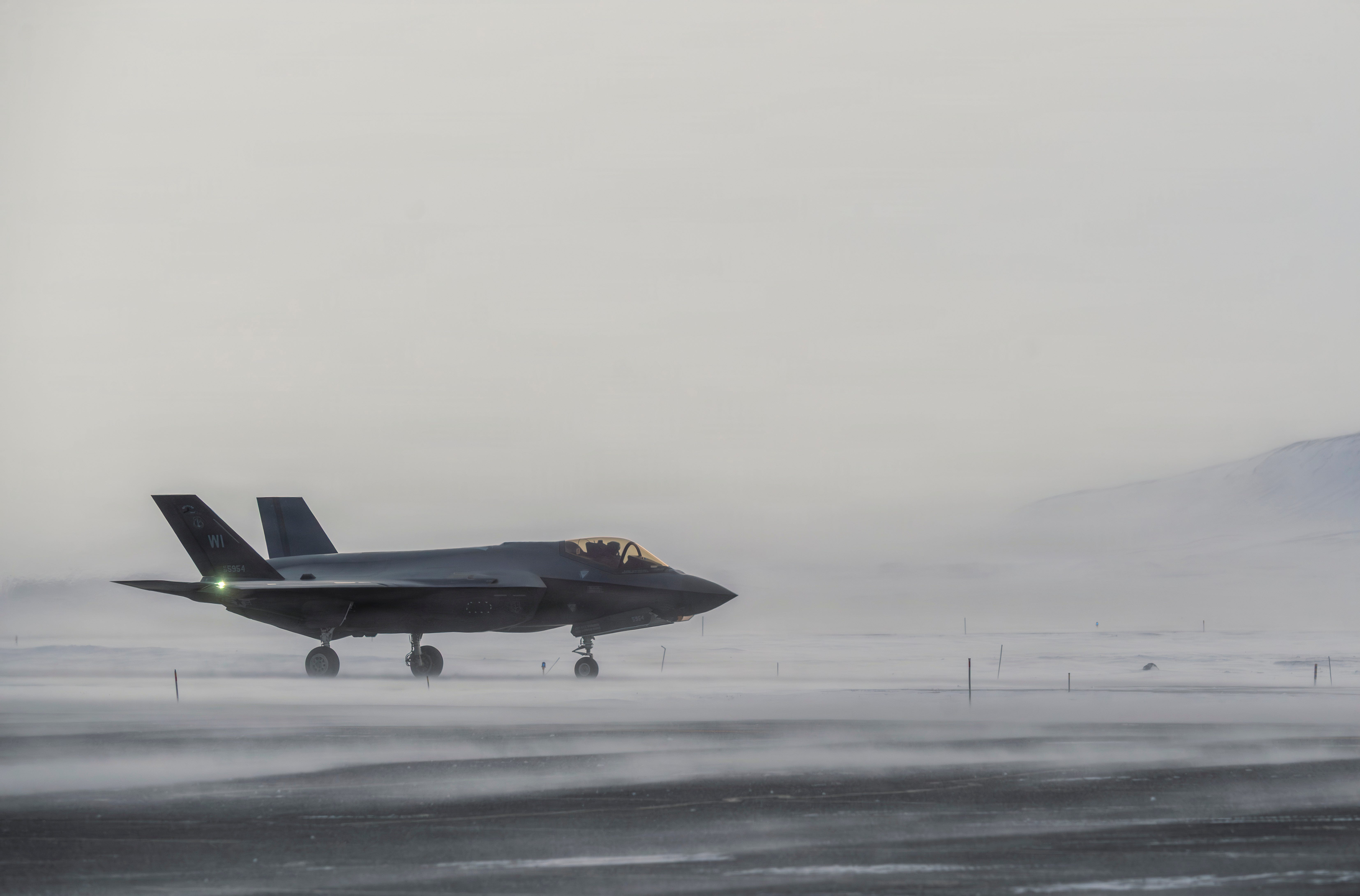
What Would a US Invasion of Greenland Actually Look Like?
Settle in, this is going to be a long one...

Welcome to the new world.
Most people didn’t even notice the transition, but we are very much in a new era now; one of renewed imperial ambition.
When Trump said he wanted to “Make American Great Again” we all assumed he wanted to take the US back to the 1950s. Well, the joke’s on us because he actually meant the early 1900s.
Would the United States of America try to take Greenland with military force?
If you had asked me that question last week, I would have laughed and gone back to my bar exam prep.
Now, I have this uneasiness that I can’t seem to shake.
The rational part of my brain, which is most of it unless I’m hungry, says, “We may go after Columbia and Mexico next, but surely, we wouldn’t attack a fellow NATO ally… right?
Right?
I mean, there is no rulebook for that scenario.
Well, let’s game it out. Here’s what it would actually look like in practice:
Picture this headline hitting your phone at 6:30 a.m.
“United States Marines Land on Greenland”
You blink. You reread it. You assume it’s satire. Then you notice it’s not from The Onion. It’s from Associated Press.
And suddenly, the most stable military alliance in modern history stands in a very awkward silence, staring at its own reflection, wondering how it ended up here.
The question is not whether the US could do it. It absolutely could. The real question is what happens next when one NATO ally threatens another over territory, and whether NATO, international law, and Greenland survive the moment intact.
This hypothetical got less hypothetical this week. European leaders have already gone on record with the core principle that Greenland’s future belongs to Greenland and Denmark, not to outside coercion, and they have framed the entire problem as an alliance integrity crisis.
So, let’s run this like a staff brief, not a social media brawl.
The rulebook you cannot “vibe” your way around
Start with the uncomfortable baseline. A US president threatening to take Greenland by force is a threat of aggression against Denmark, a fellow NATO member.
That alone breaks something fundamental.
NATO exists to keep enemies out, not to referee a shoving match between allies. The treaty never imagined its strongest member shaking down one of its smaller ones for Arctic real estate.
International law comes first, because if law school has taught me nothing else, it’s that words matter.
The UN Charter bans both the use of force and the threat of force against another state’s territorial integrity or political independence. The text is blunt, and it has been the spine of the postwar order.
So, the moment Washington says, publicly, “hand it over or else,” it crosses from hard diplomacy into illegal coercion.
You do not need a think tank panel to translate that. The words say what they say.
This is the point where Moscow usually shrugs and pretends definitions do not exist.
Washington does not get that luxury without setting its own legitimacy on fire. The United States built decades of influence on the idea that borders do not change at gunpoint, (unless oil was on the line).
Threaten to do it anyway, and you hand every authoritarian regime a laminated excuse card.
Then comes the Greenland reality, the part that destroys the “just buy it” crowd’s day.
Greenland is not an empty ice sheet with a flag stuck in it. It has self-government, its own politics, and a legally recognized right to self-determination under the Greenland Self-Government arrangement. Denmark’s own Prime Minister’s Office describes the Self-Government Act as recognizing Greenlanders as a people with a right to self-determination under international law.
The Act also lays out a road map for independence. Section 21 states (PDF Warning) that the decision on independence “shall be taken by the people of Greenland,” and if they choose it, negotiations follow.
That means Denmark cannot credibly hand over Greenland like it’s a used car with a clean title. Any sovereignty shift that ignores Greenlandic consent detonates politically. Do you want an insurgency, because that’s how you get insurgencies…
And Greenlandic public opinion has not been ambiguous. A Reuters-reported poll found 85 percent opposed joining the United States, with only 6 percent in favor.
Threats of force make that opposition harder, not softer. People do not react to being treated like a bargaining chip by thinking, “wow, what a persuasive negotiating posture!”
NATO mechanics, and why Article 5 is not a magic button
Denmark’s first move is not tanks. It is paperwork.
Article 4 of the North Atlantic Treaty gives any member the right to call consultations when it believes its territorial integrity, political independence, or security is threatened. NATO itself quotes the line in plain language.
So, Denmark would invoke Article 4 immediately, and it would keep invoking it.
Not once.
Repeatedly. That forces constant crisis consultations inside NATO. It drags every ally into the room, on the record, with cameras outside the door and markets watching.
People love to jump to Article 5, the famous “attack one, attack all” clause, like it’s a big red button labeled WAR.
That is not how the treaty reads.
NATO’s official treaty text says that if an armed attack occurs, each ally will assist by taking “such action as it deems necessary,” including the use of armed force. The key phrase is “as it deems necessary.” It is not automatic, and it is not uniform. This means each ally can decide for itself how much help it wants to give.
Even worse, NATO functions by consensus. The alliance was built to deter the Soviet Union, not to discipline the United States. There is no clean, elegant, ready-made mechanism for “the biggest kid in the alliance just went feral.”
If Denmark tried to trigger Article 5 against the United States, NATO as an institution would likely seize up or dissolve completely.
The alliance would not seamlessly pivot into combat operations against Washington. You would get paralysis, emergency diplomacy, and a frantic effort to keep the alliance from tearing itself apart in public.
Denmark would not be abandoned, but support would take different forms.
The escalation ladder that stops short of war
Here is the part that gets uncomfortable for Washington, because it is also the part that is most realistic.
Europe has pressure tools that stop short of war. They do not need to be dramatic to be effective.
They just need to be persistent.
Think of it as an escalation ladder built around three scores.
Pain, meaning how much it actually hurts the US.
Risk, meaning how much it hurts Europe in the process, and…
Political plausibility, meaning whether European leaders can sustain it without their own publics throwing them out.
Let’s walk up the ladder:
Tier 1: Maximum plausibility, low risk, immediate pressure
Tool 1: Article 4, permanent crisis framing
Denmark calls Article 4, and keeps the issue alive inside NATO’s core political machinery.
This does not “punish” the US militarily. It does something worse. It reframes the United States as the alliance’s instability source. The headlines shift from “NATO deters Russia” to “NATO manages Washington.” That reputational shift poisons everything from defense procurement to basing politics to election cycles.
Tool 2: Unified EU diplomatic condemnation
Europe’s major capitals line up behind Denmark with clear language: sovereignty, international law, self-determination. That matters because it fractures the US story of “the West agrees with us.”
It also sets the conditions for harder steps later without a sudden lurch.
Tool 3: UN General Assembly isolation
The UN Security Council likely deadlocks, because that’s what it does when major powers collide. So, Europe goes to the General Assembly and builds a condemnation vote around the UN Charter’s ban on threats of force.
This does not bind the US legally. It binds it politically. Every vote becomes a receipt. Every abstention becomes a story. Every “yes” becomes another brick in the wall of US isolation. Roger Waters eat your heart out.
Tier 2: Real friction, still reversible
Tool 4: Pause non-essential defense cooperation
Europe keeps deterrence against Russia intact, but pauses the extras: certain joint R&D pathways, training exchanges, procurement coordination, and multilateral capability projects.
The message is quiet and brutal: you do not get to lead the alliance while threatening the alliance.
Tool 5: Restrict basing privileges where legally possible
No expulsions. No dramatic closures. Just friction.
European states review basing agreements and apply the letter of the law, slower approvals, narrower access windows, stricter compliance. For a US military that runs on speed and access, friction is operational pain.
Tool 6: Arctic governance push that sidelines Washington
Europe leans into Arctic security and governance coordination where it can, presenting itself as the responsible stakeholder and the US as the destabilizer. Investors watch this closely because Arctic projects depend on predictability.
Tier 3: Economic pressure that actually hurts, used cautiously
Tool 7: Regulatory and market access pressure
The EU has a set of tools that scares multinational corporations more than sanctions do. Antitrust scrutiny, data protection enforcement, environmental compliance actions, market access reviews.
These can be framed as routine enforcement. Corporations feel it first. Washington hears about it immediately.
Tool 8: Investment chill and financial signaling
European governments and institutions signal caution on US-linked Arctic and defense investments. No bans. Just hesitation.
Markets react faster than diplomats. Insurance costs rise. Timelines slip. Capital hesitates. That pain arrives without a single jet taking off.
Tier 4: Last-resort moves, high pain, high risk
Tool 9: Prepare a sanctions framework, even if you never deploy it
Preparation leaks. The leak is the pressure. Actual sanctions on US entities would be seismic and mutually damaging, which is why it stays in the drawer unless Washington escalates hard.
Tool 10: Alliance reorientation without a formal break
Europe accelerates defense autonomy planning and frames it explicitly as a hedge against US unpredictability.
This terrifies US strategists because once allies plan around you, influence evaporates quickly. You can get it back, but you will not get it back for free.
By this point, the stock market has crashed due to global uncertainty and the US has become a pariah.
That’s the rational ladder.
It hurts.
It stays below war.
It also assumes Europe stays disciplined.
Now let’s take this beyond rational. I want to be clear, this next part is purely speculative. No matter what happens, there is no universe in the multiverse where Denmark and the US exchange gunfire… Although, I’ve been wrong before.
What a shooting war would look like if the Nordics chose force
Okay, let’s make one assumption for the sake of analysis.
Several NATO members, particularly Nordic states, decide they will use military force to stop a US invasion of Greenland. They do not merely posture. They authorize rules of engagement that allow them to fire.
Hold on to your butts; we’re in the Twilight Zone now.
This is not a NATO operation. NATO as a formal structure is over. Consensus becomes impossible when the US, NATO’s key founding member, is the aggressor. So, the Nordics would form an ad hoc coalition outside NATO command, framing their actions as support for Denmark and collective self-defense logic, not as NATO versus the United States.
War aims matter, because they shape everything.
The coalition would not aim to conquer anything. Nobody is invading the United States over Greenland.
Their aim would be denial: prevent the US from establishing a clean lodgment, disrupt reinforcement, and raise the political cost high enough that Washington backs down or settles.
That turns Greenland into a contest about access, reinforcement, and legitimacy.
Access is a geography problem.
Reinforcement is a logistics problem.
Legitimacy is the part that breaks occupations (eventually).
Greenland is huge, but usable entry points are limited, which forces an attacker into a small number of airfields, ports, and prepared sites. That helps a defender because you can predict where pressure will land.
Now add the one place everyone understands without saying it out loud.
Pituffik Space Base, formerly Thule, supports missile warning, missile defense, and space surveillance missions, including a phased-array radar operated by the US’s 12th Space Warning Squadron, plus satellite command and control through the Pituffik Tracking Station.
That site changes the character of any fight. Everyone fears miscalculation around strategic warning systems. Nobody wants to trigger a chain of misunderstandings that ends in catastrophe.
Hands off the nukes and the nuke adjacent warning systems!
So, you get a strange combination: the most important site creates pressure for restraint, while the surrounding access points create pressure for escalation.

First up, the posture shift; also known as the week where everyone asks “are we really doing this?”
As a fan of Warhammer 40K, I structure this like I’m building an army list. My true nerd readers will know what’s up…
On the US side first:
If the Pentagon had to build a Greenland invasion package, it would not look like the Maduro raid with snow sprinkled on top. Caracas was a two-hour decapitation sprint with helicopters, cyber, and a giant air armada for shock and suppression.
Greenland is a logistics problem wearing a parka.
That said, the Venezuela benchmark is real. Reporting on Operation Absolute Resolve says the US launched over 150 aircraft from roughly 20 locations, with elite ground units and SOF aviation in the mix.
Here’s what the Pentagon could plausibly muster.
The opening move force: seize and lock key nodes
This is the “get in first, control the chokepoints” package. In Greenland, chokepoints are airfields, ports, and comms infrastructure. Pituffik’s runway and support footprint matter here because it is already a DoD platform with strategic warning missions.
Likely components:
JSOC assault elements (Delta Force as a national mission force option, plus supporting enablers)
75th Ranger Regiment for airfield seizure and fast perimeter control (classic mission set)
An airborne infantry element for rapid follow-on, likely 82nd Airborne or a similar ready brigade
Marines for expeditionary security and follow-on presence, especially if ports become relevant
A Greenland operation would be less about “capturing a leader” and more about “capturing infrastructure,” then holding it long enough that politics can catch up.
Special operations aviation and assault lift
If the US wants a fast, precise opening, it leans on 160th SOAR for low-level insertion, night ops, and moving the first wave. That model matches what was reported in Venezuela, where SOF aviation and elite units were central.
But Greenland forces a different mix:
More fixed-wing airlift (C-17 and C-130) because everything is far and heavy
More tankers because distances and loiter time in the High North eat fuel for breakfast
More search and rescue and medevac posture because the environment punishes mistakes
Airpower: establish control of the air and protect the bridge
For Venezuela, the US used a massive air armada and electronic warfare to avoid losses against Russian-made systems.
For Greenland, the air problem depends on who resists. If Denmark and Greenland alone resist politically, the air threat is low. If Nordic states decide to fight, the air threat becomes real fast, because Norway and Denmark both field F-35s and Sweden fields Gripen, and they fight on home geography.
So the US would likely bring:
Stealth fighters (F-35) and air superiority (F-22 if the US decides this is a high-end air contest)
Electronic attack (EA-18G Growler) to jam and blind
ISR (RC-135, Rivet Joint type missions, plus UAVs where weather allows)
Tankers (KC-46, KC-135) to keep fighters on station
Air and missile defense protection for key nodes once seized (Patriot type coverage and point defense)
The key is not “bomb Denmark.” The key is “make it impossible for anyone to stop the air bridge.”
The naval backbone: sea control, sealift, and the boring stuff that wins
If the US tries to turn a foothold into durable control, it needs sea lines. Heavy equipment and sustained supply do not teleport.
Expect:
A carrier strike group for air cover and power projection
An amphibious ready group with a Marine Expeditionary Unit for flexible landing options and crisis response
Attack submarines for sea denial and to keep adversary navies honest
Logistics ships because the only thing worse than a contested North Atlantic is a contested North Atlantic with no fuel
This is where Greenland differs sharply from Caracas. Venezuela was a raid. Greenland would become a supply campaign.
The ground “hold” force: this is where the bill comes due
Seizing an airfield is a headline. Holding Greenland is a posture.
If Washington intended more than a symbolic seizure, it would likely need:
A brigade-sized footprint as a minimum to secure key areas and rotate forces
Engineers to keep runways, ports, and shelters functional
Air defense and counter-drone coverage, because modern battlefields do not let you ignore small threats
Arctic-capable units and cold-weather sustainment expertise
The Army has been deliberately building Arctic readiness through exercises in Finland and Norway, including Arctic Forge, with units like 10th Mountain Division participating in Arctic-focused training rotations and host-nation exercises.
If the Pentagon wanted troops who can live and operate in misery without collapsing, it would reach for units that train for cold-weather and expeditionary conditions. The 11th Airborne Division in Alaska exists in large part to cover that kind of environment, even if Greenland is still its own special version of awful.
The Greenland wildcard: Pituffik is both an asset and a constraint
Pituffik is not just “a base.” Space Force describes its missile warning, missile defense support, and space surveillance mission through the 12th Space Warning Squadron and the upgraded early warning radar.
That cuts both ways:
It is an obvious node to secure early, because it supports strategic warning.
It is also a node everyone will hesitate to damage, because messing with missile warning infrastructure is how you get into the worst kind of escalation spiral.
So, you get a strange reality. The most important site pushes both sides toward restraint, even while the broader crisis pushes them toward confrontation.
How big could the US make it, compared to Venezuela’s 150-aircraft raid?
For a short, sharp “seize a node” operation, the US could absolutely match Venezuela’s scale, and the reporting shows it is willing to do that for a political objective.
For a sustained Greenland campaign, the aircraft count is not the headline. The headline is:
How many days of supplies can you push through in winter?
How many sorties can you generate in Arctic weather?
How many tankers you have available?
How long you can keep ships and aircraft operating safely in the North Atlantic while being watched, challenged, and politically isolated?
If Nordics are fighting, the US can still bring overwhelming mass, but the cost curve spikes hard because you are no longer raiding a compound. You are contesting air and sea approaches against modern allied air forces in their neighborhood.
Before the first shots, you would see the coalition reposition. Long-time US allies in Europe, namely the UK, would likely sit this one out. “Pip pip cheerio, sorry old boy, you’re on your own with this one.”
Denmark rallies politically and legally, and Greenland’s elected leadership becomes the centerpiece. If Nuuk condemns the invasion attempt and requests assistance, it gives the Nordic coalition political oxygen.
If Washington tries to install a friendly “interim authority,” like Russia would do, the coalition frames the entire operation as occupation.
The Nordics also move tangible assets.
Air assets disperse and surge. Naval units push into the North Atlantic approaches. Intelligence sharing goes into overdrive. Undersea surveillance and maritime domain awareness becomes the obsession. The coalition wants to see US movements early and force Washington to operate under constant observation.
Sweden is particularly useful here:
Sweden would start by flooding Denmark with signals and cyber support.
FRA, Sweden’s national signals intelligence authority, exists for this exact kind of national emergency: foreign SIGINT plus cyber security support to the government and critical infrastructure.
On top of that, Sweden can put airborne SIGINT into the air quickly using its S102B Korpen platform, which has a public track record of intelligence-gathering sorties near sensitive areas.
Denmark gets early warning of US force movement patterns, emissions mapping, comms collection where available, and a clearer picture of how Washington is running the operation.
If shots are a real possibility, Sweden’s early contribution is not “more fighters.” It’s “better information for everyone else’s fighters.”
Sweden operates Saab 340 AEW&C aircraft with Erieye radar, built to track aircraft and ships and to extend the recognized air and maritime picture.
That aircraft becomes a combat enhancer for Denmark and Norway by improving cueing and helping deconflict a crowded airspace that’s about to get very tense.
In phase one, Sweden would likely fly these over the Baltic and southern Scandinavia, not Greenland. That frees Danish attention and assets by stabilizing Denmark’s home region while Copenhagen focuses on the Greenland crisis.
Sweden would surge Gripen sorties to tighten air policing, escort, and rapid reaction alert coverage in the Nordic region.
Sweden’s Gripen E has entered Swedish Air Force operational service, and Sweden still operates Gripen C/D, giving it a solid fighter force for regional defensive missions.
The practical tasking looks like this: more combat air patrols, more intercept readiness, and more protection for the air and sea corridors Denmark needs to move forces and supplies.
Sweden also has ground-based air defense to protect the rear: Patriot and Gotland air defense.
Sweden fields Patriot as Luftvärnssystem 103 and describes its structure and purpose as part of Sweden’s air defense battalions.
Sweden has also reinforced Gotland’s air defense posture in the past, including the return of air defense missile system 23 to the island.
The early goal is to keep Sweden’s and Denmark’s critical nodes covered, especially airfields, ports, and command posts. If Denmark is trying to flow anything west toward Greenland, you want the home front stable and hard to intimidate.
Finally, Sweden’s naval assets for sea denial and surveillance: submarines and corvettes.
Here’s a fun video I made about Sweden’s newest drone sub:
Sweden’s undersea card is the Gotland-class submarine force, three boats, designed for the very missions that matter in early crisis: intelligence collection, forward surveillance, and sea denial.
On the surface side, Sweden can sortie Visby-class corvettes, a stealthy littoral combatant built around sensors, speed, and anti-ship punch.
Next up: denial, denial, denial
If the coalition fights, it fights where it has leverage.
That means the sea and the air.
The first operational objective is to contest US reinforcement. You can rarely stop an initial seizure if the attacker moves fast, but you can make reinforcement uncertain, which turns a sprint into a slog. And remember, the US is particularly good at first strikes, not so good at what comes after.
At sea, the coalition would focus on shadowing, interdicting, and forcing the US to defend its sealift. Heavy equipment arrives by ship. If you make that risky, you shape the whole campaign.
In the air, the coalition tries to contest airlift corridors and tanker support. The US can fly in people quickly. It cannot fly in an armored brigade overnight. If the coalition makes airlift costly, it slows the consolidation.
Capabilities matter here, so let’s be specific.
Norway has completed delivery of its F-35A fleet, with deliveries of aircraft 51 and 52 highlighted by the manufacturer’s announcement in April 2025.
Denmark has 15 F-35s available, with completion of its initial order of 27 expected in 2026, according to the F-35 program’s own Denmark page and corroborated by defense reporting. At this point, Denmark likely wouldn’t be receiving their remaining F-35 order.
Contrary to sensational reports on social media about a year ago, the US doesn’t actually have “kill switches” inside US-made equipment. This rumor started when the US supposedly prevented Ukraine from using ATACMS at its full range potential during the Biden administration. What actually happened is the US limited targeting data from its geospatial intelligence agency.
Finland’s F-35 deliveries start in 2026, and Finland’s Defense Forces state that the F-35 reaches initial operational capability by the end of 2027. This means Finland must rely on its aging F/A-18 Hornet (C/D models).
Sweden accepted its first Gripen E into operational service in October 2025. This means we would actually see the Gripen go up against US-made F-22 Raptors and F-35s.

On paper, that is a serious Nordic regional air picture. It is not parity with US global power, but parity is not required for denial.
Denial just needs enough capability to make the attacker’s timeline slip and the political cost rise.
Then, the first kinetic moments, how it actually starts:
Wars between professional militaries rarely start with a dramatic beach charge. They start with contacts, misreads, and rules of engagement colliding.
The most likely first shots would come from one of three places.
First, air intercepts that go wrong. Aircraft challenge each other. Someone gets painted by radar, someone refuses to turn away, and one side decides to fire rather than be embarrassed.
Once a jet goes down, leaders lose options fast.
Second, maritime interdictions. A coalition ship orders a US vessel to stop. The US refuses. The coalition attempts to enforce. The US responds. This can start with warning shots and end with hull hits in minutes.
Third, electronic warfare and cyber. These activities run before and during open hostilities. They also create “accidents.” A navigation system fails. Communications drop. A unit misidentifies a track. Somebody fires at the wrong thing.
This is where discipline matters, and it is also where politics fails to control physics. A missile does not care about your press conference.
Greenland is a logistics tax in peacetime. In conflict, it becomes a meat grinder.
The Nordic coalition’s strategy would aim at one thing: prevent a quick seizure from becoming a stable occupation.
That means:
Contest sealift so heavy equipment arrives slowly, if at all.
Contest airlift so you cannot fly in “solutions” on demand.
Contest legitimacy so every US governance move looks like colonial administration on the evening news.
Let’s be clear: US sailors and airmen will die in the cold waters of the north Atlantic. Then, the question becomes, will the US respond on the ground in Europe?
A typical move would be decapitation strikes of Nordic leaders. Unfortunately, as we’ve seen, the US could execute this fairly easily (although success is not as certain when facing a force significantly more modern than Venezuela’s).
Denmark has already moved to strengthen Arctic posture in the real world, including a 2025 agreement totaling 27.4 billion Danish kroner in acquisitions focused on Arctic and North Atlantic capabilities, including items like additional Arctic vessels, a maritime patrol aircraft capacity, drones, a new headquarters, and an undersea cable.
In a crisis, those investments become part capability and part signal: Denmark refuses to be treated as a landlord who forgot to lock the door.
Here is the strategic trap that sits under the whole Greenland scenario.
The United States already has significant military access in Greenland through established arrangements, and Pituffik’s mission set supports US strategic warning and space operations.
So, if Washington chooses coercion anyway, it trades “access at arms length” for “control without legitimacy.”
That is the same move Russia made in Ukraine, and the Kremlin has paid for it in blood, sanctions, and economic isolation.
Washington does not get to do it with a clean conscience and a clean outcome.
Even in a scenario where the US establishes a foothold, the coalition can keep the costs high and the legitimacy low. As I mentioned, Greenlandic opposition to joining the US gives that coalition the political cover to keep pushing.
That is how “winning” turns into a long-term bleed.
If this ever went kinetic, you do not get a satisfying victory parade. You get one of a few bad options.
Option 1: negotiated stand-down
The coalition raises the cost, Washington finds a domestic off-ramp, and everyone calls it “de-escalation.” This is the least humiliating outcome and the most likely if adults regain control.
Option 2: frozen confrontation
The US holds some positions. The coalition contests the approaches. Greenlandic politics harden against Washington. International condemnation grows. You get territory on paper and problems in practice.
Option 3: alliance rupture
Even if the US wins the immediate military contest, it loses strategically and globally. NATO cohesion cracks. European defense policy pivots. Allies STOP buying US war machines and building more of their own.
Adversaries watch the West fracture itself and laugh their asses off.
“The real danger is not that the United States could seize Greenland. The danger is that a US president could persuade himself that a territorial trophy is worth more than a functioning alliance system.”
-Wes O’Donnell
This week’s reporting has already shown European leaders framing the issue as a red line about sovereignty and alliance integrity, not as a quirky procurement idea.
Greenland is not a tank problem with snow on top. It is an alliance credibility problem that happens to sit on the Arctic map.
If the United States threatened to take Greenland, the first casualty would not be Danish sovereignty. NATO’s moral authority takes the round first, and the whole alliance feels the shockwave.
Russia and China would love this.
Not because it hands them Greenland, but because it replaces deterrence with massive dysfunction. The Kremlin has spent decades trying to fracture Western unity. Watching the West shoot itself would feel like Christmas morning in Moscow, except with worse logistics and more vodka.
And the dark absurd humor here is that Washington does not need to do any of this to get what it actually wants. It already has strategic access. It already has the critical base. It already has partnerships it can expand legally.
Power is not measured by how much territory you can take. It shows in how much you do not need to.
Our challenge, as citizens of the Earth, is that the world’s most powerful military is run by a man with no moral compass.
Can you imagine what the world would look like if the United States wanted to impose its will on the world? Could the world’s combined armed forces stop a madman with a trillion dollar-a-year military, plus nukes?
Okay, let’s wrap this up (by talking about Trump…)
If you want to understand why this Greenland scenario feels plausible in the Trump era, you have to stop treating it like foreign policy and start treating it like a personality plus an incentive structure.
Trump’s public posture on Greenland has not been subtle. The White House is now describing a renewed push to acquire Greenland as an active discussion, and senior officials have said the US military is always an option at the president’s disposal.
That phrase, always an option, tells you everything. It is not a negotiating posture designed to build consent. It is a threat designed to build fear.
Fear is faster than persuasion. Fear also poisons the ground you intend to stand on.
He pairs that with a long-running skepticism toward alliances. He has publicly criticized NATO for years, largely through a transactional lens where the alliance is a bill and the United States is the sucker paying it.
So what is the worldview underneath?
It looks like a mash-up of three impulses.
First, the map is the scorecard.
Trump thinks in assets. Properties. Leverage. He likes things that can be pointed at, measured, and claimed.
Land satisfies that craving in a way treaty language never will. A treaty is words. A base is concrete. A flag is a camera-ready object.
This is why “alliances on paper” do not light up the same part of his brain as a territorial acquisition. Alliances require patience, trust, routine maintenance, and a tolerance for ambiguity.
Land feels like closure.
It is also an old-school fantasy of statecraft, the kind that worked when empires were still allowed to behave like empires.
Second, intimidation beats persuasion in Trump’s mind.
The Teddy Roosevelt comparison is tempting, and not for the reasons people think. Theodore Roosevelt popularized the idea captured in the phrase “speak softly and carry a big stick.” He believed power worked best when backed by credible force.
The difference is that Roosevelt’s “big stick” sat inside a broader system where legitimacy still mattered. He used pressure to shape outcomes, not to announce that the United States would seize allied territory because it felt like it.
His era had its own moral blind spots, but it still understood one key lesson: threats are tools, not substitutes for strategy.
Trump flips that. He treats the threat itself as the strategy. He uses dominance displays as if they create durable political outcomes. They do not. They create compliance at best, resentment at scale, and resistance as soon as the coercer turns his back.
For Trump, optics matter more than systems.
Alliances are systems. Systems are boring.
Systems do not create the same dopamine hit as a dramatic “win” in the news cycle. Greenland offers a clean narrative that plays well on domestic TV: America takes what it needs, and weaker players fall in line.
It is a juvenile way of reading the world because it assumes other actors exist mainly to validate your power.
Denmark becomes a prop. Greenlanders become a prop. NATO becomes a prop. The UN becomes a prop. Reality does not cooperate with props.
Greenland is the perfect case study in why this mindset is dangerous.
If the United States had a purely strategic goal, it would pursue access, basing rights, investment, and joint Arctic security. It already has a major presence and critical missions in Greenland through existing arrangements, and the US does not need sovereignty to get strategic value.
So why push sovereignty anyway?
Because sovereignty is a trophy.
A trophy mindset produces a predictable pattern.
It discounts consent. Greenland’s Self-Government Act recognizes a right to self-determination, and it lays out that Greenlanders decide their own future.
It discounts public opinion. Greenlanders have shown overwhelming opposition to joining the United States in polling.
It discounts alliance dynamics. NATO runs on credibility and predictable restraint. When Washington threatens to take territory from a NATO ally, it turns the alliance from a deterrent shield into a stress fracture. European leaders are already treating the rhetoric as a direct threat to alliance cohesion.
It discounts second-order effects. Russia and China do not need to do anything in this scenario. They just collect the footage. Every time Washington threatens force against an ally over territory, it validates the authoritarian argument that rules are slogans used by the strong to control the weak. This is going to make Xi’s and Putin’s next circle jerk an event for the ages.
Then there is the part that should bother anyone who cares about US security, even if they love the idea of a larger American footprint in the Arctic.
Strategic warning infrastructure hates instability.
Pituffik is tied to missile warning and space surveillance missions. That means any crisis that threatens Greenland raises the risk of miscalculation around some of the most sensitive capabilities on the planet.
A serious strategist looks at that and chooses stability.
A trophy mindset looks at that and hears applause.
So why should we all be worried?
Because a leader who treats territorial acquisition as a substitute for alliance management creates a world where everyone starts copying the method.
That is not theory. It is how norms die.
If Washington normalizes coercive land grabs, it erases the moral separation it has relied on for decades to rally coalitions. It loses the ability to say, with a straight face, that borders cannot be changed by force. It becomes another great power that believes might makes right, just with better logistics and nicer uniforms.
And once that happens, the world gets simpler in the dumbest possible way.
States stop asking, “What is lawful?”
They start asking, “Can I get away with it?”
That is where the Greenland scenario stops being an Arctic oddity and turns into a warning flare.
The real danger is not that the United States could seize Greenland. The danger is that a US president could persuade himself that a territorial trophy is worth more than a functioning alliance system.
That is the kind of self-inflicted strategic wound that takes multiple generations to heal.
It is also the kind of mistake the Kremlin dreams about, because it costs Russia nothing and weakens the West everywhere at once.
A mature great power treats alliances as strategic capital. It invests in them. It maintains them. It uses them to deter wars it would rather never fight.
A juvenile great power treats alliances as paperwork and territory as a prize.
One of those approaches builds a stable order.
The other one builds a world where the next border crisis is always just one ego trip away.
Thanks for reading. Stay frosty.
Слава Україні!
Forbundne, forpligtet, for Kongeriget Danmark!


There's also the economic retaliation you briefly touched on.
If countries sell US Treasury bonds, I've seen figures that Canada alone holds $420bn of them, that would place massive financial pressures on the US economy
And what of all the US bases in Europe? That have ceased to be a support for Europe but are now an actual threat. Limits on overflights? Bases that the USA also uses to support Israel's internal and external wars. Restrictions? Endless drone flight over those airbases...? Even bases like Diego Garcia that the US 'leases' but relies on. If the USA is now a hostile actor.
European countries might start to wonder whether China might even look like a more reliable ally. Ambivalent about Russia... Consistent. Ahead of USA in many areas of technology, not least semiconductors and renewables. Worth starting discussions at least. Leave Taiwan alone and stop the espionage activities. And let it be known discretely that discussions have least started.
So just who are America's remaining friends? Russia? Israel? Hungary? Some dubious Middle East states? When you knife your real friends in the back after decades, it will take a lot to get them back. And Americans generally will feel it and deservedly so. After all, they elected him twice. Twice..... Better start planning those holidays in Russia. Apparently Crimea has some nice beach resorts. And reportedly you've despised European culture all along.
That comment about America being juvenile is spot on. Compared to European, Chinese or Japanese and yes Iranian cultures and histories that extend for a thousand years and more for example. (With apologies to Native Americans). Too much of America is at the level of the spotty teenage boy playing computer games in his bedroom. Susceptible to anything he reads on social media. Ignorant about the rest of the world. And it is mostly 'he's'. The much-vaunted constitution and the institutions of state have been shown to be a house of cards.
And Ive visited the USA many times for work, study and holiday. Been to half of the states. Worked for a US based firm. I know that there are exceptions but not nearly enough. American leadership has utterly failed to stand up to Trump. It's sad to see its utter political and moral collapse.