


This article is one of three weekly exclusive articles for my paid subscribers. Thank you for continuing to fund independent military analysis with a moderate dose of pro-Ukrainian/ anti-authoritarian humor.
Whoa boy…
In a normal universe, not our dystopian timeline we’re stuck in, this headline would be all the news outlets talked about for weeks, maybe months.
And yet, Trump requesting a US military budget of $1.5 trillion cash American dollars for 2027 slipped under the radar for most people.
This number is obscenely large, even for Trump, which leads me to believe that somewhere between Venezuela and Iran, he finally realized that he wields the single most destructive force the human race has ever seen.
I’m actually surprised it took this long.
It would be like a toddler stumbling upon Mjolnir... And then smashing everything between him and the cookie jar.
Let’s start with the number itself, because it deserves a moment of silence.
One. Point. Five. Trillion. Dollars.
In a single fiscal year.
For context, the entire US defense budget for FY2026, which was itself a record, was approximately $1.05 trillion.
The proposed FY2027 request represents a more than 40 percent year-over-year increase.
To put that in relative terms: the increase alone is $445 billion. That’s approaching the entire defense budgets of China, Russia, and the United Kingdom combined ($520 billion).
Any chance we can allocate some of that money for homeless veterans? Maybe for expansion of veteran mental health services? No? I didn’t think so, but I had to ask…
So what does $1.5 trillion actually buy you? Quite a lot, it turns out… and the choices the Pentagon has made about where to spend it, and where not to, reveal a strategic worldview that’s worth looking at.
The base defense request sits at roughly $1.1 trillion. Another $350 billion would have to move through congressional budget reconciliation, which gives the administration a procedural path but not a guaranteed outcome.
On top of that, the White House is reportedly weighing an additional Iran-related supplemental, potentially in the $80 billion to $100 billion range, largely to replenish expended munitions and sustain operations.
That would come on top of an already unprecedented request.
In nominal terms, this is the largest defense budget request ever put forward by a US administration, and one of the sharpest non-world-war increases on record.
It’s landing while the United States is still engaged in a major air campaign against Iran and burning through expensive missile and air-defense stocks at a quick pace.
Let’s get into it.
The Munitions Reckoning
This is where the Iran hangover is most visible, and it’s the section I’d read most carefully if I were an intelligence analyst in Moscow or Beijing.
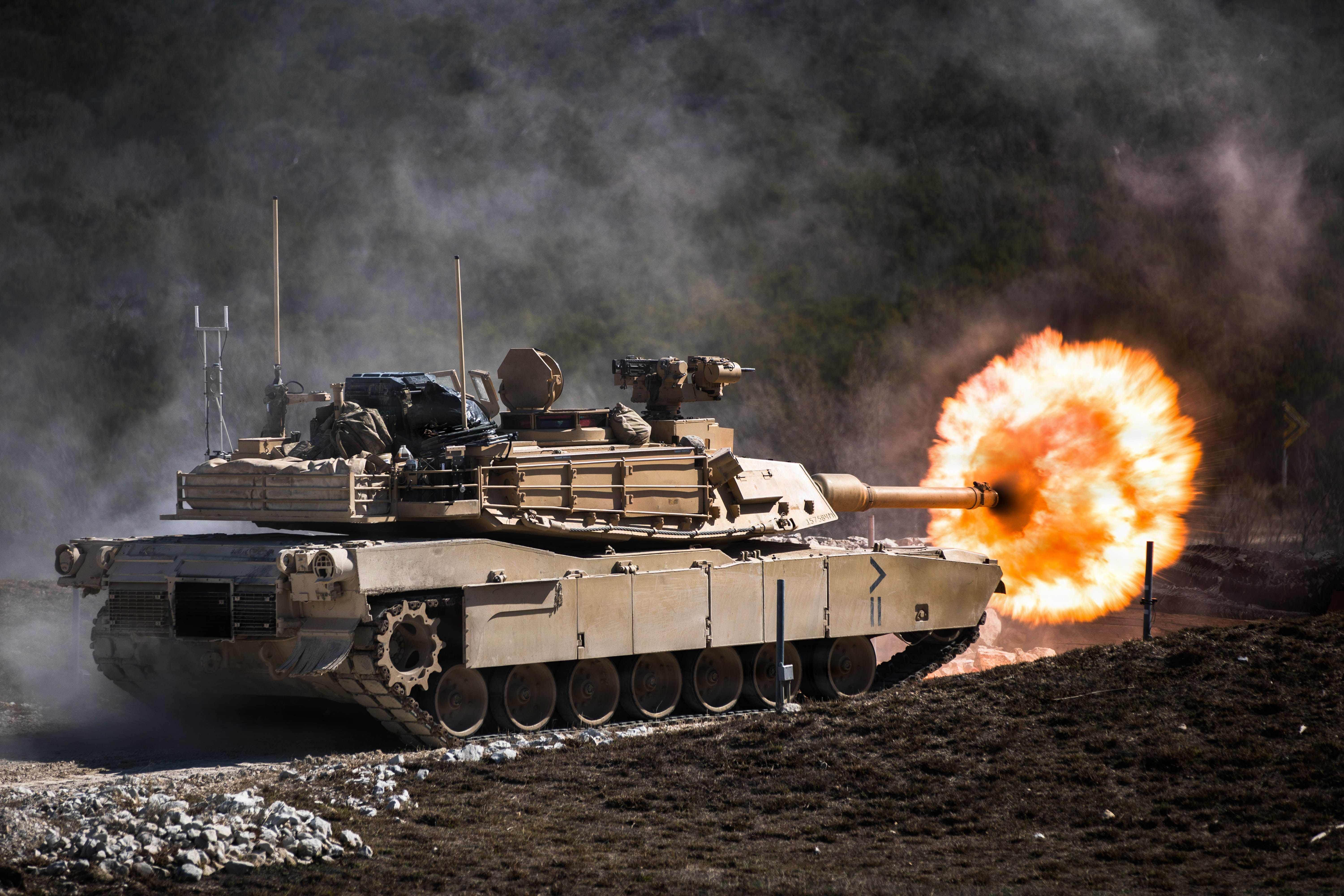
The proposed FY2027 budget requests 785 new Tomahawk cruise missiles, up from 55 in FY2026.
Obviously, Epic Fury burned through cruise missile stocks at a rate that alarmed planners.
Similarly, JASSM series air-launched cruise missiles jump from 381 to 821.
AIM-260 air-to-air missiles, a weapon that’s been in low-rate production and wrapped in a fair amount of classification, sees its procurement funding surge from $894 million to nearly $2.94 billion, which strongly suggests full-rate production is now underway.
The AIM-260 is the long-range air-to-air missile designed to outrange anything Russia or China currently fields. That funding line is a statement.
On the hypersonic front, there are two notable entries: nearly $404 million for Hypersonic Attack Cruise Missiles (HACM) and $452 million for AGM-183A Air-Launched Rapid Response Weapons (ARRW)… a weapon the Air Force had previously tried to kill after a rough test record.
In my recent article about Ukraine’s air-launched ballistic missile program, I mentioned that the ARRW was cancelled. Soon, that information will be out of date. Apparently, someone decided that the geopolitical environment no longer permitted the luxury of cancellation.
For missile defense interceptors, the numbers border on staggering.
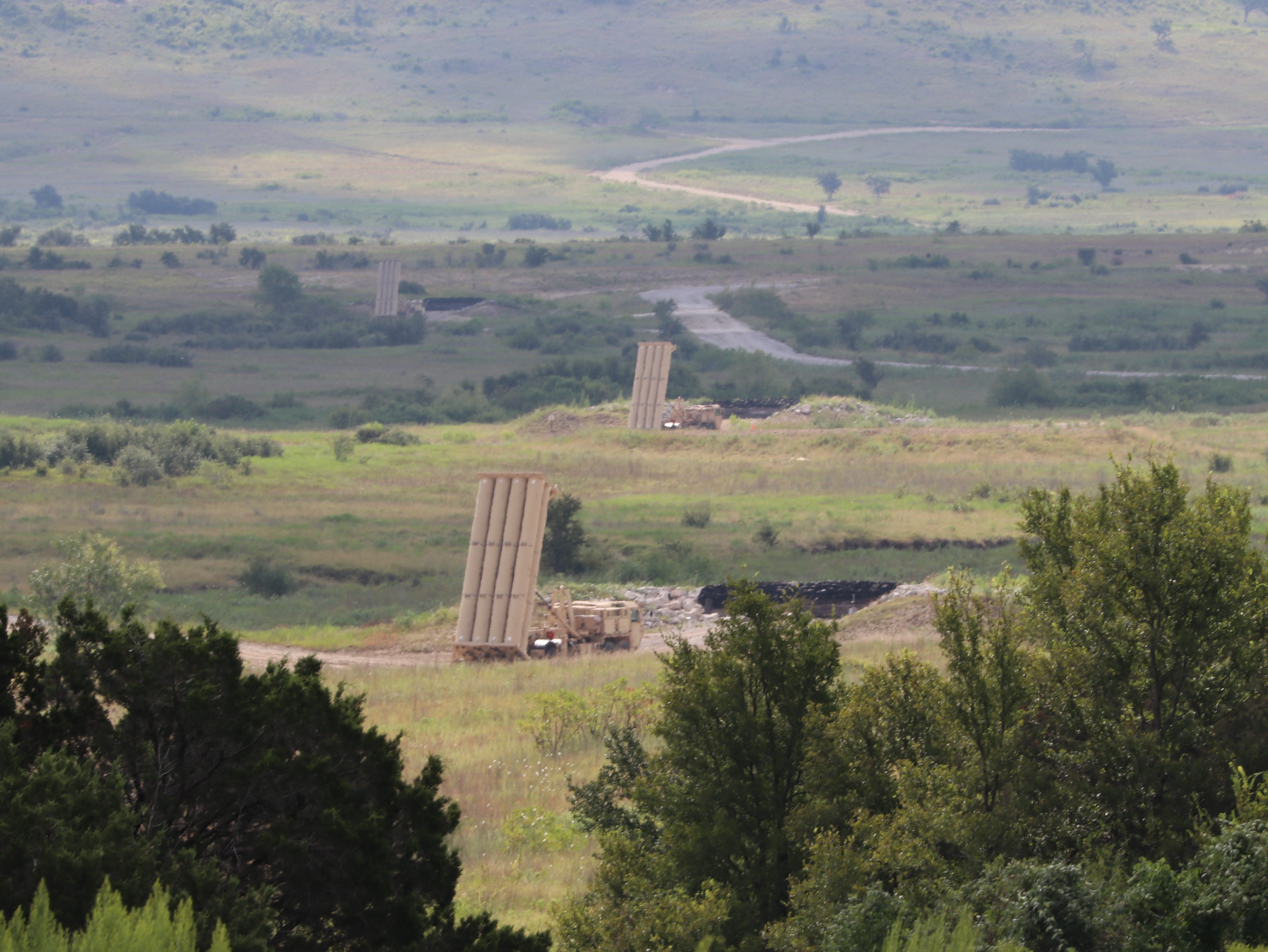
THAAD interceptor procurement jumps from 31 to 857.
SM-3 Block IIA goes from 12 to 136.
Patriot PAC-3 MSE interceptors, the workhorse of US and allied air defense, climbs from 357 to 3,163.
Heavy employment in Epic Fury and in the defense of Israel clearly exposed the depth problem in interceptor stockpiles, and this budget is attempting to paper over that gap.
One line buried in the Army section deserves special attention: Precision Strike Missile (PrSM) procurement jumping from 108 to 1,134.
PrSM made its combat debut against Iran. This is the replacement, or rather, the successor to ATACMS.
Apparently, the Army likes what it saw in Iran. The PrSM procurement jump is the clearest sign yet that short-range ballistic missiles with precision strike capability are moving to the center of US ground-force planning.
This should be deeply flattering to Ukraine’s advocates, since PrSM’s targeting logic and operational profile were born from lessons learned in the Eastern European theater.
The DAWG Gets Its Day: $54.6 Billion for Autonomous Warfare
Buried in the reconciliation package, and almost entirely absent from mainstream defense coverage, is the single most extraordinary funding increase in the entire $1.5 trillion proposal.
The Defense Autonomous Warfare Group, or DAWG, launched late last year inside the Pentagon with a modest $225 million standing-up budget and almost no public profile.
For FY2027, the Pentagon is requesting $54.6 billion for the organization, a roughly 24,000 percent year-over-year increase that makes every other line item in this budget look incremental by comparison.
This is effectively the US military’s newest branch and may be formally recognized as such in the next few years. Let’s call it the US Drone Corps/Force, or USDC/F.
I can’t wait to see the uniforms… (I say this sarcastically because the Space Force uniforms are ugly as fuck IMO)
That single allocation represents nearly 15 percent of the entire reconciliation package, and it exceeds the entire Marine Corps budget request of $52.8 billion.
To understand what DAWG is and why that number exists, you have to go back to Replicator, the Biden-era initiative that set out to field hundreds of thousands of one-way attack drones by 2028.
The ambition was admirable, but the execution ran into the wall that every hardware-first autonomous program eventually finds: supply chain bottlenecks and drone reliability gaps.
Replicator’s difficulties forced a reckoning inside the Pentagon about how the US was organizing itself for autonomous warfare.
Individual service branches were pursuing drone programs on their own timelines, with their own technical standards, creating exactly the kind of redundancy and interoperability gaps that have historically prompted Congress to establish unified structures.
Space Command in 2019.
Cyber Command’s elevation in 2017.
The logic that produced both of those decisions appears to be driving the DAWG’s trajectory, with internal documents reportedly indicating intent to eventually elevate the organization into a unified combatant command that would coordinate drone, autonomous aircraft, and unmanned vessel operations across all warfighting domains.
A unified command structure for autonomous systems would, in theory, prevent the Air Force’s CCA program, the Navy’s autonomous surface and undersea vessel efforts, and Army drone initiatives from pulling in incompatible directions; a problem that has already cost time and money across multiple programs.
Golden Dome and the Militarization of Space
Ah, space… A literal and figurative vacuum where money gets sucked out of the treasury and dumped into oblivion. If one section of this budget tells you where American defense thinking is headed over the next decade, it’s this one.
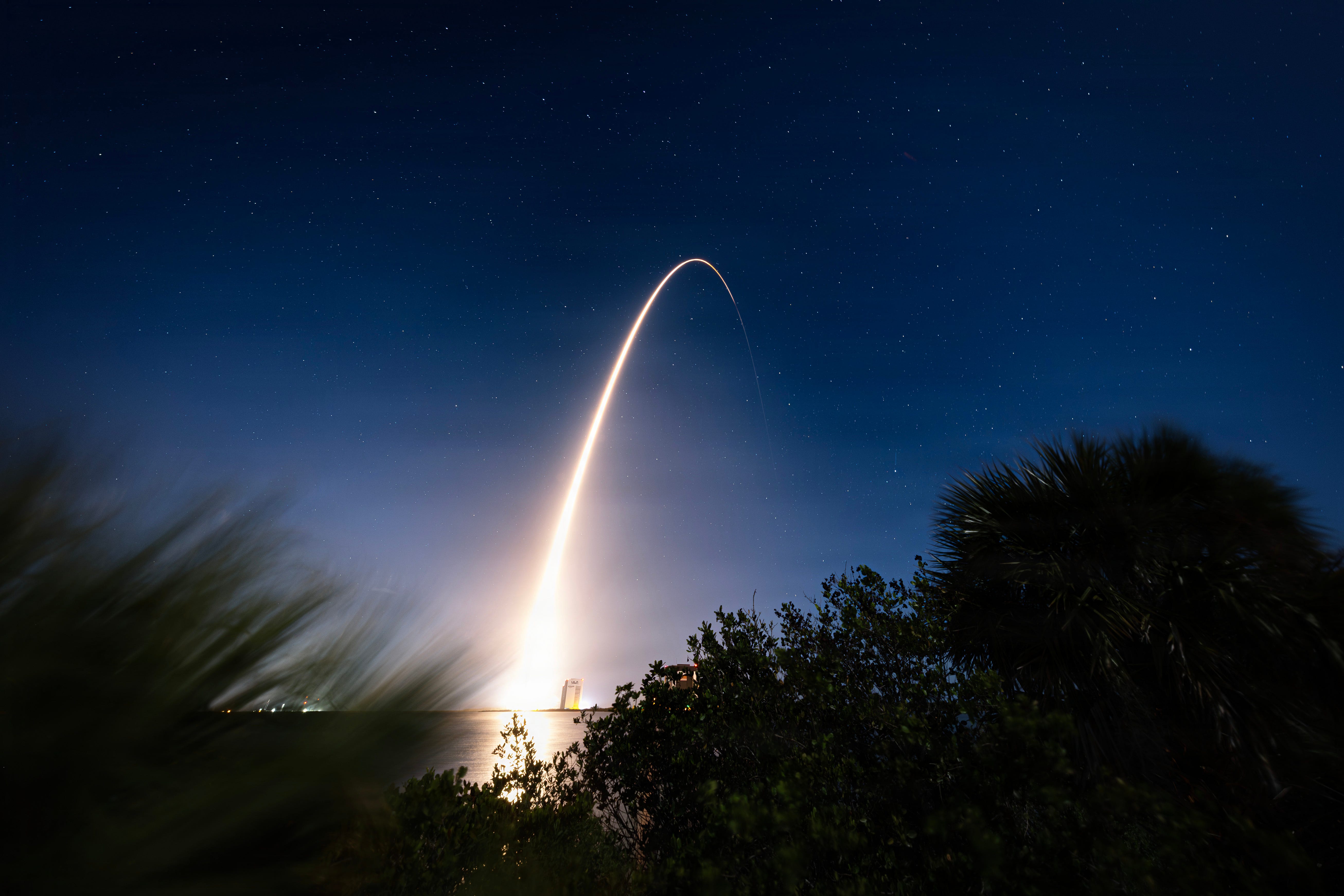
$17.5 billion for Golden Dome, the missile defense initiative that envisions a layered, space-based shield over the continental United States.
The concept encompasses new sensor architectures, space-based interceptors, and a vendor pool of over 1,000 contractors already under contract.
Golden Dome is almost a word-for-word plagiarized copy of Ronald Reagan’s “Star Wars” SDI (Strategic Defense Initiative) with some tacky Trump branding.
Russia holds the world’s largest nuclear arsenal, sitting on just under 5,600 warheads. Of those, 1,700 are supposedly ready to launch, 2,700 are in storage, and 1,200 are being phased out but could be brought back into play if needed.
This includes big city-busting bombs and about a thousand tactical nukes for battlefield use.
But even if half of Russia’s nukes don’t work, intercepting the other half with a Golden Dome would be financially impossible. $17.5 billion for Golden Dome gets you a handful of interceptions, not hundreds of warheads.
Regardless, the gap between vision and fielded capability in space-based interceptor programs has historically been measured in decades, not years, and that $17.5 billion is just for one year of development.
More immediately telling is the Space Force’s topline, which rises nearly 80 percent, from $40 billion to $71.2 billion.
That is an extraordinary commitment. For comparison, the entire US Army’s budget in the mid-1990s was in that neighborhood.
What’s the Space Force buying?
Among the most significant new line items: more than $7 billion for Space-Based Air Moving Target Indicator (AMTI) capability, (formerly the AWACS mission set) and just over $1 billion for Ground Moving Target Indicator (GMTI) systems (historically provided by aircraft like JSTARS).
