


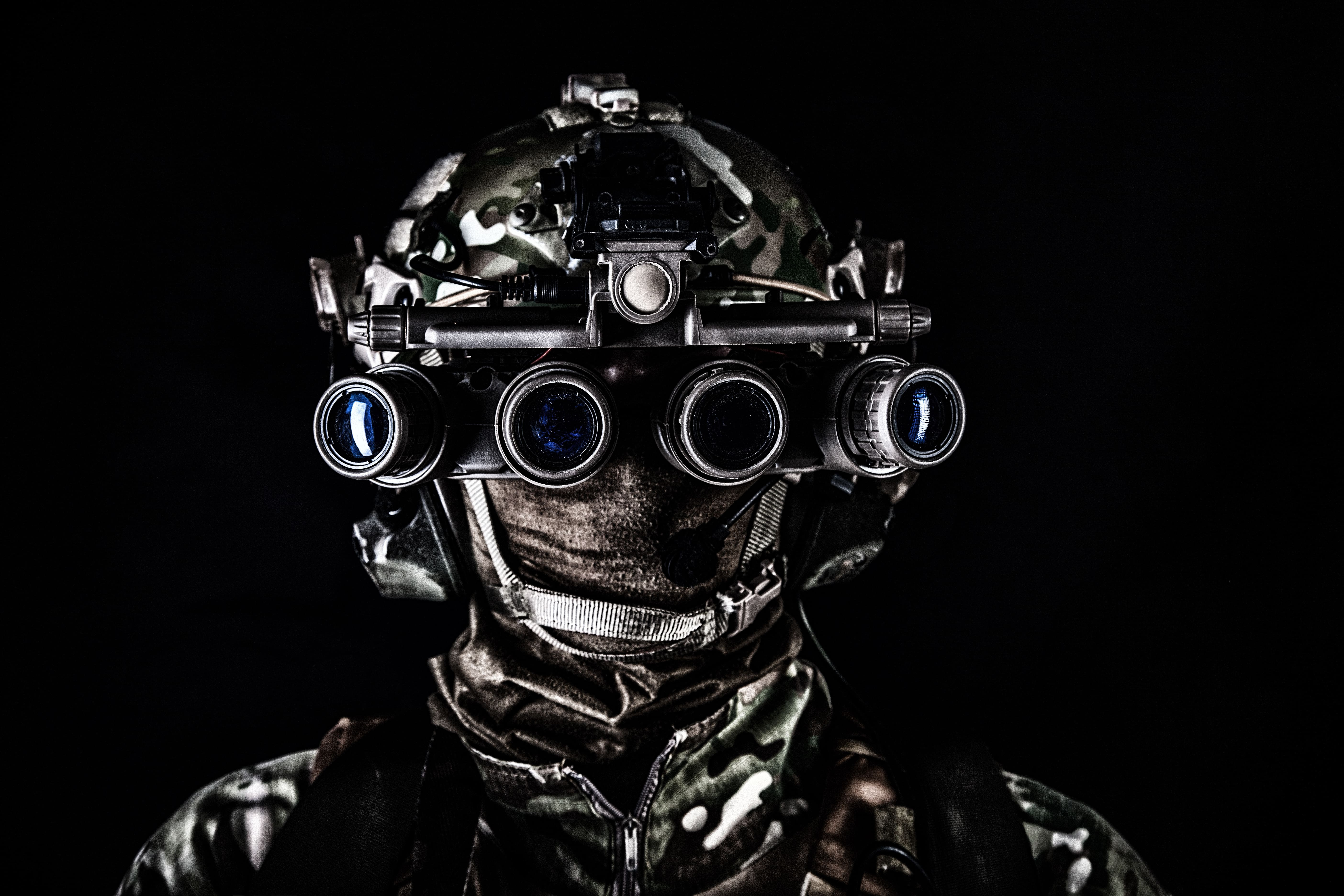
The unofficial slogan of my infantry battalion was “We own the night.” (The official slogan was “No Slack!”)
We really didn’t do anything during the day. Operating at night became so comfortable, almost second nature, because of the decades of investment in night vision technology, training, and the quiet confidence that American infantry could move, shoot, and communicate in total darkness while the enemy was essentially blind.
Ukraine’s war has complicated that doctrine. Not by disproving it, exactly, but by updating it.
As it stands right now, Ukraine has better access to Western night-fighting gear than Russia does, but neither army has achieved universal soldier-level night vision coverage. And Russia, for all its equipment shortfalls, has found a workaround.
Let’s back up.
For most of military history, darkness was a strategic asset for the weaker force. You couldn’t perforate what you couldn’t see. Raids happened at night precisely because night offered concealment.
Flares, searchlights, and moonlight were about the best a commander could hope for.
The first serious attempt to change that came in World War II with active infrared systems. The concept was straightforward: mount an IR spotlight on a tank or rifle, pair it with a receiver that could detect the reflected IR beam, and you could see in the dark.
The Wehrmacht fielded the Vampir system late in the war; a rifle-mounted IR illuminator paired with a chest-mounted viewer. It weighed about five and a half pounds and required the soldier to carry a battery pack.
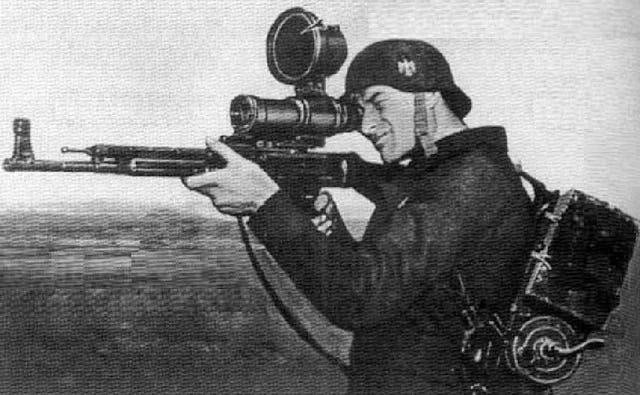
It worked, technically… It also meant you were broadcasting your position to anyone else with an IR detector, like wearing a searchlight on your face and hoping nobody noticed.
The fundamental problem with active IR was that it was a two-way street. The moment your enemy had compatible equipment, your night vision became a target indicator.
That generation of technology carried through Korea and into the early Cold War without fundamental improvement. Night operations were still limited. The equipment was heavy, expensive, and tactically awkward.
The first big shift came in Vietnam with the AN/PVS-2 Starlight Scope. First fielded in 1965, the Starlight was a passive system; it amplified ambient light rather than projecting its own.
No IR spotlight. No beacon.
You pointed it at a dark treeline and the available starlight, moonlight, or even atmospheric glow was enough to resolve shapes and movement.
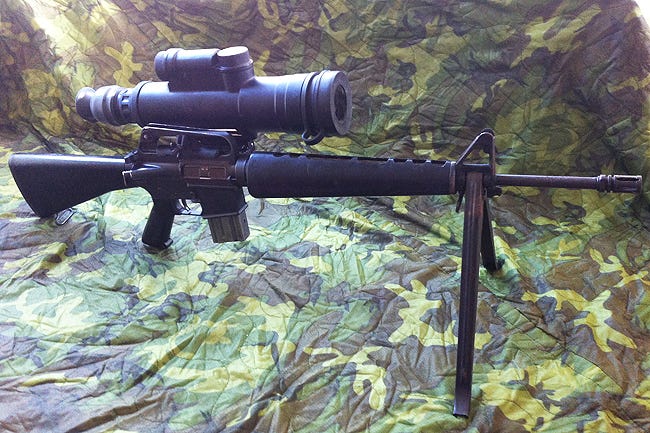
It changed small unit patrolling in ways that commanders immediately recognized. American infantry could spot movement at ranges and in conditions that previously required flares or illumination rounds, both of which also told the enemy exactly where you were looking.
The PVS-2 was primarily a weapon-mounted optic, not a helmet system. You picked it up, put your eye to it, and looked. It wasn’t conducive to walking around. But it was a proof of concept for what passive night vision could do at scale, and the Army took that lesson seriously.
The 1970s and 80s brought Generation 2 technology: the microchannel plate, which multiplied electrons through a cascade process and dramatically improved image brightness and resolution compared to Gen 1.
The AN/PVS-5, fielded in the late 1970s, was the first widely-issued helmet-mounted goggle for American infantry: binocular, head-worn, hands-free. It was also heavy, had a relatively narrow field of view, and the image quality, by modern standards, was mediocre.
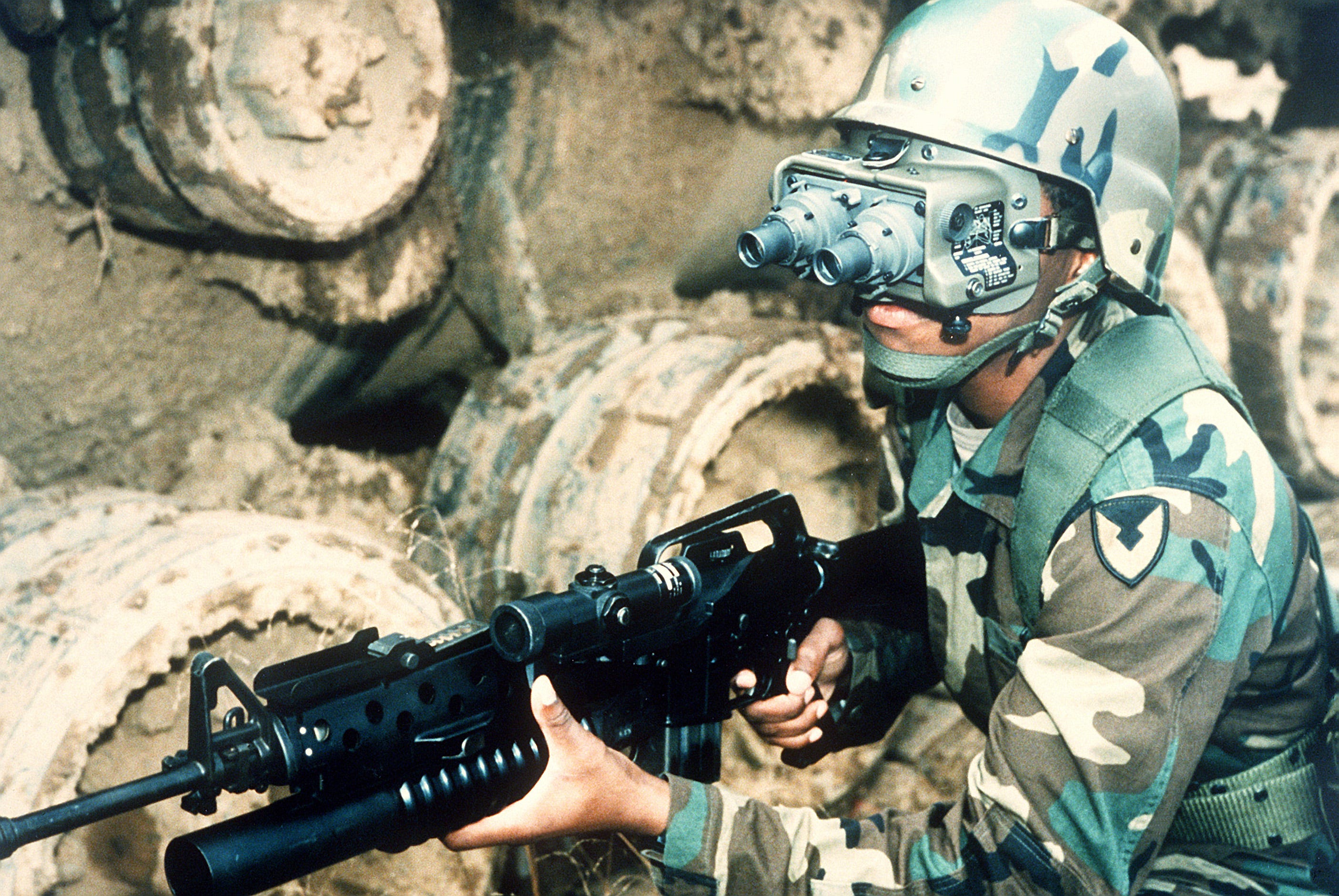
Soldiers who wore it in training described the experience as “looking through a fishbowl smeared with Vaseline.” But it was a genuine tactical capability. For the first time, ordinary infantry units could move through terrain at night with their hands free and their eyes forward.
Aviation moved in parallel and, arguably, faster. The ANVIS: Aviator’s Night Vision Imaging System, became the standard for US military helicopter crews through the 1980s. The AN/AVS-6 and later the AN/AVS-9 mounted to flight helmets and allowed pilots to fly nap-of-the-earth profiles in complete darkness.
The unit that took this furthest was 160th Special Operations Aviation Regiment, the Night Stalkers, whose entire identity was built around NVG-enabled low-altitude night flight.
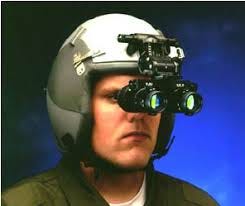
Their motto, “Death waits in the dark,” is arguably cooler than “No Slack.”
They trained to standards that no conventional aviation unit could match and executed missions that were functionally impossible before helmet-mounted aviation NVGs existed. These were the same aviators who flew into Venezuela a few months ago.
Panama in 1989 was the first real large-scale test of what American night dominance could look like in actual combat. Operation Just Cause used NVG-equipped infantry and aviation in coordinated nighttime assaults against Panamanian Defense Forces who had no comparable capability.
The results were lopsided in ways that validated years of investment.
American units moved at night with confidence. The enemy could not.
Then, Desert Storm in 1991 made the case definitively.
Coalition armor and aviation operated around the clock while Iraqi forces were tactically blind after sunset. M1A1 crews used thermal sights, a related but distinct technology, to engage Iraqi armor at ranges the Iraqis couldn’t see, let alone engage back.
It wasn’t just that the coalition could fight at night. It was that the Iraqis knew it and still couldn’t stop it. Night operations became synonymous with American military overmatch.
Generation 3 technology, gallium arsenide photocathode, (significantly better sensitivity, less noise), arrived through the 1980s and into the 90s.
The AN/PVS-7, a single-intensifier-tube binocular system, became the standard issue infantry goggle into the 90s. Better than the PVS-5, still a monocular image split to both eyes through a prism.
Functional. Widely issued. And eventually eclipsed.
The inflection point came in the late 90s with the fielding of the AN/PVS-14: a lightweight, helmet-mountable monocular that finally gave mass production economics to night vision.
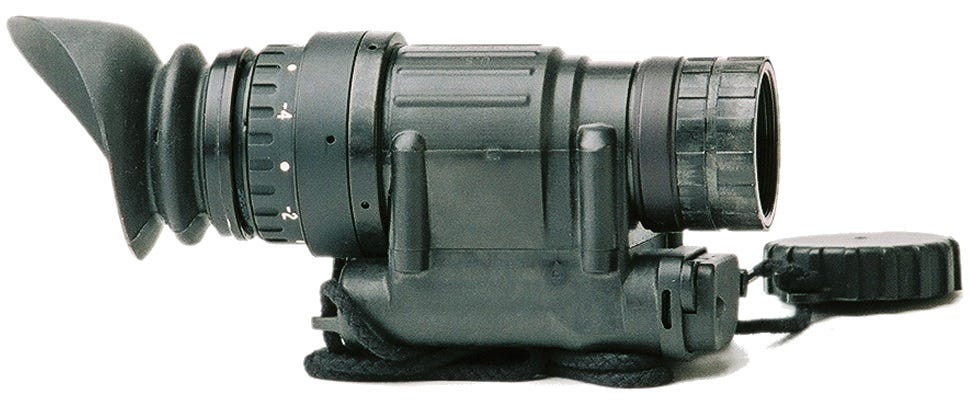
I remember my first introduction to these NVGs. Our lieutenant had us run an obstacle course at night while wearing them. The first thing I remember is the stars; I saw so many that weren’t normally visible.
After that, we had to get used to the tradeoff of giving up our depth perception for being able to actually see.
Half the platoon was at sick call the next day with sprained ankles…
The 101st Airborne wasn’t just a capable fighting force after the PVS-14. It was a different category of military unit. Troops could close with and destroy an enemy that couldn’t see them coming.
Now might be a good time to mention how valuable these devices were in the early days of the Global War on Terror. Giving a bunch of grunts what was, essentially, a $10,000 toy was going to result in a lot of broken and missing devices.
One of the soldiers in my platoon lost his PVS-14s on the Kuwait-Iraq border because he didn’t have it “tied down” to his gear with 550 cord properly. We spent the next four days walking through the desert like Moses inspecting every grain of sand to try to find them.
The main issue, I was told, was not wanting them to fall into the hands of “terrorists.”
We never found them…
Oddly enough, the private didn’t get in trouble beyond some moderate hazing. Our second lieutenant platoon leader, however, got a letter of reprimand, (which, I’m told, is a career-ender).
Shame. He was a cool dude. Big Cinderella fan. Not much older than me at the time.
