


Exclusive for Paid Subscribers every Wednesday and Sunday. I know this is going live on Tuesday (a day early) but it’s time sensitive! Thanks for helping support independent analysis. -W
The Washington Post reports Pentagon officials told Congress the first two days of the campaign consumed about $5.6 billion in munitions. That number, by itself, doesn’t prove “depletion,” but it does tell you the burn rate was intense right out of the gate.
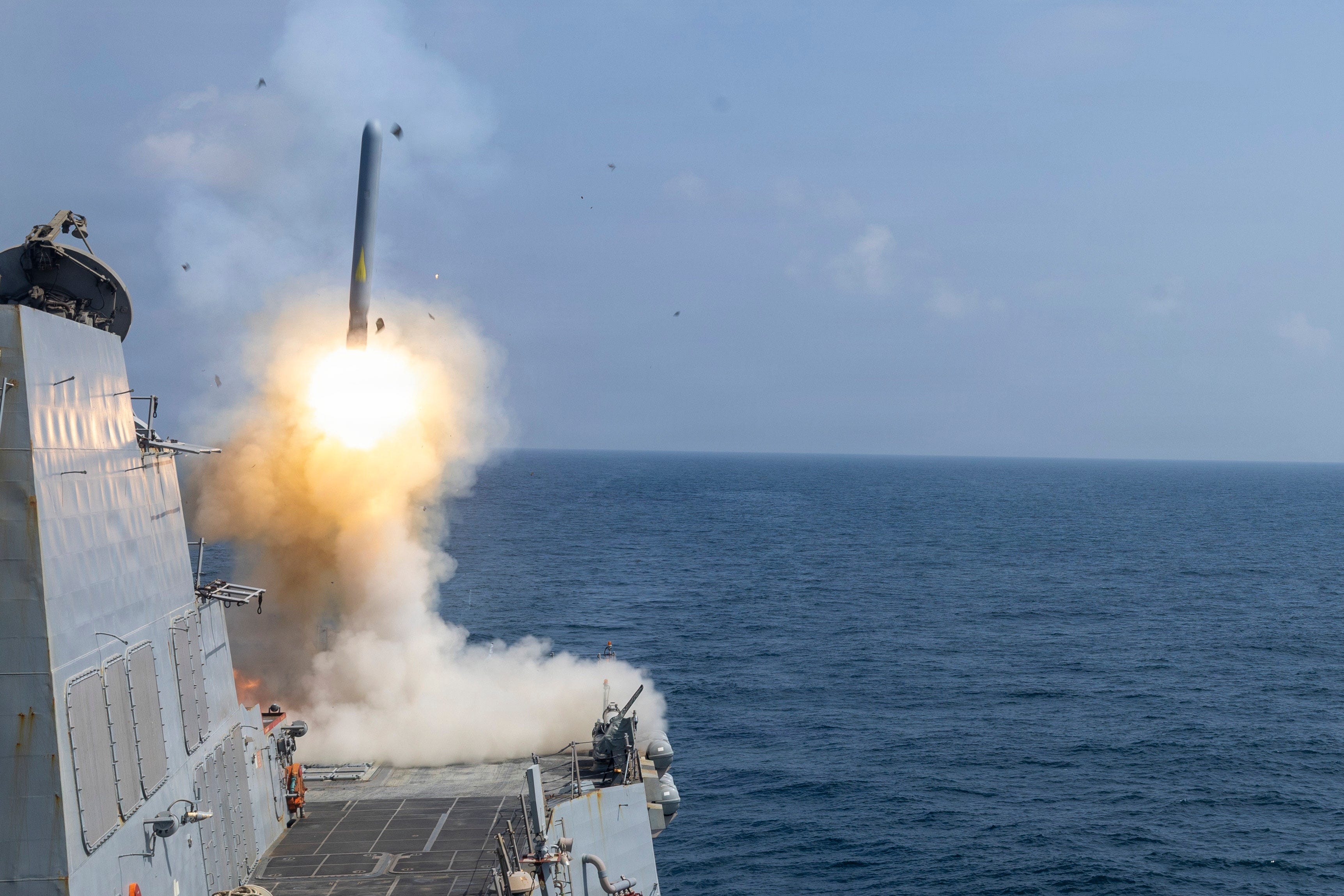
In the opening 48 hours of Operation Epic Fury, the Pentagon fired more than 2,000 munitions at nearly 2,000 Iranian targets. That number sounds impressive until you ask the follow-up question: how fast can we replace them?
The answer, depending on the system, ranges from “slowly” to “not for years” to “we probably should have started sooner.”
Trump posted on Truth Social that America has a “virtually unlimited supply” of weapons and could fight this war “forever.” He also said Iran was “running out of launchers.” Both statements are the kind of thing you say when you need the enemy to believe you more than you need to believe yourself.
If Trump said, “virtually unlimited supply,” he most certainly wasn’t talking about precision munitions. He was likely talking about common gravity bombs (JDAM/LGB class) which can only be used once air superiority is achieved. Otherwise, we’ll end up looking like Russia trying to lob glide bombs over the border while trying to stay out of range of Iran’s air defenses.
And yes, we do likely have more JDAMs and iron bombs in storage that we know what to do with.
But what about those precision munitions again?
The Pentagon is discussing invoking the Defense Production Act, a Korean War-era emergency law that compels manufacturers to prioritize government orders, to accelerate munitions production. You don’t invoke wartime production authorities when your stockpiles are virtually unlimited.
Let’s do this system by system. Then we’ll talk about what Russia and China are reading into all of it, and what signals to watch for that will tell us how serious this actually gets.
But I’ll give you my conclusion up front: We’re probably running low on the expensive stuff, although stockpiles are classified. And yes, Russia and China both will feel emboldened because we’ve given them a window of time where our “deterrence” ability is weakened.
Finally, I blame two forces: The US government’s shortsightedness over the last 30 years, and Trump’s war of choice in the Middle East.
The Structural Problem Nobody Fixed
Before the specific systems, the underlying problem deserves a plain-English explanation, because it didn’t start last week and it won’t end when the shooting stops.
Retired Rear Admiral Mark Montgomery put it with surgical precision: “We did marginal to minimal purchases every year and hoped we didn’t get caught out in the open. And we did.”
That sentence covers three administrations. Republican and Democratic defense budgets alike. Years of procurement decisions where the Pentagon bought just enough to keep the production line warm without ever building the kind of deep magazine that a sustained multi-theater conflict requires.
As one analyst summarized it: the root cause of this shortage is that successive administrations failed to procure the necessary number of interceptors over many years, which led to production lines slowing down or shuttering entirely.
The result is a military that can open a war with overwhelming force, and it has, but whose ability to sustain that force at high tempo across multiple theaters simultaneously is now the subject of closed-door congressional briefings and White House emergency meetings with defense industry executives.
That is not a partisan statement. That is a production arithmetic statement.
You might be wondering why the stockpile was neglected over the last three decades… Well, that could be its own 3,000-word article, but the short answer is that the 1990s saw a huge military drawdown, and the following Global War on Terror was a fight against a non-peer that didn’t require piles of exquisite munitions.
Also, the US once had allies, and the whole idea of alliance warfare is that the “munition burden” gets shared across the alliance. When the US goes to war alone, or with only a single coalition partner, the math changes… And I hate math; that’s why I went to law school.
One more thing before the systems breakdown: be skeptical of anyone who claims to know the exact current inventory counts. Current on-hand totals for PAC-3 by variant, THAAD, SM-3, SM-6, Tomahawk, JASSM, and LRASM are either classified or discussed only in closed briefings.
What we can do is assemble high-confidence indicators like procurement rates, analyst assessments, congressional behavior, and operational pattern shifts, and read them honestly. That’s what follows.
