


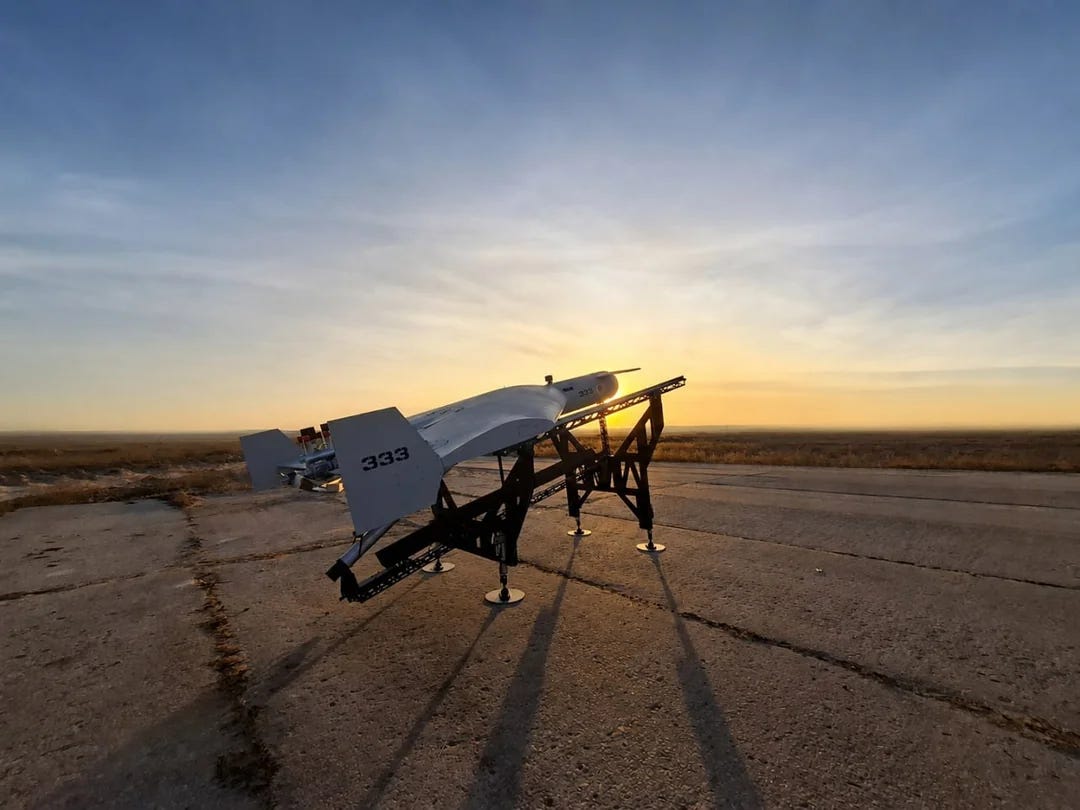
On July 16, Ukrainian drones traveled roughly 800 kilometers inside Russia and reached Engels-2 air base, one of the country’s most important strategic bomber facilities.
Satellite imagery from Planet Labs, examined by the open-source group AviVector, later showed a Tu-95MS strategic bomber with its tail section completely torn away, sitting beside an intact sister aircraft, the kind of clean before-and-after comparison that leaves very little room for argument.
I actually wrote about it here:
Ukraine Just Split a Tu-95 in Half and Russia Can't Build Another One

From orbit, the damage looks slightly awkward; like looking at a broken arm that’s definitely not supposed to bend that way.
Russia stopped building Tu-95s in 1992. Every one that burns is permanently gone, and Russia’s fleet may now be down to somewhere around 43 airframes, with only about a dozen usually active on any given day.
For three and a half weeks, nobody publicly said what actually hit it.
Now we know.
On August 12, the Ukrainian defense outlet Oboronka published a report, cleared in advance with both the manufacturer and the SBU, identifying the weapon as the MICH 2000, a previously secret black flying-wing attack drone used exclusively by the SBU’s Alpha special operations unit.
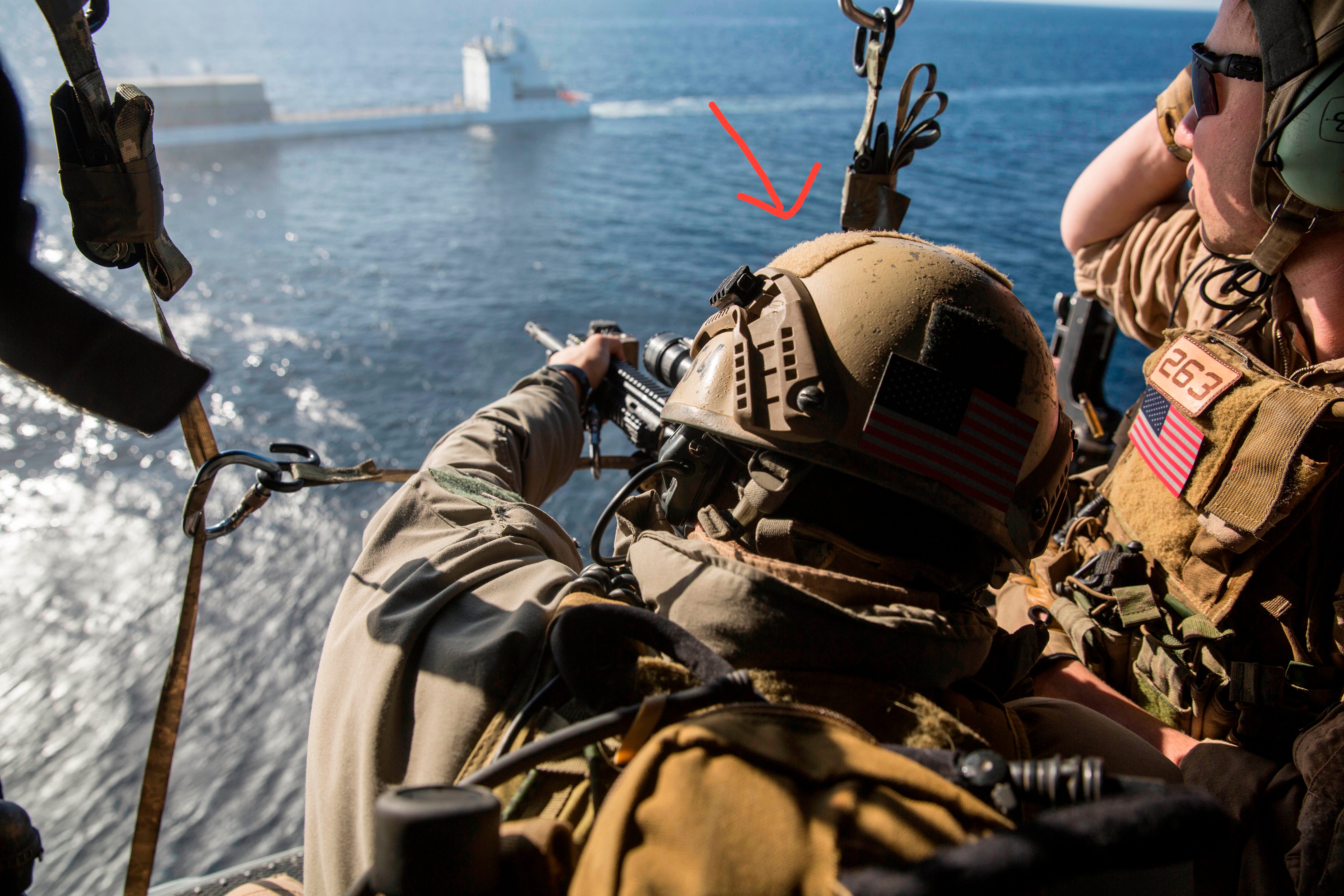
Now, for US veterans of the Global War on Terror, the name “MICH 2000” makes us do a double-take. That happens to be the name of the Modular Integrated Communications Helmet (MICH) with 2000 being the first year it was developed.
I can’t find any public reporting to describe what the Ukrainian MICH is named after or whether it’s an acronym for something else.
According to that manufacturer’s own account, the aircraft can fly up to 2,000 kilometers, carry a warhead between 25 and 60 kilograms, costs about $48,000 in its base configuration, and rolls off a Ukrainian production line at a rate of roughly 6,000 units a year.
Here’s the story of how they made it…
Back in 2022 and 2023, Ukraine was still scrambling to build a serious domestic deep-strike industry from close to nothing. Ukrainian units had been buying Chinese Mugin-5 PRO civilian drones and converting them into one-way attack aircraft, running around $15,000 apiece, carrying about 25 kilograms, and reaching roughly 500 kilometers.
That was a decent capability, although 25 kilograms is a little on the smaller side for explosives on a deep strike platform.
Then, in the summer of 2023, China tightened its export controls on civilian drones.
Beijing said publicly the restrictions weren’t aimed at any particular country. (Sure, wink wink. Yet they kept exporting junk to Russia during this timeframe.)
Whatever the reason, Ukraine needed another source, and late that year a team of Ukrainian engineers flew to China hoping to buy finished aircraft directly from a manufacturer in-country.
They found a factory near Hong Kong, run by a company called ZTK Drones, building dozens of ZTK-150s; Shahed-shaped flying wings distinguished by a pair of small forward canards.
They tried to buy in bulk. The purchase stalled.
Then the company offered to sell the blueprints.
“They came up with the idea to sell us the technology so we could make everything ourselves,” one team member said. “That’s when they planted the idea that we could really build drones in Ukraine instead of buying and shipping them.”
Ukraine’s military leadership loved it. When the team flew back to China ready to close the deal, the factory’s own management refused to authorize the sale, and the whole thing looked dead.
Then things got wonderfully strange.
The Ukrainians accepted an offer for pilot training instead and used their time on the factory floor to quietly document everything they could see.
“In parallel with the training, we photographed everything that was there,” one unnamed team member later told Oboronka. They flew home with eight actual drones and a phone full of pictures of the Chinese production line.
China wouldn’t sell them the recipe, so the Ukrainians spent their training time photographing every shelf and cabinet in the kitchen.
Once home, Ukraine took the eight aircraft apart and started building its own version.
This calls for a standing ovation… Bravo Україна!

But, it didn’t go well at first.
The first Ukrainian-built prototype flew about one kilometer before crashing, thanks to an off-balance center of gravity.
