


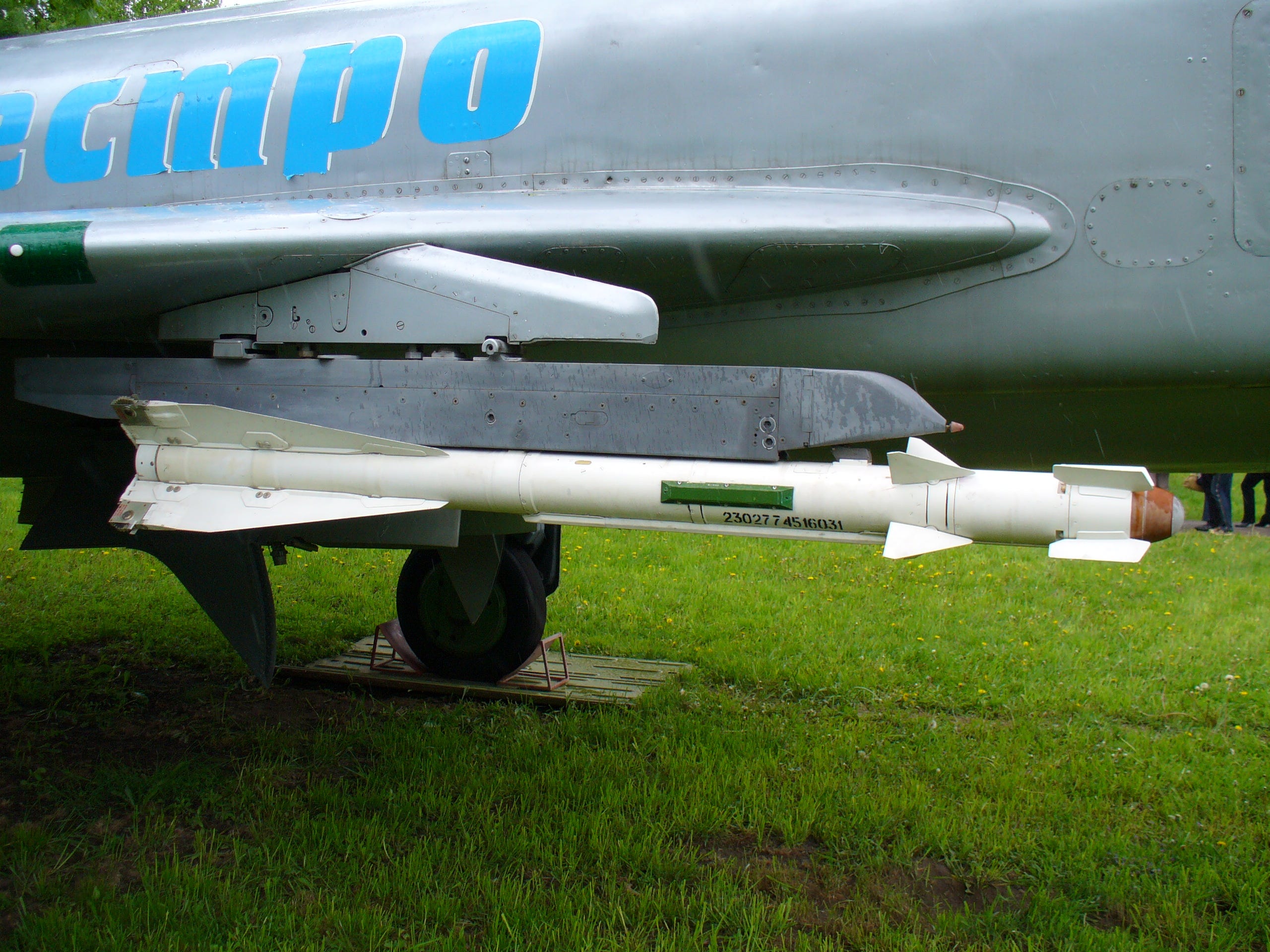
Ukraine found elevated radiation near the wreckage of an R-60 missile mounted on a Geran-2 drone.
Now, the press is losing their damn minds with clickbait titles.
Just look at this:

The headlines had every ingredient designed to make the public explode faster than a Russian ammunition depot near a cigarette-smoking mobik.
Radiation. Ukraine. Russian missile. Geran-2 drone. War crimes investigation.
That reads like Putin found a way to turn a Shahed into a bargain-bin dirty bomb.
Except that’s not what happened.
What Ukraine found is an old Soviet R-60 air-to-air missile, mounted on a modified Geran-2 attack drone, with depleted uranium (DU) in its warhead.
Now, that’s definitely weird for an air-to-air missile (that’s supposed to be used against light aluminum-skinned aircraft)… usually DU is used in armor penetrators against tanks and APCs.
Yes, DU is hazardous.
Yes, it deserves attention. And I’ve written several times in the past about how the DU cleanup after the war is going to be a headache for Ukraine.
But it’s not the same as Russia suddenly launching radiological warfare. Why? Because Ukraine also uses DU also in its Western-supplied munitions… against Russia.
The real story here is more technical and less alarmist.
Why would a short-range air-to-air missile carry depleted uranium in the first place?
The answer lives inside something called a continuous-rod warhead.
So, let’s talk about that today…
But first, what actually happened
On May 20, Ukraine’s Security Service, the SBU, announced that investigators found elevated radiation on fragments of a Russian R-60 air-to-air missile recovered near Kamka in Chernihiv Oblast.
The debris came from an April 7 strike.
The SBU said the warhead contained depleted uranium striking elements, including uranium-235 and uranium-238, and that specialists measured gamma radiation at 12 microsieverts per hour near the wreckage.
Ukrainian authorities secured the warhead and moved it to radioactive-waste storage.
Could something other than depleted uranium explain the radiation reading?
Technically, yes. A gamma detector only tells you radiation is present. It doesn’t write a peer-reviewed technical paper. Natural uranium, another uranium alloy, legacy contamination, or some other radioactive component in the guidance system could produce an elevated reading.
But the SBU said specialists identified depleted uranium striking elements containing U-235 and U-238 in the R-60 warhead. If that lab identification is accurate, then DU is the boring and likely explanation, not a new Russian radiological weapon.
The important missing public detail is the isotope ratio. U-235 plus U-238 only tells us the material is uranium-bearing. The missing ratio tells us whether it’s depleted uranium, natural uranium, or something else.
Without that ratio, the public version of the claim rests on the SBU’s technical conclusion. It may be moot because we already know that certain variants of the R-60 contain DU.
This all sounds alarming because it is alarming. Civilians should not pick up missile wreckage under any circumstances, and especially not wreckage containing toxic heavy metals and radioactive material.
But here’s where the current media landscape needs a grown-up in the room. The R-60M has long been reported to use a small continuous-rod warhead containing depleted uranium rods.
That means the radiation finding is less “new Russian terror weapon” and more “old Soviet missile doing old Soviet missile shit after Russia strapped it to a drone.” The R-60M carries a 3.5 kg continuous-rod warhead, with 1.6 kg of depleted uranium rods in some versions.
It’s nothing Russia invented this week and nothing that wasn’t already rotting away in the Soviet depot.
Okay, so what is a continuous-rod warhead?
Ahhh, from a military technology perspective, this is the more interesting part of the story, in my opinion. A continuous-rod warhead is designed to kill aircraft by cutting them, not by punching a neat hole through the fuselage.
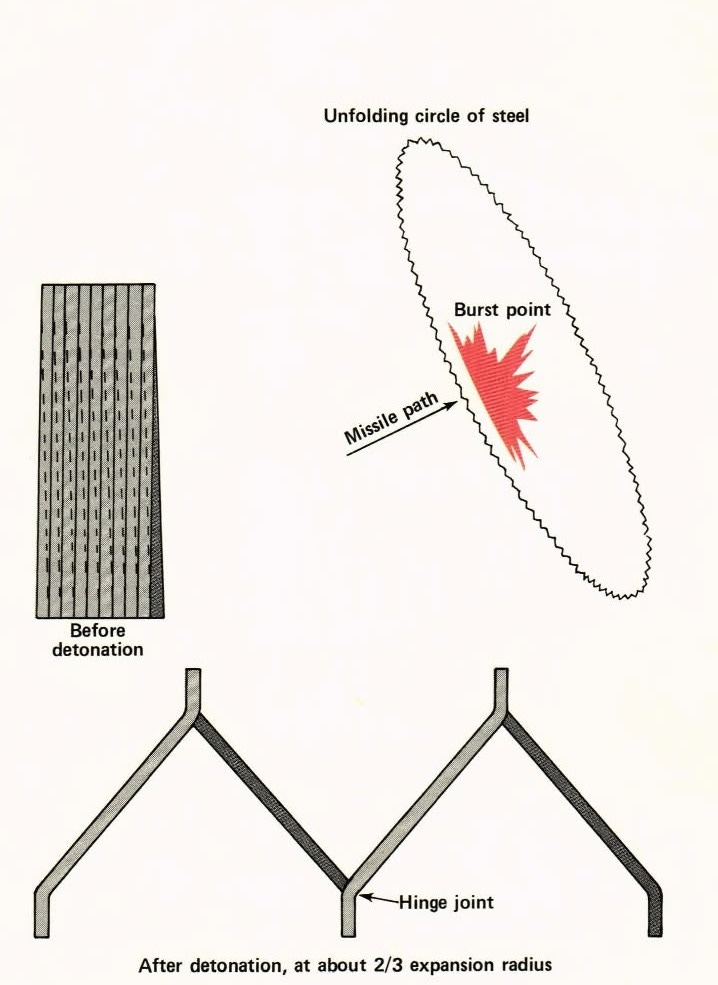
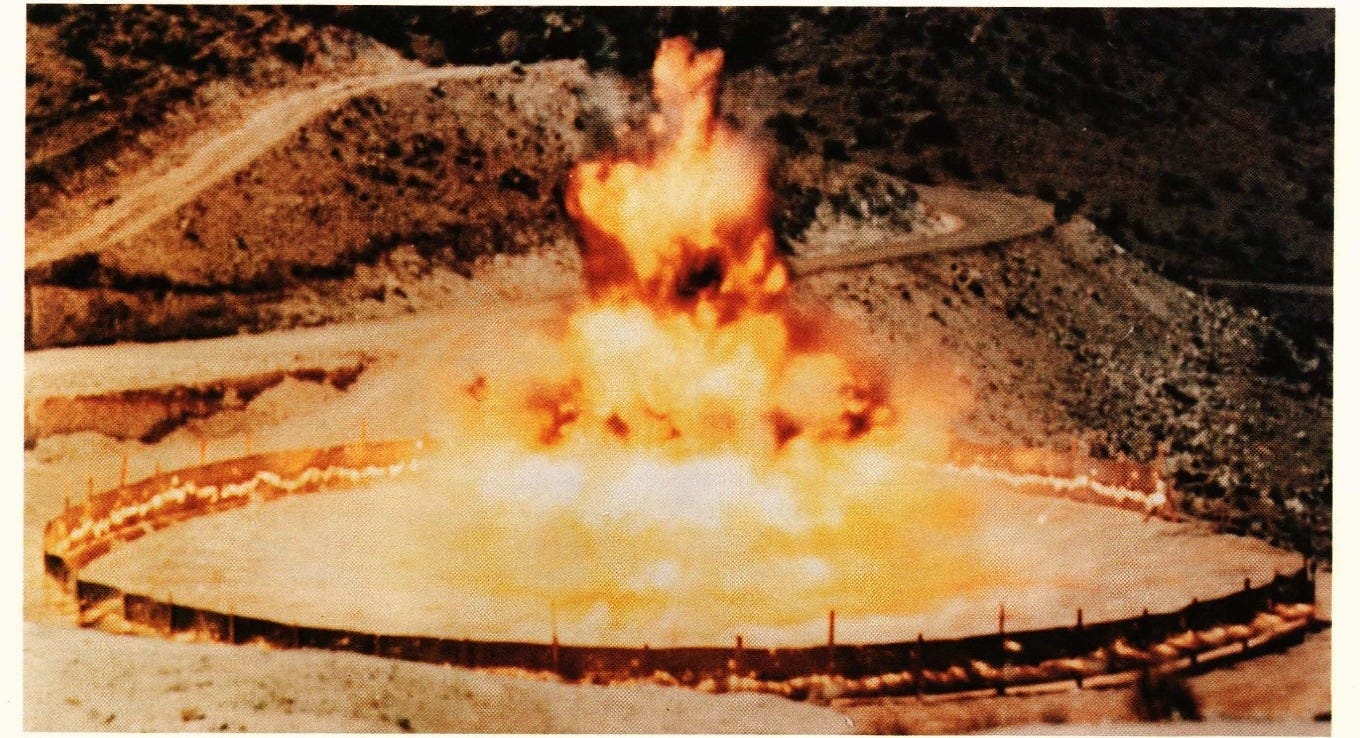
Inside the warhead is a ring or bundle of metal rods welded together at alternating ends. When the explosive detonates, the rods expand outward into a fast-moving hoop or cutting band.
Johns Hopkins Applied Physics Laboratory described the American-made Talos continuous-rod warhead as using a double layer of steel rods welded at the ends into hinge joints, then accelerated outward by explosive detonation. The objective was structural damage from rod impact against the target.
Think about it like this: A normal fragmentation warhead is a shotgun blast. A continuous-rod warhead is a circular flying hacksaw.
That’s why it makes sense for bigger air targets.
Aircraft aren’t tanks. They’re thin-skinned, fast-moving collections of aluminum, composites, fuel, hydraulics, and wiring. You don’t need to punch through 600mm of rolled homogeneous armor.
You need to break something that keeps the aircraft flying like a control surface, a fuel line, a hydraulic system, or an engine inlet. You need to create a failure, not a crater.
But in this case, it’s not about armor. It’s about making a tiny warhead lethal enough to matter on a near miss.
The R-60M’s warhead is only about 3.5 kg.
That’s small. Very small, compared to larger medium-range missiles. This explains why Russia uses the R-60 to ride along with a Mario Cart drone; because it’s small enough to have minimal impact on Shahed/Geran-2 flight performance.
