The CIA Has Been Helping Ukraine Target Russian Oil
The agency presumably identified a single Achilles’ heel component that would take a refinery offline for weeks
There’s an old truth from the unglamorous side of World War II: you do not always need to destroy the enemy’s weapon. Sometimes you just take away the one part they cannot replace without a forklift, a clean room, a decade of paperwork, and a supply chain that doesn’t exist anymore.
That type of pressure, if applied at the right time and place, can end a war.
US officials told the Telegraph that the CIA, working alongside the US military, helped Ukraine shift from “nice explosion for social media” strikes to a more disciplined campaign against Russian oil refineries.
What’s more, the CIA provided targeting data to hit the refinery at a specific bottleneck component described by the Telegraph as a “coupler device,” identified by a CIA expert as the sort of part that keeps a plant down for weeks, if not months.
Let me paint a picture before we get into the details.
2025 opened with a clear signal of intent.
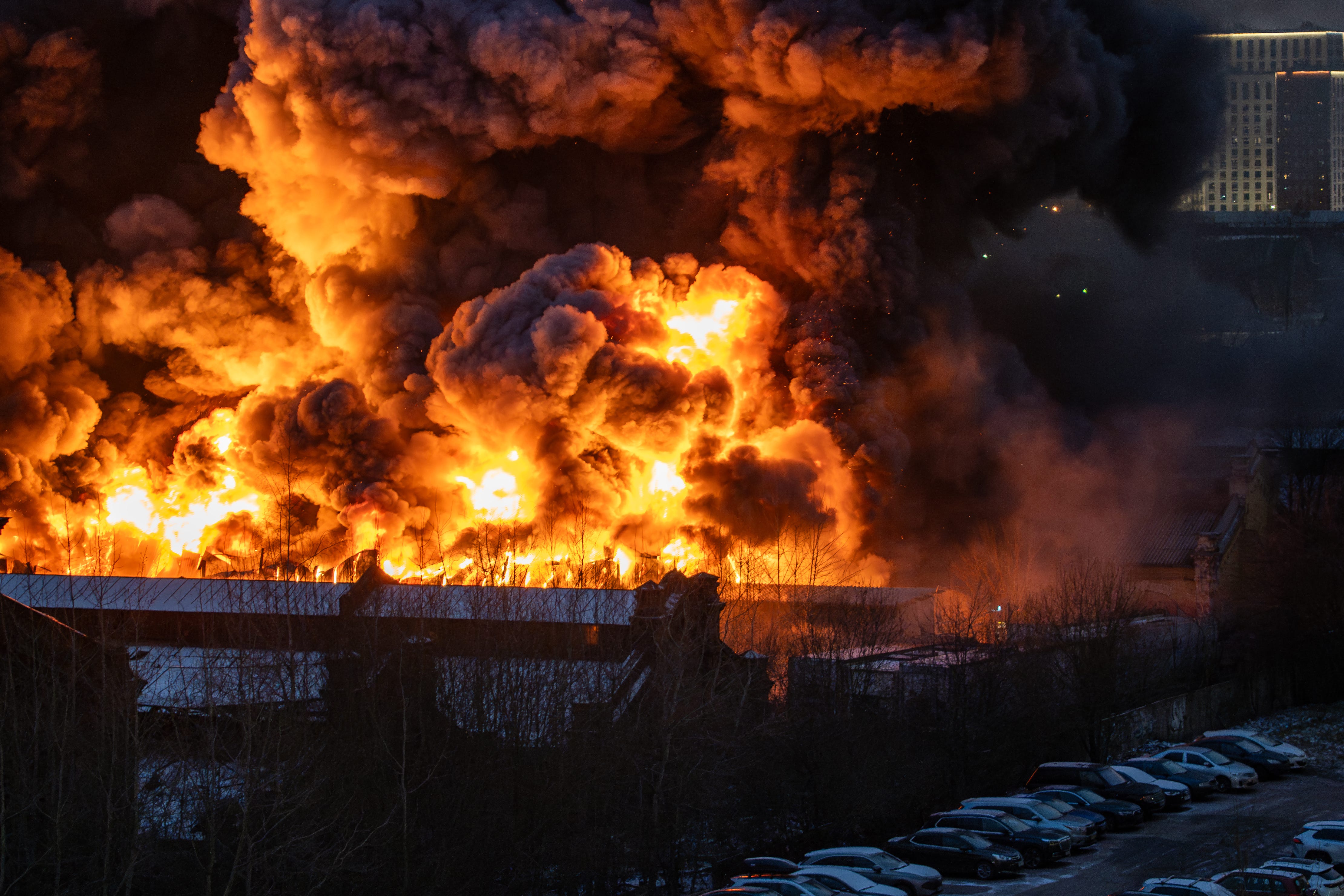
In late January, Ukrainian drones reached the Ryazan oil refinery southeast of Moscow, one of Russia’s most important refining hubs. Industry sources cited fires and damage to processing equipment.
By March of 2025, shortly after Trump assumed office, he paused intelligence sharing with Ukraine. We now know that the New York Times, citing officials, said the CIA heavily lobbied for the agency to keep sharing intelligence or “their officers on the ground in Ukraine could be at risk.”
These CIA officers were, among other things, helping Ukraine’s long-range strike forces tap into Washington’s geospatial intelligence under the previous Biden admin.
Through the spring and early summer of 2025, Ukrainian strikes continued at a steady tempo. Not every incident made headlines, and not every fire was equal. Some attacks hit depots, pumping stations, or infrastructure on refinery grounds rather than the refining units themselves. But the pattern was unmistakable: Ukraine was going after the oil.
For his part, Trump believed that he could persuade Putin to end the war. When it became apparent that his bromance was on the rocks, Trump turned to using intelligence to help Ukraine do more damage to Russia to bring Putin back to the negotiating table.
Trump is transactional by nature and he saw intelligence support as a lever. It can be dialed up, dialed down, and used as a negotiating tool.
But by June, Trump gave his blessing for full CIA support to hurt Putin where it would be most effective. I want to be careful here not to give too much credit to Trump for simply doing what he should have been doing all along, nor do I want to minimize the Ukrainian role in executing these attacks.
Regardless, the change was noticeable. On August 2, Ukrainian drones struck the Novokuibyshevsk refinery in Russia’s Samara region, a Rosneft facility critical to supplying fuel to central Russia.
Industry reporting indicated the refinery was forced to halt operations entirely after the strike. On the same day, another attack hit Ryazan again, this time cutting the refinery’s output by roughly half. The damage affected primary crude distillation units, the industrial heart of any refinery. When those go offline, there is no workaround. Crude simply cannot be processed.
By this point, the economic effect was no longer theoretical. Russia’s refining capacity dipped noticeably on certain days, exports fell, and domestic fuel pressures began to show.
Moscow imposed temporary fuel export restrictions and leaned harder on emergency reserves. The strikes were not catastrophic in isolation, but in aggregate they created persistent drag on Russia’s energy system, exactly the kind of slow bleed that is hard to headline and harder to fix.
In November, the campaign pushed south again.
Ukrainian drones struck the Tuapse refinery on the Black Sea coast, triggering a fire at a facility that has long been a strategic export node. Tuapse sits at the intersection of refining and maritime export infrastructure.
Disruptions there reverberate through Russia’s ability to move refined products abroad, especially under sanctions that already strain logistics.
By December, the strikes had become almost routine. Not because they were ineffective, but because Ukraine had normalized something Russia once considered unthinkable: sustained attacks deep inside its refining network.
Even as I’m writing this article for you on January 1, 2026, there has just been another refinery hit. Ukrainian strike drones carried out attacks on an oil depot in the town of Lyudinovo, Kaluga Region, and the Ilsky Oil Refinery in Krasnodar Krai, Russia.
Even when damage was limited, the constant threat forced Russia to disperse air defenses, rotate repair crews, and accept longer downtimes. Refineries were no longer assumed to be safe rear-area assets. They had become part of the battlefield.
Taken together, Ukraine’s 2025 refinery strikes, and now 2026 strikes, tell a coherent story about Ukraine and the CIA both learning which components were hardest to replace, which shutdowns lasted longest, and which facilities created the most downstream pain when interrupted.
Still, it is extremely compelling that the CIA identified a single Achilles’ heel component, and then helped Ukraine target it.
Why refineries are different from oil tanks
I rang up a childhood friend, who is now an oilfield executive in Texas at a major “big oil” company, as research for this piece.
“How are the wife and kids? Are you still playing Warhammer 40k? Great. Now tell me everything you know about oil refineries…”
If you hit an oil depot, you get a big fire, some satisfying footage, and a repair job that often looks like this: weld, pump, patch, resume.
Refineries do not work like that.
A refinery is a living machine that runs on pressure, heat, hydrogen, catalysts, and rotating equipment that has zero patience for improvisation.
You can fix a tank with steel and time. You cannot fix a key rotating train or a precision coupling with vibes and patriotic speeches.
Also, refineries are layered. A crude distillation unit separates crude into fractions. Downstream units like hydrocrackers and fluid catalytic cracking units take those fractions and turn them into gasoline, diesel, jet fuel, and feedstock for petrochemicals. When one major unit goes down, the whole facility can be forced into partial operation or shutdown.
That is why refinery outages, even localized ones, can bite harder than you would expect.
Reuters has reported that Ukrainian strikes have at times taken significant portions of Russia’s refining capacity offline, especially when combined with planned maintenance. Reuters also notes that sanctions and replacement part constraints complicate repairs and sourcing.
That is the CIA’s strategic logic in a nutshell. Refineries are where Russia’s bloodstream gets processed into usable fuel. You hit the right refinery nodes and you are not just burning a building, you are reducing sortie rates, trucking, rail throughput, and military logistics resilience.
So, what is this so-called “coupler device,” described as the Achilles’ heel, and why would it matter?
“Coupler device” is not a standard public name for one single refinery widget. It sounds like a Telegraph journalist’s simplified label for a class of components. The most likely candidate, based on how refineries actually fail, is a coupling in a rotating equipment train.
Think of the big machines that keep refineries alive: compressors, pumps, blowers, and turbines. They run at high speed, under heavy load, and they are intolerant of misalignment.
A coupling is what connects a driver (motor or turbine) to the driven equipment (compressor, pump, blower). In large industrial applications, couplings can be custom engineered for torque, vibration, thermal expansion, and specific alignment tolerances.
If you lose a coupling in a critical service, you do not “just swap it.” You often need a full outage, alignment checks, balancing, inspections, and sometimes replacement of adjacent equipment.
Even when you have the part, installing it can be a precise job.
You need the correct coupling model, rating, metallurgy, and geometry.
You need specialized machining and balancing.
You need laser alignment, vibration analysis, and a controlled recommissioning.
You need the unit down, depressurized, purged, and safe for maintenance crews.
When you do not have the part, you’re dead in the water.
Large couplings are not mass consumer items. They can be specialized, custom, and slow to manufacture. Industry material on geared couplings and industrial couplings commonly emphasizes high torque applications and specialized manufacturing, and documents discussing lead times for such components underline why spares planning matters in heavy industry.
Now add the Russia factor.
Russia is not cut off from the world, but sanctions and export controls have complicated access to certain industrial components and service support. Reuters explicitly notes replacement parts have become harder to obtain, forcing substitution and workarounds.
So, the “coupler device” story, at a technical level, passes the smell test. The phrasing may be simplified, but the concept is real: identify the part that is hard to replace, and you can turn a strike into a multi-week shutdown instead of a weekend repair.
What the CIA would actually provide, in real world terms
People hear “CIA targeting” and picture a guy in sunglasses pointing at a map. Real life is more boring and more lethal. The valuable contribution would not be “how to blow something up.” Ukraine has plenty of engineers for that, and plenty of motivation.
The valuable contribution would be intelligence that helps answer questions like:
Which units inside a refinery are truly critical path right now?
Which train is running, which train is in maintenance, and which one is already limping?
Which spare parts are on site, and which are not?
Which facility has the most painful constraints under sanctions?
Where are the high value choke points that cause cascading downtime?
That can be derived from a mix of imagery, intercepted communications, industrial procurement patterns, maintenance rhythms, and plain old pattern recognition. It is the kind of problem intelligence agencies love, because it is partly technical, partly human, and it rewards patience.
None of this requires the CIA to be physically inside Russia. The modern world leaks operational hints constantly. Industrial logistics has signatures. Repair cycles have signatures. Even the way a facility runs at night can reveal which units are active.
But the on-the-ground dimension matters in Ukraine.
I’ve written (in 2023) about deep intelligence cooperation between the US and Ukraine going back to 2014, including assistance focused on monitoring Russia. In 2024, I examined the CIA playbook for this type of ally support and it pointed to covert facilities and sustained liaison activity inside Ukraine.
Essentially, Ukraine provides proximity, language, and battlefield learning. The US provides collection reach, analytic depth, and a global view of supply chains and military industry.
That is a dangerous combination for Moscow, and it will be interesting to see how Putin responds.
Here’s where Putin’s mind will go:
A degraded refinery is not just an economic hit. It can be interpreted as a strategic attack. If Putin believes, or convinces himself, that the United States has effectively joined the war by enabling strategic strikes inside Russia, that perception can shape his decisions even if the legal reality is murkier.
Russia has a long habit of misreading signals, overreacting to some, ignoring others, and then blaming everyone else for the outcome.
That is not a moral judgment. It is an observed pattern of authoritarian decision making in a system that punishes bad news and rewards loyal storytelling.
The specific risk is misinterpretation under stress.
If Russian leaders face growing constraints, refinery outages, supply problems, and domestic unease, they can either adapt quietly or they can externalize blame and widen the conflict narrative.
A story like “the CIA is crippling our energy sector” is useful propaganda at home, but it also becomes a psychological commitment. Once you sell your public on the idea that you are under direct attack, the pressure to respond grows.
This is why, paradoxically, precision can be destabilizing.
Personally, I’m sick of the tired “escalation” argument. Ya know, the same bullshit argument that drip-fed Western weapon systems to Ukraine throughout the Biden presidency.
But it’s still worth considering how Putin might respond, if at all.
Is it possible that Trump’s blessing of the CIA to help Ukraine destabilize Russia’s oil industry was actually a masterstroke of genius that ultimately brings Putin to the negotiating table?
Ehh, I’m not so sure Trump can think that far ahead. But it is an interesting problem for Putin:
Option A: Fight an endless war over the Donbas, trading tens of thousands of Russian bodies for a few kilometers per year, or
Option B: Lose my entire oil industry and be forced to import (when we used to export) until my regime collapses.
It’s worth noting that officials also claimed that the CIA was helping Ukraine strike Russia’s shadow fleet of oil tankers.
In fact, Trump reportedly praised the strikes because they gave “leverage and deniability.” That is believable as a political sentiment.
Leverage is what negotiators dream about. Deniability is what politicians dream about.
The problem is that deniability does not exist in the opponent’s mind. It exists in your press conference.
Russia does not need proof to act. It needs a story that feels plausible to its leadership and useful to its domestic audience. If it wants to believe the CIA is orchestrating refinery strikes, it will believe it. If it wants to believe that to justify retaliation, it will believe it louder.
I say this only to provide a bit of balance. Personally, I think it’s great news. Because if Putin was going to “escalate” he would have done it when F-16s or HIMARS showed up. Not providing weapons or intelligence out of fear of escalation has prolonged this war long enough.
That label, escalation, is meant to frighten Western capitals into paralysis, to make every effective Ukrainian action feel like a step toward catastrophe. But blowing up refineries that bankroll missile strikes on civilian apartment blocks is not escalation. It is accountability… applied with range and precision.
Ukraine did not choose this war. It did not choose to have its cities turned into target practice or its power grid treated like a military objective. What it has chosen, belatedly and intelligently, is to stop fighting Russia only at the point of impact.
Hitting the machinery that fuels the war is not reckless. It is rational. It shortens timelines, raises costs, and forces Moscow to confront limits it pretended did not exist.
What actually restrains Moscow is resistance that works, pressure that accumulates, and the quiet realization that impunity is no longer guaranteed. Ukraine’s refinery campaign fits squarely into that logic.
Wars do not end because aggressors are reassured. They end when aggression becomes unsustainable. Ukraine understands that. And for the first time in a long time, Russia is being forced to understand it too.
Слава Україні!


Anything Trump authorizes in support of Ukraine is just him wiggling his tiny mushroom dick to prove to Putin that he is 'powerful' and 'strong' and not the weakling coward he really is. He will always side with Putin when push comes to shove because he is the bottom in that bromance
I suppose it does make sense that CIA is helping-have capacity for very high flying intelligence gathering and technical no how. I really think that Ukraine needs to go into overdrive and hit Putin where it hurts…good article.