


As far as nuclear weapons go, I’m a bit of an odd duck. I’m definitely on the record as being against proliferation; having written multiple articles on the topic before the Ukraine War.
But at the same time, I’m not opposed to my tax dollars strengthening and modernizing America’s (and our allies’) nuclear deterrent.
Because even before Trump, the United States had a long list of enemies who would love to “take us down a peg.” It’s like a carbon monoxide detector in your house: It’s nice to have around, but hopefully you never have to use it.
So, I guess the best way to sum up my stance would be, “Nukes for me, but none for thee.”
Still, one can appreciate the deterrent effect while simultaneously finding them distasteful, as most military folks do. We were trained in precision and took great care to minimize civilian casualties. So, nuclear weapons in general are indiscriminately offensive to most of us.
Now, in the past 48 hours, two different figures have made essentially the same extraordinary claim.
Former Trump ally and full-time circus clown Tucker Carlson says Trump could be days away from deciding whether to use a nuclear weapon against Iran’s Pickaxe Mountain complex.
Then former CIA officer John Kiriakou told Piers Morgan that contacts inside the White House had also told him Trump was considering a tactical nuclear strike against the facility.
Neither allegation has been independently verified; which would be a tall order in any case.
For its part, the White House says Carlson has no insight into current military planning.
On October 16, while discussing Pickaxe Mountain specifically, Trump said, “I wouldn’t use nuclear. We don’t have to.” He also answered “no” on November 2 when reporters asked whether he was preparing another attack immediately after the midterms.
But let’s briefly look at the person who would be making that decision.
Trump has a nuke-y personality - Just saying…
One of the largest meta-analyses on the subject examined more than 400 studies involving over 123,000 people and found that narcissism was associated with aggression, particularly when the person experienced provocation.
Other research has found that people high in narcissistic traits can become especially reactive to humiliation, criticism, and threats to status.
Research into narcissism and war suggests that leaders with stronger grandiose narcissistic traits may have unusual difficulty accepting military outcomes that make them appear to have lost.
Rather than updating their objectives as battlefield information changes, they can become increasingly invested in finding some outcome that can still be presented as “victory.”
Now imagine a leader who has publicly promised that an enemy will submit. Months of conventional bombing follow. The enemy doesn’t submit. The government survives, the deeply buried facility remains difficult to destroy, and every additional conventional strike produces diminishing returns. Hmm. Sounds familiar…
Backing down can look like losing.
Negotiating can look like losing.
Accepting that the original objective was unrealistic can look like piss-poor planning.
Then some White House intern hired only for his Aryan traits puts another option on the table: Why not nuke the fuckers?
The attraction here wouldn’t necessarily be purely military; nuclear weapons carry an almost unparalleled symbolic message of dominance. Like catnip to narcissists.
For a president increasingly frustrated that conventional force hasn’t produced the submission he expected, crossing the nuclear threshold might begin to look like the only thing dramatic enough to, let’s say, restore control of the story.
I’m not trying to scare you here. Remember, personality is only one variable among military advice, alliance politics, intelligence, law, Trump’s personal legacy, and the aftereffects of breaking the nuclear taboo.
All I’m saying is enough people with connections in Washington are now discussing the possibility… and that, my friends, is batshit crazy.
Because from a targeting perspective, the premise itself is flawed.
Would a nuke even work against a buried target?
Pickaxe Mountain, known in Iran as Kuh-e Kolang Gaz La, sits about two kilometers south of the Natanz nuclear complex in central Iran. Satellite imagery shows a large tunnel system buried beneath a granite mountain, with multiple portals, hardened access points, and a layout designed specifically to make aerial attack difficult.
Ahem, granite. Remember that detail for later.
Analysis places portions of the facility somewhere around 80 to 100 meters underground. Some estimates run deeper. But nobody outside the people who built it can tell us the exact layout.
Satellite imagery can estimate how much rock Iran removed during excavation, but it can’t tell us whether a tunnel then went straight ahead, curved downward, branched into multiple chambers, or climbed upward inside the mountain.
Iran has also shaped some tunnel entrances with bends rather than straight corridors.
They appear to have learned from what happened at Fordow, where ventilation shafts and other structural weaknesses gave American planners useful ways to transmit destructive effects into a deeply buried facility.
Pickaxe is a targeting problem wrapped inside an intelligence problem.
Before deciding what weapon destroys a tunnel complex, you need to know where the tunnels actually are.
I know… That sounds obvious.
But it becomes a bit more important when the weapon under discussion contains a nuclear warhead.
Speaking of the intelligence problem, CSIS’s September satellite analysis found significant construction activity during 2026, but its analysts said the available imagery could neither confirm nor disprove Israeli claims that centrifuges had been moved inside.
They also saw reasons to doubt that the complex was already capable of uranium enrichment.
Then, in October, the Institute for Science and International Security reported that visible activity at Pickaxe had gone dormant. Tunnel entrances had been blocked with earth, and analysts assessed that the facility was not currently operating or undergoing major construction, (although admittedly, valuable equipment or material could still be stored inside).
That’s a pretty big intelligence gap if someone is contemplating the first wartime nuclear strike since 1945.
The Reddit argument goes something like this: Pickaxe is under hundreds of feet of granite. Conventional bunker busters can’t reach it. So, nuclear weapons become the remaining option.
But a nuclear earth-penetrating weapon does not punch down through 100 meters of granite. It penetrates a somewhat small distance into the ground and detonates. How deep? A couple of meters.
When a nuclear explosion happens beneath the surface, much more of its energy couples into the surrounding earth. The resulting shock travels through rock and soil, and that ground shock is what damages underground structures below the point where the weapon actually stopped.
The Pentagon’s own Nuclear Matters Handbook describes this coupling effect as the main mechanism for attacking deeply buried targets.
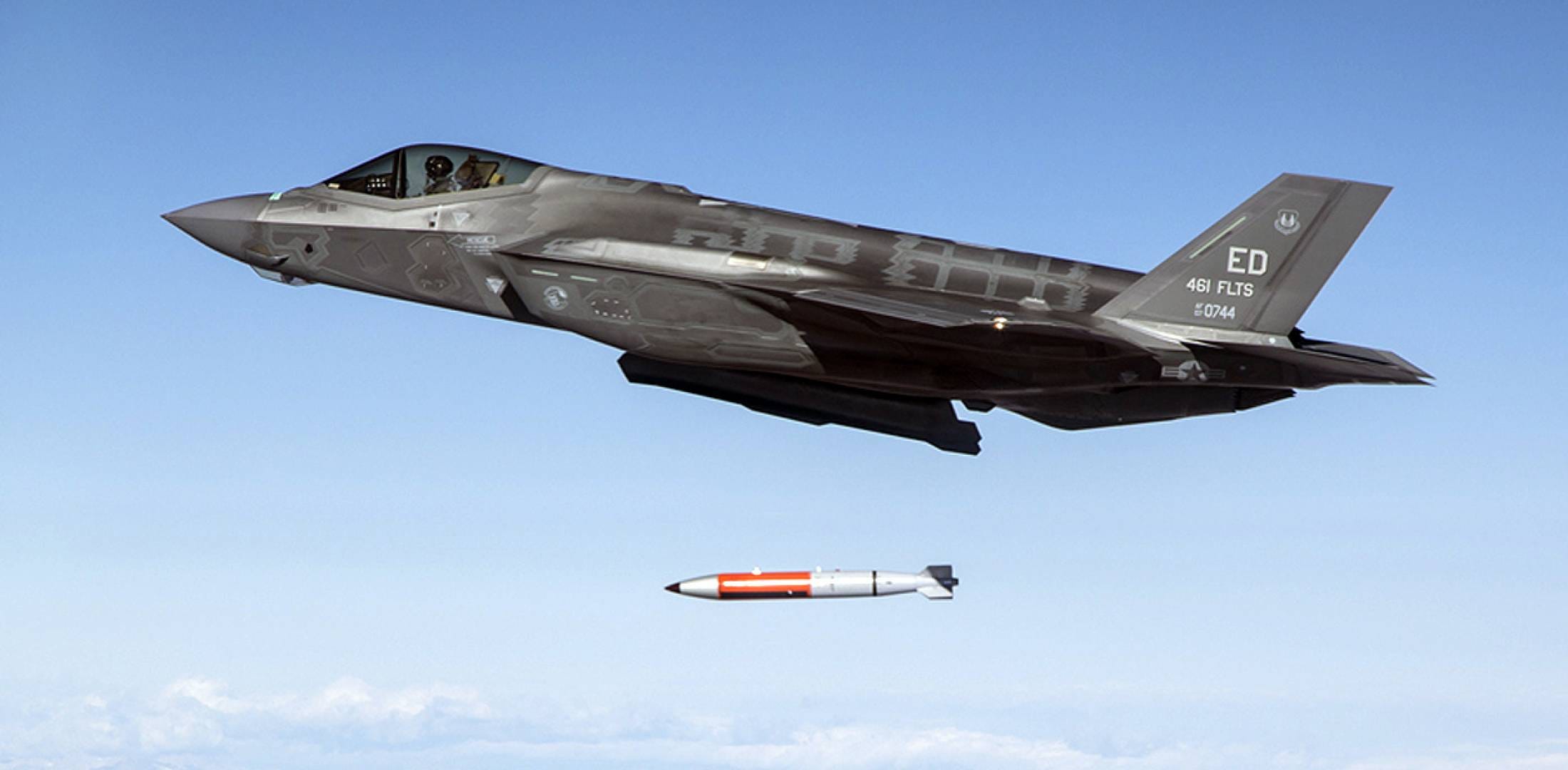
The United States does indeed possess a nuclear weapon specifically associated with earth penetration, the B61-11.
It’s an unguided earth-penetrating gravity bomb with a fixed nuclear yield of roughly 400 kilotons. By comparison, the weapon used at Hiroshima was around 15 kilotons.
By the way… While being guilty of it myself, I hate the Hiroshima comparison for every nuclear conversation. But why it’s less relevant is an article for another time.
The B61-11 was built to penetrate a few meters into earth before exploding, (not burrow hundreds of feet toward its target).
The newer B61-12 is much more accurate and has selectable lower yields, but it isn’t the dedicated earth penetrator people tend to imagine for this mission.
The B61-13 was designed to give the president additional options against harder and large-area military targets, and US nuclear modernization work continues to focus on hard and deeply buried facilities.
So, here’s the question of the hour: could a nuclear weapon destroy Pickaxe Mountain?
Eh… Maybe.
A National Academies study of nuclear earth penetrators found that nuclear ground shock can hold deeply buried targets at risk at substantial depths, depending on weapon yield, geology, target hardness and distance from the detonation. The same study also found that even nuclear earth penetrators can’t dig deeply enough to contain the explosion underground.
Hans Kristensen, one of the world’s best-known analysts of nuclear arsenals, told The War Zone that a B61-11 could probably make Pickaxe Mountain unusable.
He didn’t say we could confidently vaporize every chamber, every centrifuge, and every kilogram of material hidden beneath the mountain.
And if highly enriched uranium were stored inside, nobody can say whether all of it would remain entombed, be scattered internally, or be carried into the environment by the explosion.
You may end up with the strangest possible nuclear-war outcome:
The US uses a nuclear weapon to eliminate uncertainty about an Iranian nuclear facility then immediately creates a new uncertainty about where the Iranian nuclear material went.
Good luck writing that battle-damage assessment, boy-o.
People also hear “earth penetrating” and imagine a nuclear explosion neatly contained underground. It won’t be.
The National Academies studied this question years ago and reached a nasty conclusion: earth-penetrating nuclear weapons can’t penetrate deeply enough for the explosion and radioactive debris to remain contained underground.
The explosion could excavate an enormous amount of irradiated material and throw some of it into the atmosphere. Honestly, Trump would get better results just sending in lots of US Army Rangers, or a few US Navy SEALS.
I’m actually somewhat surprised that we’ve gone from February to November with no “boots on the ground.” Instead, we’ve gone strait to nukin’ talk.
“How about a nice game of chess?”
What do you think happens to the United States if it were to use a nuke against Iran?
Here’s my guess:
Let’s assume the bomb works.
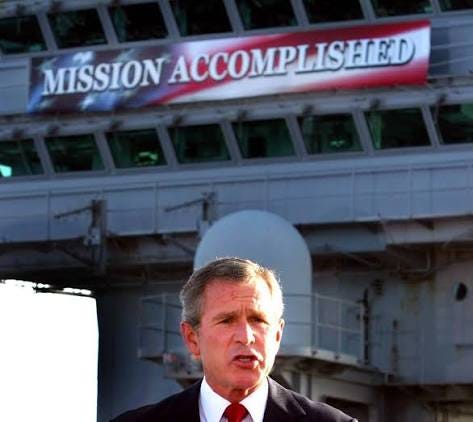
The B61-11 burrows into Pickaxe Mountain and the Pentagon reports catastrophic damage to the tunnels and halls inside. The president goes on television to announce that the Iranian nuclear threat has been eliminated, and for maybe six hours, Washington owns the story.
Trump calls up “W” and asks to borrow his “Mission Accomplished” banner from 2003.
Then the shit hits the fan.
The UN General Assembly convenes an emergency session. China and Russia condemn the strike, so does much of the Global South, and so, I suspect, do most of America’s allies.
The Security Council can’t do much about it, because the United States holds a permanent seat and a veto, and unless Washington inexplicably decides to sit on its hands, there will be no UN sanctions regime against America.
But that doesn’t mean there are no consequences.
Governments can sanction each other without asking the Security Council’s permission. The EU can impose restrictive measures if every member government agrees, although Brussels usually aims at officials, institutions, or specific sectors rather than entire countries.
So, Trump himself could be sanctioned.
Canada, Japan, Australia, and individual European capitals would suspend defense relationships, restrict exports, and slap travel bans on the people who planned and approved the strike.
Foreign ministers fly home early, ambassadors get recalled for “consultations,” joint exercises disappear from the calendar, and somebody in a European defense ministry starts reviewing pending weapons transfers.
Meanwhile, parliaments across the alliance start asking “why exactly are we hosting American troops, and in a few cases American nuclear weapons, on our soil?”
Nobody in Warsaw or Vilnius is going to decide Vladimir Putin got less dangerous because Washington did something stupid and reckless in Iran.
So, I think the alliance survives (for now). Confidence in American judgment doesn’t.
Under NATO’s nuclear-sharing arrangements, American B61 bombs sit at bases in Belgium, Germany, Italy, the Netherlands, and Turkey, ready to be carried by allied aircraft in a war nobody wants to fight.
Now imagine being the German chancellor on the morning after.
You have to stand in front of the Bundestag and explain why American nuclear weapons should stay on German soil when the country that controls them has just shown it considers nuclear first use an acceptable fix for a war of choice.
Belgian and Dutch leaders have the same miserable conversation with their parliaments, and so do the Italians.
We may see an end to nuclear sharing, nations might restrict American access to European bases, end overflight rights, and require Washington to ask permission before launching anything from European territory.
Then, the proliferation cascade begins.
The lesson here is that countries with nuclear weapons don’t get attacked.
Iran didn’t have one, and Iran got nuked. Ukraine gave its arsenal away in 1994 in exchange for security assurances and got invaded twice. You don’t need a political science degree to connect those dots.
Parliamentary commissions start studying options, physicists get invited into secure rooms, fuel-cycle policies get a second look, and some people start calculating exactly how long it would take to build a weapon if national leadership ever gave the order.
But I don’t think the dollar collapses.
According to the IMF, the dollar made up 56.7 percent of the world’s disclosed foreign-exchange reserves in the second quarter of this year. That share has been slowly eroding for decades, but nothing else offers the same depth and liquidity.
The euro still has structural problems, China restricts capital flows and doesn’t let the renminbi trade freely, and gold, for all its charms, doesn’t run a global payment system.
What an American nuclear first use changes is the incentive to keep looking for alternatives. Central banks will buy more gold, some reserves drift toward euros, and more countries start trading with each other in local currencies through payment systems built specifically to avoid touching the American financial system.
Research from the National Bureau of Economic Research has found that heavily sanctioned countries already reroute transactions toward alternative networks, especially the yuan, although outside that group the shift away from the dollar remains small.
A nuclear strike would expand the club of governments that want those alternatives.
Twenty countries decide they’d rather hold 5 percent less in dollars, then another twenty make the same call, and then sovereign wealth funds start pricing in American political risk.
Ten years later, somebody looks up and notices that the 57 percent figure has fallen a long way.
Anyone hoping for a symmetrical response, like Europe slapping Russia-style sanctions on Washington, is going to be disappointed. American banks, technology, capital markets, and the dollar are woven so deeply into global commerce that comprehensive sanctions on the United States would mostly punish the countries imposing them.
I could see targeted measures instead: travel bans on specific officials, suspended military exports, restrictions on technology tied to nuclear delivery systems, and allies canceling F-35 orders in favor of European aircraft.
Those would hurt, but the bigger loss would be America’s ability to organize sanctions against anyone else. Picture Washington, under a future democrat president, trying to rally a global coalition to punish Russia for threatening nuclear use in Ukraine.
Putin’s ambassador simply sets a satellite photo of Pickaxe Mountain on the table.
American moral authority has never been spotless, but after this, its ability to police the nuclear taboo becomes impossible.
Then comes the Constitutional crisis at home…
Remember, congress never passed a specific authorization for the Iran war. In June, both the House and Senate approved a war powers resolution directing the president to remove US forces from hostilities, but it was a nonbinding measure that never went to the president’s desk.
Under the American nuclear command system, meanwhile, the president alone has the authority to order nuclear use.
The Congressional Research Service notes that he doesn’t need the concurrence of Congress or his military advisers, although any order is still bound by the law of armed conflict, and military lawyers and commanders would weigh its legality.
Anyone who served in the Air Force knows how close to religious the service is about nuclear surety, and those officers would be in an unbearable position.
Put those two facts together, and you get a president waging a war Congress never authorized who then crosses the nuclear threshold on his own.
Congress would implode.
I’d expect emergency hearings, subpoenas for the strike planning documents, and classified transcripts, War Powers lawsuits, bills to prohibit nuclear first use, attempts to cut off funding, and quite possibly impeachment proceedings, depending on who holds the House and Senate when the dust settles.
Senior officials would resign rather than defend the decision, and generals could find themselves under oath being asked exactly what advice they gave and when.
The president’s sole authority over nuclear weapons would become one of the biggest political issues in the country overnight.
The military result would become almost irrelevant to the political fight. Congress would be arguing about whether one person has the constitutional right, without asking anyone, to make a decision that rewrites the strategic environment for eight billion people.
Most Americans would see it as the most reckless presidential act of their lifetimes.
You’d get massive demonstrations, veterans shouting at other veterans on cable news, retired generals denouncing Trump, churches mobilizing, and scientists signing open letters by the thousands.
Then the casualty reports from Iran would start arriving.
Whatever abstract support existed for “a tactical nuclear weapon against an underground facility” would have to survive contact with actual photographs. Words like “tactical” tend to lose their soothing quality once somebody points a camera at villages of Iranians miles downwind with radiation sickness.
America would probably survive economically, NATO would probably survive institutionally, and the dollar would probably survive financially, at least for a while.
Countries would simply accelerate their insurance against us. That means more European weapons, more independent intelligence services, more gold in central bank vaults, more payment systems that route around New York, and, most dangerously, more nuclear weapons.
That’s the scenario that worries me most.
The US uses one nuclear weapon to stop one country from getting one, and ten years later, five more countries have decided that staying non-nuclear isn’t worth the risk anymore.
If that happens, a nuclear strike on Pickaxe Mountain would go down as one of the worst strategic defeats in American history.
“A strange game… The only winning move is not to play.”
Слава Україні!
It's very easy to extrapolate the result of that titanic mistake. It's such a stupid thing to do that I'm shocked our orange Kremlin puppet didn't do it immediately.
Such use would give Putin the permission structure to use tactical nukes in Ukraine. We would not intercede NATO would fracture and collapse, don't you think?